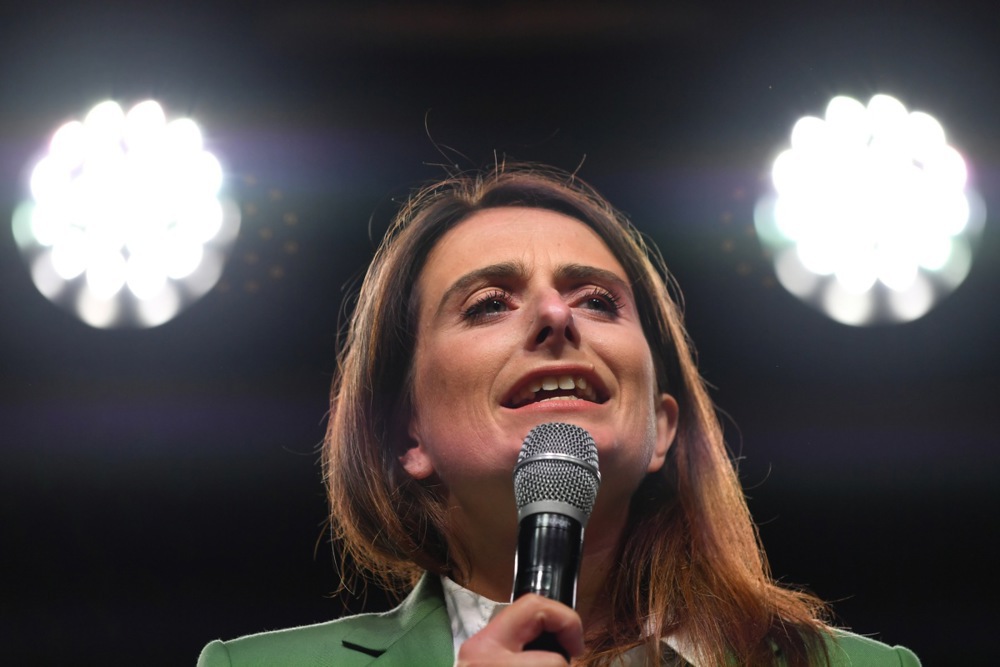
Green Party leader Zack Polanski has called for horse racing to be banned in the United Kingdom, just as the nation prepares for one of its most iconic sporting events, the Grand National at Aintree.
The remarks, which go beyond the Green Party’s official policy, have sparked criticism from across the political spectrum on the eve of the Randox Grand National, scheduled for tomorrow at Liverpool’s Aintree Racecourse.
Polanski has described horse racing as animal cruelty and argued that all equestrian disciplines should be removed from the Olympic programme.

In earlier comments on social media, he has called for animals to be taken out of sport altogether, writing in 2024: “Let’s go further and remove all animals involved in sport.”
He has also refused to wear clothing featuring horse-riding imagery because of his vegan principles.
The Green Party’s formal policy calls for an end to the exploitation of animals in commercial racing, including horse and greyhound racing and supports a ban on the use of whips.
Polanski’s position, though, appears to advocate a full prohibition on the £4 billion industry, which supports thousands of jobs and has deep cultural roots in British life.
Reform UK leader Nigel Farage branded Polanski’s views “cranky nonsense” and “utterly absurd”, accusing the Green leader of seeking to wipe a longstanding British tradition off the sporting calendar.
Nick Timothy, a senior Conservative figure and MP whose constituency includes Newmarket, widely regarded as the headquarters of British horse racing, described the Green leader’s position as “extreme madness”.
He added that Polanski is “not the only one” and accused the current Labour government of risking the future of the sport through taxation and regulation.
Louie French, the Conservative Shadow Sports Minister, said the Greens were “out of touch” and that their desire to ban horse racing showed just how disconnected they are from mainstream British life.
Other critics have highlighted the potential economic impact, with the racing sector contributing significantly to employment, horse breeding and rural economies.
The timing of the comments has drawn particular attention, coming as racegoers and millions of television viewers gear up for the three-day Aintree festival, which culminates in the Grand National — a steeplechase first run in 1839 and watched by audiences around the world.
It typically attracts more than 150,000 racegoers.
Historically, in the 1990s and early 2000s, the race regularly drew 10 million to 16 million terrestrial viewers in the UK alone.
The race is broadcast live in 140 to 170 countries, with an estimated worldwide audience of 500 million to 800 million people (including highlights and delayed broadcasts).
This makes it one of the most-watched single sporting events on the planet, although exact global figures are estimates rather than precise measurements.
Recent years have seen safety improvements to the Grand National, including a reduction in the maximum field size to 34 horses and modifications of fences. This year’s race has already seen several withdrawals, including the reigning 2025 champion the bay gelding Nick Rockett, who was ruled out with illness.
Animal welfare campaigners have long raised concerns about fatalities and injuries in jump racing, particularly in high-profile events like the Grand National.
Supporters of the sport point to ongoing reforms, strict veterinary oversight, and the fact that the vast majority of racehorses live long, well-cared-for lives after retirement.
The Green Party has previously floated reviews of horse and greyhound racing on animal protection grounds.
A party motion passed at conference called for ending the exploitation of animals in all commercial racing situations.
Polanski’s intervention comes amid broader Green campaigning on animal rights, including opposition to so-called blood sports and strong support for veganism and wildlife protection.
He has been vocal about greyhound welfare in recent months.
Britain’s horse racing industry employs tens of thousands directly and indirectly, generates substantial tax revenue and forms part of the social fabric in many communities.
Every day I'm setting out my plan to end rip-off Britain and take back our power and wealth from those who have stolen it.
Here's today's Sun front page.
The Murdoch empire is terrified. pic.twitter.com/ULLRgWHPbq
— Zack Polanski (@ZackPolanski) April 10, 2026