







Five years after Russia launched the full-scale invasion of Ukraine, some of Belgium’s most prominent multinationals remain active in the country. Despite twenty rounds of EU sanctions against Russia, numerous declarations of support for Ukraine, and billions committed in financial support to Kyiv, Belgian companies’ Russian factories are still running, revenues are still being generated, and taxes are still being paid into a state budget now heavily geared toward war.
The companies insist the reality is more complex.
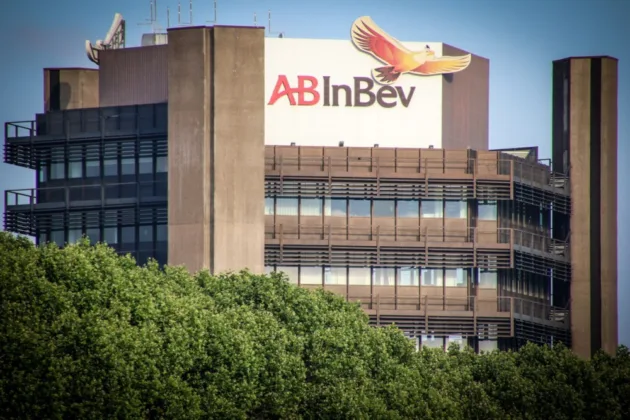
No case better illustrates the contradictions than AB InBev, the Leuven-based brewer and Belgium’s best-known global brand. When the war began, the company pledged to leave Russia, announcing it would forgo financial benefits from its Russian joint venture with Turkey’s Anadolu Efes. It booked a €1.1 billion impairment, signalled a clean break and has repeatedly said that it no longer sees the Russian market as part of its long-term international strategy. Yet despite those efforts, the business remains formally tied to Russian operations that continue to function under a different structure and branding.
What makes the situation particularly uncomfortable for AB InBev is not continued expansion in Russia, but the opposite: The perception that the company has been unable to fully sever ties despite clearly attempting to do so. Efforts to exit dragged on amid regulatory hurdles, failed negotiations, and increasing restrictions on foreign asset sales.
In December 2025, a Kremlin decree transferred management to a Russian entity, effectively stripping foreign partners of operational control. The business was eventually rebranded Napitki Vmeste (“Drinks Together”), underscoring its transition into a domestically managed operation.
From a corporate governance and reputational standpoint, AB InBev now finds itself stuck in an outcome that satisfies almost no one. The company no longer meaningfully controls the business in the way it once did, yet it also cannot fully demonstrate a clean exit to investors, stakeholders, and the broader public. After more than five years of war, prolonged negotiations and regulatory complications are increasingly seen by critics as insufficient explanations.
The Danish brewer Carlsberg found itself in a strikingly similar position: Its Russian subsidiary was seized by Russian authorities, yet the company managed to negotiate an exit, recovering more than €300 million for its assets. Dutch brewer Heineken also succeeded in exiting Russia after accepting a symbolic €1 sale of its Russian business to a local buyer, which also agreed to repay around €100 million in intercompany debt owed to Heineken. Those outcomes may offer some hope for AB InBev.
Other Belgian firms present less dramatic but still contentious examples. Beaulieu International Group operates a production facility, Juteks RU, in Kameshkovo, 400 km east of Moscow, focused primarily on cushion vinyl flooring. In 2025, Juteks RU earned over €120 million, according to the latest financial report. Beaulieu has argued that its Russian business is largely “local for local,” relying on Russian staff, local raw materials, and domestic sales rather than exports. With significant investments in production facilities, the company has opted for continuity rather than exit. Maintaining fully operational local production has also allowed companies to preserve market share and commercial presence in Russia while many Western competitors have withdrawn.
The food ingredients company Puratos also continues to operate in Russia. Puratos has three production facilities in Russia manufacturing ingredients for the bakery, confectionery and chocolate industries, including fillings, mixes, improvers, sourdough products, and chocolate-related ingredients. According to its financial report, the company’s sales in 2025 exceeded €130 million. Puratos has framed its decision in terms of supplying essential goods and maintaining livelihoods.
Another case is Bekaert, a global leader in steel wire transformation. Its main Russian asset is the Bekaert Lipetsk plant, located about 400 km south of Moscow, which generated over €50 million in 2024, according to its latest available financial report. The company has maintained operations in Russia, citing responsibilities to local employees and customers.
Critics argue that such justifications, common among multinationals, fail to address the broader ethical implications of sustaining business in an economy mobilised for war. The longer companies remain operational in Russia, the harder it becomes to portray their presence as temporary or involuntary rather than a strategic decision to retain long-term access to the market.
Not every company has taken the same path.
Belgian chemical major Solvay entered the Russian market through a 50-50 joint venture with petrochemicals giant Sibur called RusVinyl, established in 2007. The project was designed to build one of Russia’s largest polyvinyl chloride (PVC) production complexes in the Nizhny Novgorod region. RusVinyl produced suspension and emulsion PVC, widely used in construction materials, pipes, window frames, cables and packaging. The plant was launched in 2014, making it one of the flagship Western industrial investments in Russia’s petrochemical sector.
In March 2023, the Belgian chemicals group sold its 50 per cent stake in RusVinyl to Sibur for approximately €430 million. The deal closed later that month, with Solvay receiving €433 million in cash proceeds but recording a capital loss of around €174–175 million, largely due to currency translation effects and the discounted conditions imposed on foreign sellers exiting Russia.
Belgian businesses still operating in Russia note that they are acting within the law. But according to critics, legality is no longer the only standard being applied – as the war drags on, the reputational and political costs are becoming harder to ignore.
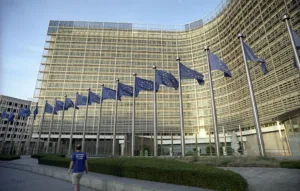
Brussels hosts key EU institutions and NATO headquarters, and its government has consistently supported Ukraine. Yet Belgian companies have largely been left to determine their own approach to Russia, creating a disconnect between the country’s geopolitical stance and its corporate presence.
For AB InBev, the situation has become unusually complex: A company that announced its departure and wrote down more than a billion dollars still finds itself tied to Russian operations now effectively under state control. Whether this amounts to complicity or coercion depends on perspective.
Either way, the room for ambiguity is shrinking. Pressure from investors, governments, and the public is mounting. Companies that once relied on time and complexity to justify their presence in Russia are finding that those arguments are carrying less weight with each passing year.
At the same time, exit conditions for foreign firms continue to harden, with mandatory discounts on asset sales now reaching at least 60 per cent. For many observers, the issue is no longer whether leaving Russia is difficult – that is broadly understood – but why some companies continue to maintain visible commercial operations in the country despite the mounting political, reputational, and ethical costs.