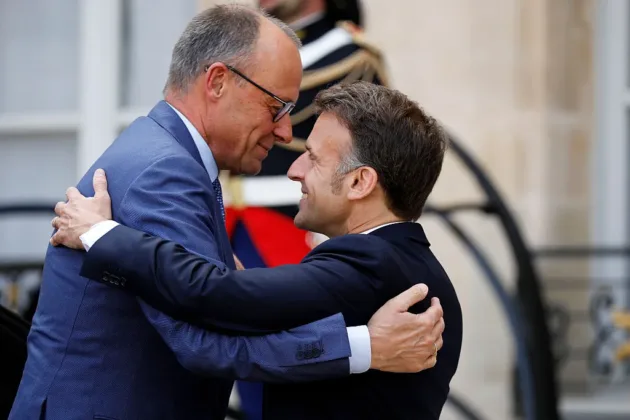


If one factor links the dire unpopularity of Chancellor Merz and President Macron, it is their political insularity. Neither engages freely with their disaffected voters, and neither has a close cadre of advisors willing to present unwelcome news. Macron is a creature of the French elite and has never “pressed the flesh” with the commoners in anything but carefully staged events. Merz retains the grandiose hubris of private capital, but has not cultivated a circle of seasoned confidants to keep him politically grounded. Every leader needs aides willing to dispute the boss and suggest better political alternatives. Merz and Macron prefer to remain cocooned within the trappings of high office, wilfully deaf to the angry complaints of the commoners.
Compare them to Indian PM Narendra Modi. After his Bharatiya Janata Party (BJP) lost its parliamentary majority in 2024, it roared back last week with a landslide victory in the West Bengal heartland of the previously dominant Trinamool Congress party. How did Modi engineer this dramatic turnaround? According to the Financial Times, Modi has a “relentless focus on grassroots issues … [and a] determination to stay close to voter concerns.” The Eurasia Group’s Pramit Pal Chaudhuri tells us, “Modi will often bring in people with differing views and have them argue … He is very focused on ensuring he gets dissenting opinions [and] multiple sources of information.” A brilliant innovation: Respond to popular discontent by … soliciting dissenting opinions and staying close to voter concerns. Not exactly the political equivalent of splitting the atom, but apparently far beyond the political skills of Macron or Merz.
Why do these leaders remain sequestered like Garcia Marquez’s General in His Labyrinth?
Poaching issues from the opposition is a time-honoured means of ensuring political longevity. Angela Merkel dominated the opposition Social Democrats for sixteen years by appropriating their key policies on social spending and the environment. Giorgia Meloni neutered her opposition with a polite embrace of the EU. Rather than co-opting their oppositions, Macron and Merz prefer to label them as “fascist,” which precludes any cooperation and taints any prospective adoption of their policies. Tossing a key issue like migration over a political firewall only empowers the opposition and cedes discontented voters to the National Rally and the AfD.
Unlike their leaders, German and French taxpayers are unprotected by the perquisites of high office and have noticed the steady degradation in their standard of living and personal safety. German cities are beset by young migrants living on social benefits, including free housing and a monthly stipend. Rather than finding work and mastering a new language, they prefer to spend their days idling in city centres, committing petty crime and harassing young women. Despite his calls for the remigration of those unwilling to assimilate, Chancellor Merz has failed to deport appreciable numbers, even of convicted criminals or failed asylum seekers. Any new laws expediting deportations are stymied by his awkward alliance with the Social Democrats, who are more deferential to the preferences of the out-of-power Green Party than they are to those of their own coalition partner.
President Macron never recovered from his bruising encounter with the plebeians when they erupted over his proposed increase in fuel taxes. Ramming his pension reform through by decree convinced the French electorate that Macron was more loyal to the dictates of the Eurozone than he was to his voters, dashing any hopes he may have had to restructure the moribund French economy. Large numbers of North African migrants remain unassimilated and more interested in hunting Jews than jobs. Neither France nor Germany offer a compelling cultural ideal to recent arrivals, who often prefer Islamist triumphalism and Sharia law to constitutional government.
Beyond their lack of a “common touch” or any unifying national vision, both Macron and Merz face dire economic prospects. Unlike Modi, they cannot shower voters with new welfare benefits: Their current social welfare obligations are already unsustainable. New defence spending will crowd out any new vote-buying programmes. Macron failed to reinvigorate the French economy with significant reforms, and faces a deficit and debt crisis that threatens the integrity of the Eurozone. The German economy is stuck in a rut and shows no signs of adapting to a world of dear energy and declining export markets. Neither leader appears able to wrestle with the regulatory leviathans crippling growth and strangling innovation.
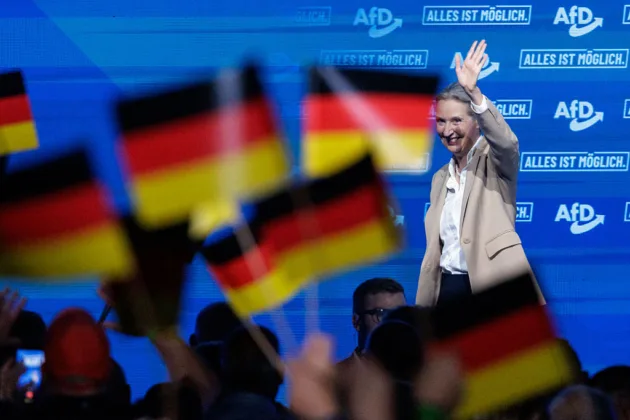
Deep in their respective labyrinths, Merz and Macron still nurse a faith in technocratic competence as the antidote to populist fervour. Yet neither have devised workable policies to revive their national economies or ensure that migrants either integrate or return home. Failed technocrats are always vulnerable to vengeful populists, and so we see the National Rally and the AfD surging in popularity. Jordan Bardella is leading presidential polls while the AfD looks to roll up a series of regional elections this year, with realistic hopes for an eventual plurality in the Bundestag.
Technocrats who’ve marinated their entire professional lives in Europe’s dominant centre-left milieu disdain the instinctive national and cultural pride championed by populists. This contempt deprives them of the ability to couple their preferred policies with a unifying patriotic vision that can convince a hesitant electorate to accept drastic reforms. Charles de Gaulle would never make this mistake. His campaign to rewrite the Constitution and launch a comprehensive industrial renewal was embedded in his confident vision of French grandeur. He proposed to make France great again, and France accepted his offer. Merz and Macron are lesser men, more the lineal descendants of senior bureaucrats than great leaders. They are managerial elites: Able to govern decently during good times, but incapable of evoking the powerful national identity needed in times of crisis.
Disaffected voters look for reason to believe in their homeland and a candidate offering their country a claim on the future. Policies without patriotism fail these tests. One suspects that any populist successors to Macron and Merz will not.