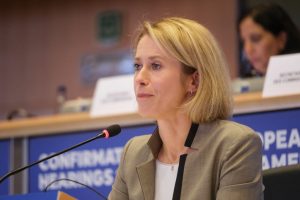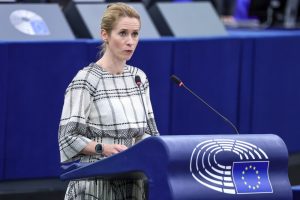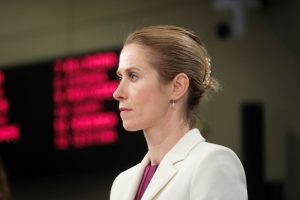

The European Union has signalled it will tighten financial assistance to non-EU countries maintaining close ties with Russia or Iran, EU foreign policy chief Kaja Kallas said ahead of a meeting of EU development ministers in Brussels on May 18.
Kallas told reporters that, “if a partner supports Russia or Iran, then it has to be flexible, so that we can realign our engagement in this case”, signalling a broader strategic shift towards using development funding as an instrument of geopolitical leverage, particularly against Moscow and Tehran.
Her remarks immediately raised questions about the potential implications of this evolving approach for countries across Eastern Europe, Africa, the Middle East, Asia and Latin America that between them absorb tens of billions of euros in EU assistance every year. According to the Paris-based Organisation for Economic Co-operation and Development (OECD), global official development assistance fell to $174.3 billion (€150 billion) in 2025, a drop of 23 per cent — a contraction that makes Brussels’ choices about who gets what increasingly consequential.
A GLOBAL FINANCIAL NETWORK
The European Union is one of the world’s largest providers of external assistance. Through its 2021-2027 long-term budget framework, Brussels channels funding via multiple instruments that collectively form a global system of development and humanitarian support.
At the centre of this system is the Neighbourhood, Development and International Cooperation Instrument (NDICI – “Global Europe”), valued at approximately €79.5 billion for the 2021-2027 period. The programme finances governance reforms, infrastructure projects, climate resilience initiatives and private-sector development across Africa, Asia, Latin America and the EU’s immediate neighbourhood.
Alongside it, humanitarian aid managed by the European Commission’s Directorate-General for European Civil Protection and Humanitarian Aid Operations (ECHO) allocates between €1.5 billion and €2.5 billion annually in response to armed conflicts, natural disasters and displacement crises worldwide.
Another €14 billion has been allocated under the Instrument for Pre-Accession Assistance (IPA III), which supports political and economic reforms in the Western Balkans and Türkiye as part of their EU accession paths. Meanwhile, the European Peace Facility — an off-budget mechanism worth around €17 billion over the same period — has become an increasingly central foreign policy tool, particularly through military support provided to Ukraine in the context of the Ukraine war.
The EU also deploys macro-financial assistance programmes that provide emergency loans and grants to partner economies facing severe instability, including Ukraine, Moldova, Tunisia and Jordan.
Taken together, these mechanisms make the EU one of the most influential external financial actors globally, with aid deeply embedded in the political and economic structures of dozens of partner States.
Though previously presented as broadly neutral, a direct link between aid and geopolitical alignment is now becoming explicit.
AID AS GEOPOLITICAL LEVERAGE
What appears to be changing, following Kallas’ remarks, is not the scale of EU external engagement but the strategic logic behind it.
This evolution is largely driven by the EU’s broader effort to isolate Russia internationally — not only through direct sanctions but also via diplomatic and economic pressure on third countries maintaining close ties with the Kremlin.
European officials have begun openly discussing whether countries that assist Russia in circumventing sanctions — or that deepen strategic cooperation with Tehran — should continue receiving the same level of European financial support.
At the same time, pressure on Iran has intensified amid the recent military confrontation involving the United States and Israel.
REGIONS LIKELY TO BE AFFECTED
The consequences of such a policy shift would likely be uneven across regions.
Africa could emerge as one of the most affected areas. In the Sahel, countries such as Mali, Burkina Faso and Niger have received substantial EU development and humanitarian assistance over the past decade, particularly in governance, poverty reduction and security stabilisation programmes. Though following successive military coups, relations with European partners have deteriorated sharply, while the ruling authorities have strengthened ties with Russian-linked security actors — most notably the Africa Corps, the successor structure to the late Yevgeny Prigozhin’s Wagner Group.
The EU has already reduced parts of its security cooperation in the region, and deeper alignment with Moscow could accelerate further cuts, especially in governance and institutional funding.
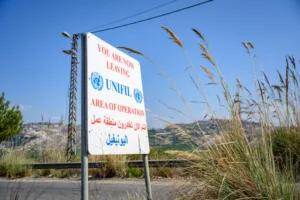
In the Middle East, Iraq and Lebanon continue to receive significant EU assistance, including humanitarian aid, institutional reform support and economic stabilisation packages. Though Iranian influence — particularly through political networks and armed non-state actors such as Hezbollah — complicates long-term EU planning.
SYRIA: AID DE FACTO NOT CONDITIONAL ON HUMAN RIGHTS
Syria represents one of the most delicate areas of EU external policy adjustment. Following the fall of Bashar al-Assad in December 2024, the EU has rapidly reopened diplomatic channels with Damascus while gradually easing parts of its sanctions regime.
EU support, previously centred almost exclusively on humanitarian assistance estimated at around €1 billion annually, could eventually expand into reconstruction and governance programmes. Discussions in Brussels reportedly point to a potential medium-term support package worth between €5 billion and €7 billion.
Though there are risks of persecution against ethnic and religious minorities within the country — risks that have, over the past two years, led to episodes of severe violence and massacres — the EU does not currently appear to consider these developments a decisive factor in shaping its aid policy orientation.
Greater concern in Brussels appears to focus on the continued Russian military presence in Syria, where Moscow still maintains the Hmeimim airbase and the Tartus naval facility, preserving strategic influence over the country’s future trajectory, albeit to a diminishing extent.
SERBIA AND THE WESTERN BALKANS
The Western Balkans — covered by the EU’s €14 billion IPA III framework — would also be directly exposed to a more conditional aid model based on geopolitical alignment.
Serbia is particularly significant. An EU candidate country since 2012, Belgrade has refused to fully align with EU sanctions against Russia while continuing to pursue a balancing strategy between East and West.
Though EU assistance is unlikely to be suspended outright, future funding disbursements and accession negotiations could become increasingly tied to Serbia’s foreign policy alignment with Brussels.
LATIN AMERICA UNDER GREATER SCRUTINY
EU engagement in Latin America remains comparatively limited but is increasingly shaped by geopolitical considerations. Through the Global Gateway strategy — which aims to mobilise up to €300 billion in public and private investments worldwide between 2021 and 2027, with €45 billion earmarked specifically for Latin America and the Caribbean — Brussels primarily focuses on green investment, infrastructure and institutional cooperation.
Countries such as Brazil and Argentina continue to pursue strategic autonomy, maintaining relations with both Western powers and BRICS-aligned States. Though they are not major recipients of politically sensitive EU aid, their positions on sanctions and international alignment are becoming more relevant within broader EU cooperation frameworks.
No country is currently expected to lose EU funding outright. Nevertheless, diplomats acknowledge that a more conditional framework could gradually reduce the predictability and flexibility of future financial allocations.
A TRANSFORMATION OF EU FOREIGN POLICY
If implemented systematically, an “alignment-based” assistance model would mark a significant transformation in the EU’s external policy identity.
Development funding — long presented as a relatively neutral instrument aimed at promoting stability and poverty reduction — is becoming more explicitly integrated into the EU’s security and geopolitical strategy. Aid would increasingly function not only as support, but also as a mechanism of strategic influence within a rapidly polarising international system.
What is already clear is that the debate is no longer theoretical. With tens of billions of euros in annual external spending at stake, the question of who receives European funding — and under what political conditions — is becoming a defining element of the European Union’s evolving foreign policy doctrine.