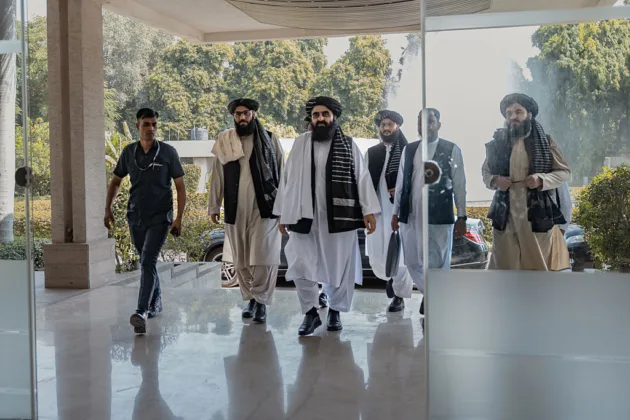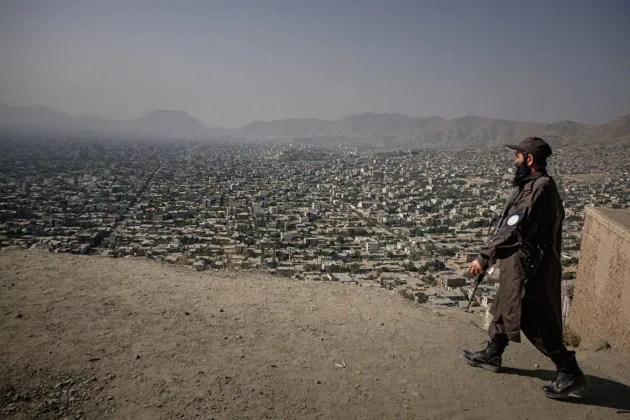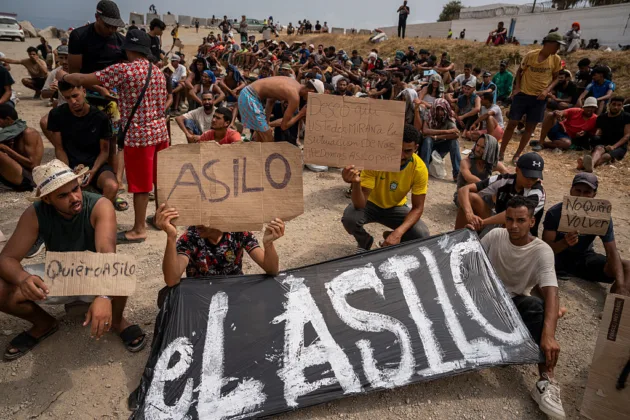





The European Commission has invited Taliban officials to Brussels for technical talks on the deportation of Afghan immigrants, in what would mark the first publicly known visit by representatives of the Islamist group to the EU capital since they returned to power in 2021.
Commission spokesman Markus Lammert confirmed on May 12 that the EU executive, together with the Swedish Justice Ministry, had sent a letter to “the de facto authorities in Afghanistan” asking whether they would attend a meeting at technical level in Brussels.
The move has been coordinated with Sweden and comes at the request of around 20 Schengen member states pushing for faster returns of rejected Afghan asylum seekers, according to the Commission.
No date has yet been set for the meeting, Lammert told reporters. It would be the second EU contact of 2026 with Afghanistan’s rulers, following a technical meeting held in Kabul in January.
The Commission said engagement with the Taliban administration “in no way constitutes recognition” of the group, which Western governments have refused to acknowledge since it overthrew the US- and NATO-backed administration in Kabul.
Lammert said the bloc was acting under an EU mandate to maintain “operational engagement” with the country’s authorities, in order to facilitate contacts, monitor the situation and assist member states.
The proposed talks are to focus on practical questions including travel documentation, passport issuance, identity verification and the coordination of deportation flights, according to reports.
Hundreds of thousands of Afghans have sought asylum in Europe since the Taliban takeover, and by 2025 they remained the largest group of asylum seekers in the bloc, according to official figures.
Several governments have stepped up returns in recent months. Germany has deported more than 100 Afghan men with criminal convictions since 2024, using Qatar as an intermediary, while Austria hosted a Taliban delegation in September 2025.
Rights groups have warned that engaging Kabul on deportations risks violating the principle of non-refoulement, which bars returns to countries where people face persecution.
European Council on Refugees and Exiles (ECRE) senior policy officer Reshad Jalali said: “It is deeply alarming that discussions are taking place about deporting Afghans back to Taliban-controlled Afghanistan.”
He added that returns would risk “making the EU complicit in exposing them to danger and abuse”, citing Taliban restrictions on women’s movement, the ban on girls’ education beyond primary school and morality laws limiting expression and employment.
International Rescue Committee Afghanistan country director Lisa Owen said: “Deporting Afghans back to a country where almost half of the population cannot feed themselves is not a migration policy; it is a decision that could cost lives.”
Green MEP Melissa Camara said inviting Taliban officials to discuss returns would mean “abandoning the values and rights on which the European Union is founded”, urging the Commission “not to cross this red line”.