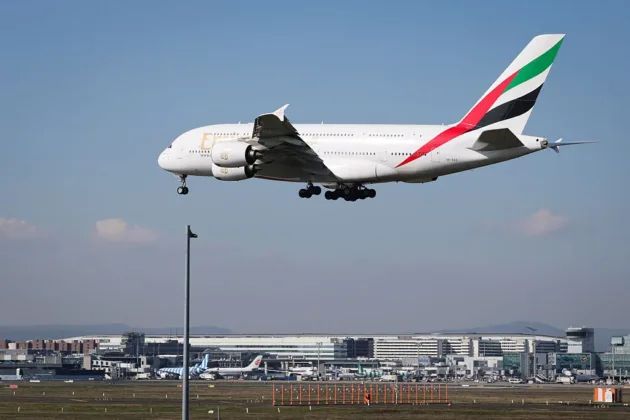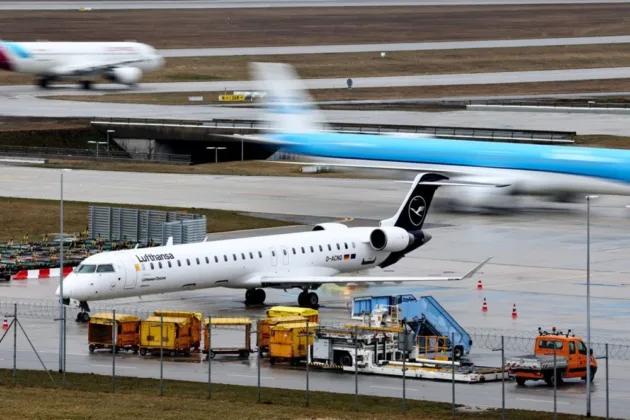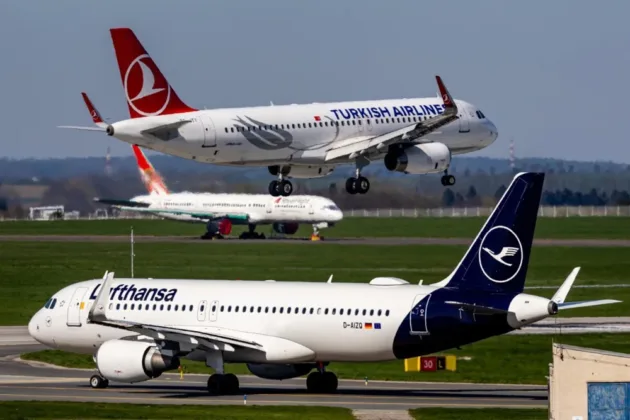





The European Commission has said the European Union (EU) is not yet facing jet fuel shortages, but is readying contingency measures and weighing options that include using American kerosene as a back-up for the summer holiday season.
The US-Israeli war with Iran and the closure of the Strait of Hormuz have pushed aviation fuel prices higher and raised the prospect of shortages during Europe’s peak travel period.
The EU Aviation Safety Agency (EASA) is due to publish recommendations on Friday on whether to allow the use of Jet A, a US-produced aviation fuel not currently permitted on the European market.
In parallel, the European Commission is to outline measures member states can use to optimise jet fuel consumption, including aircraft loading procedures and the allocation of airport slots.
Brussels has repeatedly insisted the 27-nation EU is not experiencing shortages, though officials have acknowledged the situation could deteriorate.
“At this stage, this is more a problem of economics and fuel costs than availability,” aviation transport specialist Matteo Mirolo told AFP, adding that supply needed to be considered “especially as this will not be the last crisis we face”.
Before the Middle East war, about 20 per cent of the kerosene consumed in Europe transited through the Strait of Hormuz, which has been effectively closed by the conflict. Several airlines, particularly low-cost carriers, have announced flight cancellations as prices have surged.
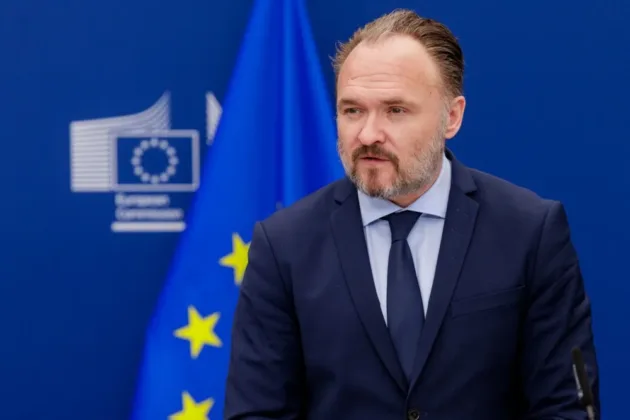
EU Energy Commissioner Dan Jorgensen said the bloc was preparing for possible “security of supply issues” should the crisis drag on. “We are not there yet, but it can happen,” he said.
The Commission said it would set up a “fuel observatory” to track EU production, imports, exports and stock levels of transport fuels. Until now, the bloc has lacked a detailed overview of strategic fuel stocks across member states.
European legislation requires countries to hold oil stocks equivalent to 90 days of net imports and 61 days of domestic consumption, without distinguishing between petrol, diesel and jet fuel. A Commission source said Ireland was more at risk because of limited refining capacity.
The Commission is expected to ease rules on “tankering”, the practice of aircraft carrying more fuel than necessary to avoid expensive purchases elsewhere, and to allow temporary flexibility on airport slots.
If the crisis persists, member states are expected to consider coordinated action to release emergency stocks and voluntarily share jet fuel.
US-produced Jet A has a higher freezing point than the Jet A-1 type used elsewhere, making it less resistant to very low temperatures on long-haul flights. Allowing its use in Europe would require regulatory and logistical adjustments.
EU Transport Commissioner Apostolos Tzitzikostas said an assessment was under way, with some airlines pushing for temporary exemptions as early as this summer.
In the longer term, Brussels has stressed the need to develop non-fossil sustainable aviation fuels (SAF). “The crisis should push states to invest in alternative SAF fuels, not only for climate reasons but also for energy sovereignty,” Mirolo said.