






Europe has been forced to switch off huge volumes of solar electricity in recent weeks as ageing grids struggle to absorb a surge in renewable output, with industry analysts warning that the amount of wasted power is set to hit a record this summer.
Around 40 terawatt-hours of solar electricity – roughly enough to supply Greater London for a year – is expected to be discarded in the coming months, up by a quarter compared with 2025.
The phenomenon, known as curtailment, occurs when grid operators order generators to shut down because transmission networks cannot move the electricity to where it is needed.
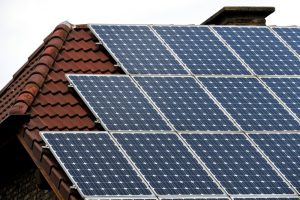
Hundreds of millions of solar panels have been installed across Europe over the past decade, from Sicily to Lapland, turning what was once a niche technology into the bloc’s biggest source of power during the summer months.
That rapid expansion has now collided with a system that has failed to keep pace. Capacity growth is slowing, financial returns are falling and a record amount of electricity is going to waste because grids cannot handle the surge.
Generation records have already been broken this spring in Germany, the UK and France, with further peaks expected as daylight hours lengthen.
Data published by energy think-tank Ember show Germany curtailed about 3.1 per cent of its total solar generation in 2025, up from 1.9 per cent in 2024.
The country, the EU’s largest solar producer, wasted an estimated 9.6 TWh of wind and solar generation last year – nearly 4 per cent of the total generation of those two sources.
Across the continent, congestion management costs in Europe neared €9 billion in 2024, while 72 TWh of mainly renewable energy was curtailed due to bottlenecks – roughly equivalent to Austria’s annual electricity consumption, according to a study by Aurora Energy Research.
More than 1,000 GW of renewable energy capacity is currently awaiting grid connection approval across Europe, with Italy accounting for roughly 370 GW of the pipeline, the Aurora report found.
Permitting timelines remain a key obstacle, though some member states are now moving to streamline approvals. The International Energy Agency and other organisations have estimated that the amount of transmission and distribution investment needed to meet the expected speed of renewable deployment is two to three times the current trend.
In some EU member states, the permitting process for new high-voltage lines can take ten years or longer.
Spain has approved new rules to fast-track battery deployment, as part of a package to future-proof its power grid and address key vulnerabilities identified after the Iberian blackout in 2025.
Industry body SolarPower Europe has said curtailment risks undermining investor confidence in new solar projects, calling for faster permitting, stronger market signals and a wider rollout of storage and demand-side flexibility.
The scale of waste also raises questions about the EU’s Green Deal climate targets, which depend on renewables supplying the bulk of the bloc’s electricity within the next decade.