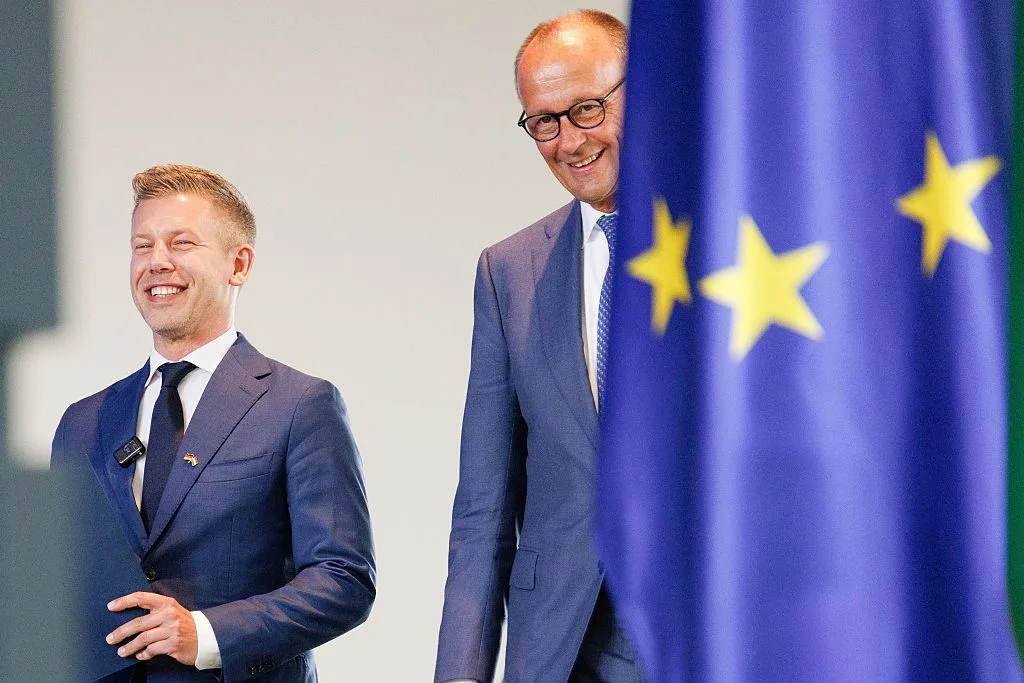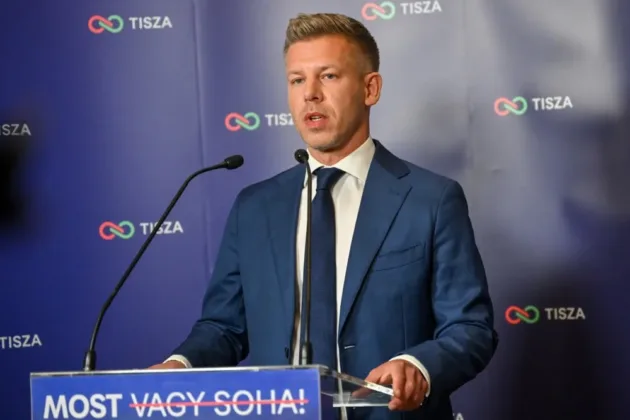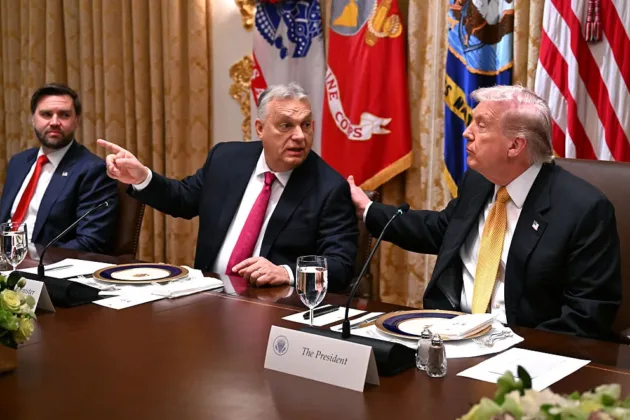


Viktor Orbán has gone, and with him the European Union has lost the one national leader most willing, and most able, to pull the bloc’s emergency brake. After 16 years in power, the former Hungarian prime minister has been swept aside by Péter Magyar, leader of the Tisza party, who was sworn in on May 9.
What ended in Budapest was not only a long premiership. It was the removal of a head of government who held a national mandate and used it, repeatedly, to block decisions the EU executive wanted taken. His successor arrives in office as the figure Brussels had hoped for, and worked towards, well before Hungarians voted.
The speed of the welcome told its own story. European Commission President Ursula von der Leyen declared that “Hungary has chosen Europe” within roughly 17 minutes of the result, and Alexander Soros of the Open Society Foundations said Hungarians had taken back their country. European People’s Party President Manfred Weber said it was now incumbent on the bloc to support Budapest, telling reporters that Europe must be the friend at Hungary’s side.
Magyar was not an outsider to that world. His Tisza party sits inside the EPP, and his Brussels operation has long been run by EPP insiders. His campaign rested on a single, devastating argument: only a pro-EU leader could unlock the money Brussels was withholding from Hungary. That argument worked because Brussels had made it true.
Around €20 billion destined for Hungary had been frozen over rule-of-law concerns, with roughly €10 billion of post-Covid funds due to be lost permanently if no deal was struck by late August. Critics on the eurosceptic right argue the conditions were calibrated so that releasing the cash required political alignment rather than mere technical reform, with frozen funds, an EU-financed NGO and media ecosystem, and the shielding of the chosen challenger forming, in their account, a single project.
Magyar’s own record fed the doubts. As an MEP he took part in only a fraction of roll-call votes — the lowest attendance in the term — while parliamentary immunity shielded him from legal proceedings at home. Voters were offered a conservative without the corruption; the absence of a voting record made that claim hard to test.
THE VETO THAT BRUSSELS WANTS GONE
Within days of the handover, von der Leyen revived a long-standing project: stripping member states of their national veto in foreign policy. Orbán’s Hungary had used the veto more than any other capital. Of 48 vetoes cast by EU countries in recent years, 21 came from Budapest. In March, Orbán blocked a previously agreed €90 billion loan for Ukraine amid a dispute over the Druzhba pipeline, which carries Russian oil to several member states.
Around 80 per cent of EU legislation is already adopted by qualified majority voting; the exceptions cover foreign policy, defence, taxation and enlargement, where a single government can still halt a decision, the Council has confirmed. Von der Leyen has said moving to qualified majority voting in foreign policy is an important way to avoid systemic blockages, and that the bloc should use the moment to act.
For the Commission, that is a fix for paralysis. For its opponents, it is the second brake released in the same season as the first: a nationally elected veto removed at the ballot box, and the legal veto itself now targeted for abolition.
CRITICS WARN OF A BLOC WITHOUT CHECKS
The push troubles smaller member states. Dutch MEP Sander Smit has warned that abandoning unanimity could expose countries to decisions against their national interest, arguing that durable EU decision-making cannot rest on bypassing national democracy. German MEP Daniel Freund has taken the opposite view, describing unanimity as a security risk.
The legal obstacle is awkward for reformers: it takes unanimity to drop unanimity, and several governments do not want to surrender a tool they regard as vital,. The most realistic route is the “passerelle” clause, which still requires every capital to agree. EU diplomats expect member states to settle for a push on enlargement rather than a procedural overhaul.
A NEW BUDAPEST, NOT A SILENT ONE
The assumption in Brussels is that Magyar will not use the veto as Orbán did. Whether he will resist the Commission on anything is the open question. Von der Leyen presented him with what amounted to conditions in return for funds, covering Ukraine, migration and identity legislation, with goodwill that “may be very short-lived” if he does not comply.
That is the spirit of the change. Hungary’s most awkward leader has been replaced by a government that owes its room for manoeuvre to Brussels, at the same moment the Commission moves to remove the veto a future awkward leader might use. With its loudest sceptic gone, the EU institutions that wanted fewer brakes face fewer obstacles to removing them — and the argument over who now checks the EU executive is no longer Orbán’s to block.