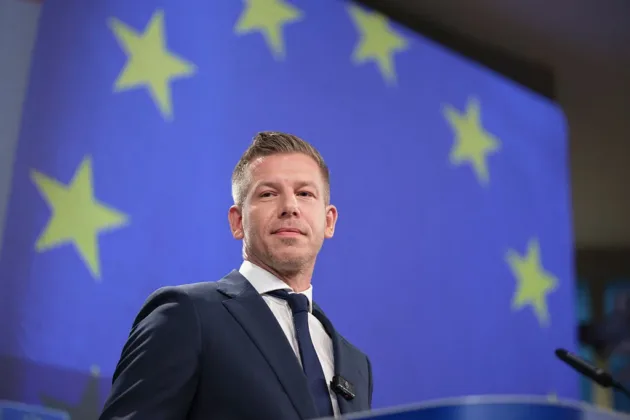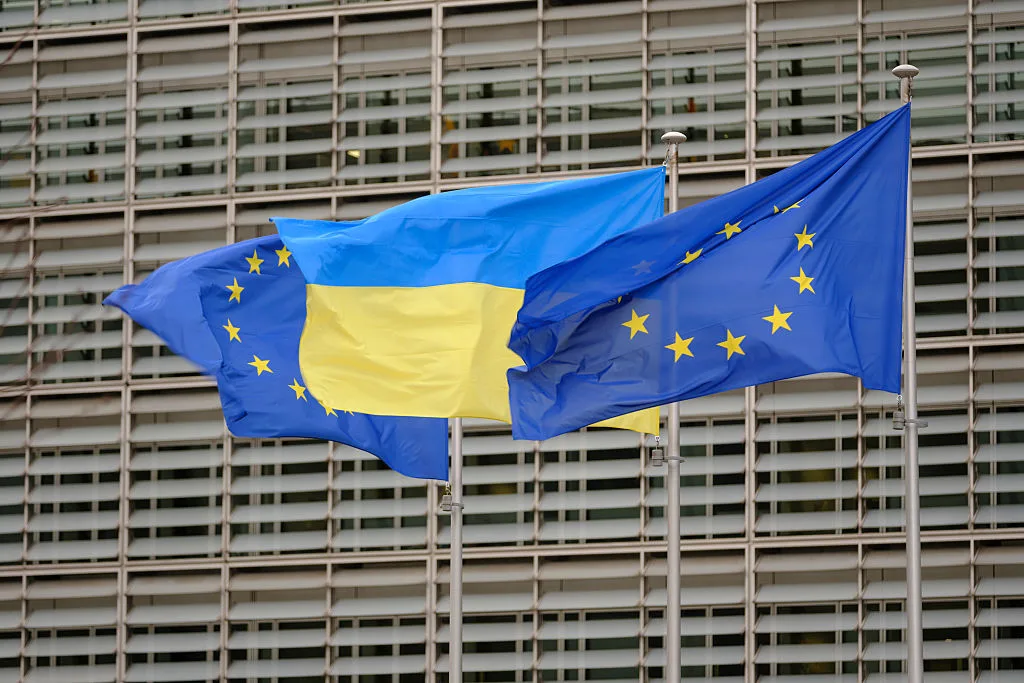
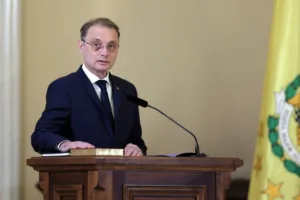

The European Commissioner for Enlargement, Marta Kos, told reporters in Brussels on Monday that she would urge all 27 member states to formally open every cluster of Ukraine’s accession negotiations “as soon as possible”.
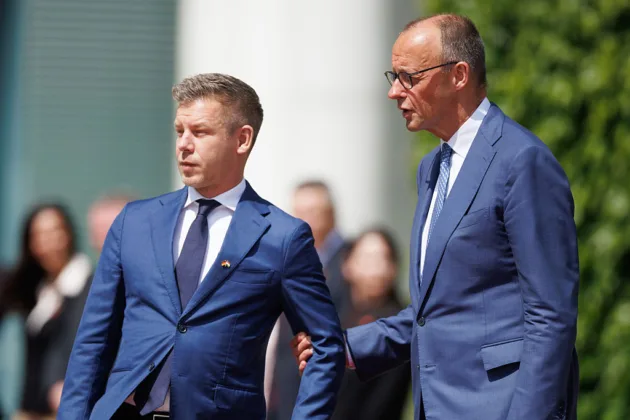
She did so two days after Viktor Orbán’s 16-year rule in Hungary came to an end. His successor, Péter Magyar, was sworn in as Prime Minister on May 9. With Orbán out of the European Council, no head of government in the bloc is now openly arguing against Brussels on the pace of enlargement.
Kos said the first cluster could be opened under the Cypriot presidency of the Council of the European Union, which runs until June 30. The remaining five could follow in July under the incoming Irish presidency.
“We have done a lot of advance work and now everything is ready to be formally opened,” she said, according to Interfax-Ukraine.
THE LAST DISSENTING CAPITAL
For four years Orbán had been the loudest sceptic in the European Council. He blocked the unanimous decisions needed to formally open Ukraine’s accession clusters and argued in public that fast-tracking Kyiv would damage Hungarian farmers and European security.
He lost the April 12 parliamentary election in a landslide to Magyar’s Tisza Party. Kos welcomed what she called a “more positive” tone from the new Hungarian Government.
The next-closest thing to a critical voice is Slovak Prime Minister Robert Fico, whose position has shifted repeatedly. In early May he said Bratislava supports Kyiv’s ambitions to join the bloc. His coalition partner, the Slovak National Party (SNS), has since demanded in writing that he commit never to vote for Ukrainian accession in this term.
Outside that coalition row in Bratislava, the room is quiet.
A 40-YEAR-OLD METHODOLOGY
Kos also said she would press the 27 to overhaul the methodology that has governed enlargement for four decades. She said it was ill-suited to the moment.
“We do not live in peacetime. We do not have time,” she said.
The European Commission is now exploring whether candidate countries can plug into parts of the single market and EU programmes before they have fully transposed the bloc’s body of law. Under the existing rules, accession negotiations are structured around 35 chapters, 33 of them grouped into six thematic clusters. The Commission informally opened all six in March. Formal opening still requires unanimous backing from the 27 governments.
WHO IS AHEAD OF KYIV IN THE QUEUE
Montenegro has been negotiating since 2012. It has opened all 33 chapters and provisionally closed seven. Albania, a candidate since 2014, opened four clusters of chapters between September 2024 and this spring. Serbia has been negotiating since 2014; 22 of its chapters are open and only two provisionally closed.
Ukraine applied for membership four days after Russia’s full-scale invasion in February 2022. It received candidate status that June, was cleared to start negotiations in December 2023 and now stands on the verge of having all six clusters opened.
That is faster than any other candidacy in recent European Commission memory.
THE BILL NOT BEING DEBATED
A 2024 analysis by Brussels-based think tank Bruegel, updated this year, has estimated that Ukrainian membership would add around €85 billion in Common Agricultural Policy (CAP) payments over a single seven-year budget cycle and capture billions more in cohesion funding.
Once its territory and farmland are fully recovered, Ukraine would hold roughly a fifth of all agricultural land in the bloc. It would be the single largest recipient of CAP money on day one of membership.
These figures have appeared in policy papers. They have not been put to voters in any of the 27 capitals. No referendum has been held in any current member state on whether Ukraine should join.
European Commission President Ursula von der Leyen has herself cautioned that the bloc cannot commit to a firm accession date, despite Kyiv’s push to join by 2027 as part of a wider package of Western security guarantees still being negotiated.
Kos closed her remarks by saying there was “room for all” candidates in the bloc, including Albania, Montenegro, North Macedonia, Serbia, Bosnia and Herzegovina and Kosovo. The Western Balkans were told much the same at a summit in Thessaloniki in 2003.
Most of them are still waiting.
The Cypriot presidency hands over to Ireland on July 1. Whether the call to open all six clusters in this calendar year produces binding political decisions, or only the appearance of movement, will become clear in the next eight weeks.