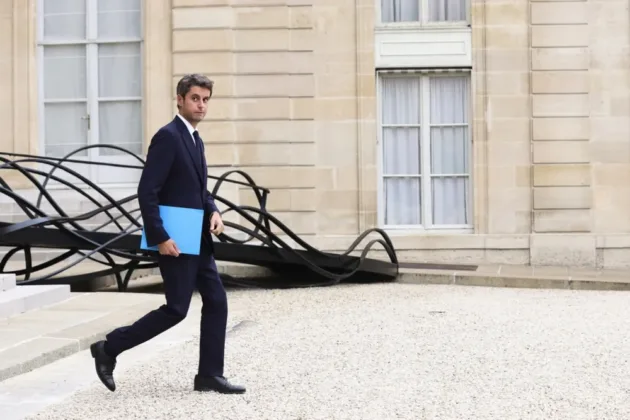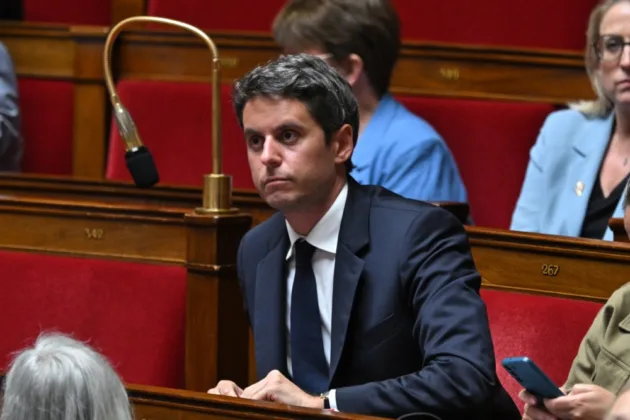


Gabriel Attal, the youngest prime minister in modern French history and now general secretary of the Renaissance party, has formally entered the race for the French presidency, casting himself as a break with a national “decline” that his own political family has spent a decade administering.
Speaking on May 22, 2026, the 37-year-old former prime minister announced he would seek the Renaissance nomination to succeed Emmanuel Macron, who is barred by term limits from standing again in 2027. He framed the bid as a rejection of what he called “50 shades of managing decline” in French politics, an unusual phrase from a politician whose entire career has unfolded inside the machinery he now indicts.
A rally is scheduled for Paris on May 30; Renaissance’s national council backed his entry earlier this month with 91 per cent of its members voting in favour.
INSIDE THE MACHINE
Born March 16, 1989, in Clamart, near Paris, Attal was educated at the École alsacienne and Sciences Po, the standard pipeline of the French administrative elite. He joined the Socialist Party in 2006, worked in then-health minister Marisol Touraine’s cabinet, and switched to Macron’s En Marche movement in 2016, just as the centrist’s presidential bid was taking shape.
His climb was rapid and entirely interior to the system: MP in 2017, junior education minister in 2018, government spokesperson in 2020, budget minister in 2022 and education minister in 2023.
EIGHT MONTHS AT MATIGNON
Macron appointed him prime minister on January 9, 2024, an attempt to reset a presidency battered by pension-reform protests, farmers’ demonstrations and an internal revolt within Renaissance over the 2023 immigration bill, which had passed only thanks to National Rally (RN) votes.
The reset did not hold. After Renaissance was soundly beaten by the RN in the June 2024 European Parliament elections, Macron called snap legislative polls. The result was a hung National Assembly. Attal handed Matignon to Michel Barnier that September and has since taken visible distance from the Élysée, publishing the memoir En homme libre on April 23, 2026, in which he revisits a dissolution he had quietly opposed but publicly executed.
A COSMETIC CONVERSION
Out of government, Attal has positioned himself as a centrist with an increasingly hard line on the issues that drive French voters towards the right-wing opposition.
On Europe 1 and CNews on April 27, 2026, he said France no longer chose its immigration and called for a Canadian-style points-based system and tougher rules on family reunification. He rejected the mass regularisation announced in April by the Spanish Government, which plans to legalise around 500,000 undocumented migrants.
His borrowings from former president Nicolas Sarkozy have been stylistic. The substance, though, remains within the existing EU framework: no constitutional changes, no treaty exits, no rupture with the European Court of Justice rulings that have long constrained national room for manoeuvre on migration.
A FRACTURED CENTRE
Attal remains the polished representative of a political family woven into the EU institutions. His partner, Stéphane Séjourné, is European Commissioner for Prosperity and Industrial Strategy; Renaissance sits inside Renew Europe and has consistently championed the Green Deal and deeper integration.
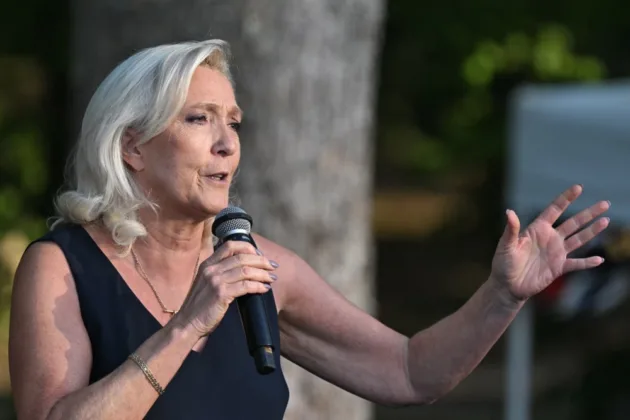
His candidacy now sets up a contested race within Macron’s own bloc. Édouard Philippe, the President’s first prime minister, has been positioning himself since 2024 and consistently tops centrist polling. Élisabeth Borne, Attal’s predecessor at Matignon, resigned as chair of Renaissance’s national council on May 6, citing disagreement with the party line. Beyond the centre, Bruno Retailleau of Les Républicains is reported by Reuters as the favourite of the conservative right, while Marine Le Pen remains the leading right-wing contender despite ongoing legal complications.
The numbers are unflattering. A Toluna/Harris Interactive survey for M6 and RTL in early May put RN president Jordan Bardella on 34 to 35 per cent in first-round voting intentions, Philippe on 19 per cent and Attal on 14 per cent. The task ahead is to convince a sceptical electorate that the man at the controls of Macronism’s last months in power can credibly run as its successor.