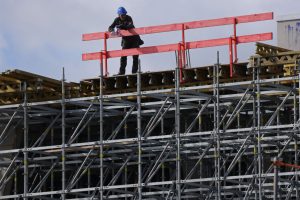






New apartment construction in Germany has fallen to its lowest level in over a decade, exacerbating the country’s chronic housing shortage amid high building costs, elevated interest rates and weak investor confidence.
According to data published on May 22, 2026 by the Federal Statistical Office (Destatis), the number of completed apartments dropped sharply in 2025, reaching approximately 206,600 units.
This was the lowest figure since 2012 and an 18 per cent decline compared with the previous year, marking the second consecutive annual fall after a 14.4 per cent drop in 2024.
Forecasts for 2026 point to a further deterioration, with the German Economic Institute (IW) expecting completions to fall to around 215,000 units, far short of the previous government’s target of 400,000 new homes annually.
Building permits, which signal future activity, rose by 10.6 per cent in 2025 to 238,100, though the backlog of approved but unfinished apartments stood at 760,700 at the end of 2025, virtually unchanged from a year earlier.
Around 35,700 building permits expired in 2025, the highest figure since 2002, according to Destatis.
Experts have warned that the pipeline of new housing will stay constrained for the next two to three years due to the time lag between approvals and completions, which now averages 26 months and can stretch to 34 months for multi-family dwellings.
Germany faces a significant structural housing deficit, estimated at between 550,000 and over 700,000 units, according to the “Social Housing” Alliance, particularly in affordable and social housing segments.
Major cities such as Berlin, Munich, Hamburg and Frankfurt continue to experience acute shortages, driving up rents and property prices in sought-after urban areas.
In Munich, only 6,500 new apartments were built in 2024, 30 per cent fewer than the previous year, while Hamburg recorded 1,927 completions, a 39.8 per cent decline.
The construction downturn has put additional pressure on the rental market, as demand from both domestic and migrant households outstrips supply.
Industry associations and economists have called for urgent policy measures, including faster permitting processes, cost reductions and targeted incentives for multi-family housing projects.
The new federal Government has pledged a Bau-Turbo (construction turbo) initiative, approved by the Bundestag on October 9, 2025, to accelerate approvals and simplify regulations, though analysts remain sceptical about a quick turnaround given the scale of the challenges.
Without a substantial increase in building activity, Germany’s housing shortage is expected to worsen in the coming years.
Germany’s ambitious climate policies, particularly the Buildings Energy Act (GEG) and associated regulations, have significantly increased costs across the construction and housing sector.
The GEG has imposed demanding energy performance standards, requiring thicker insulation, advanced ventilation systems with heat recovery, high-quality windows and other costly features tied to European Green Deal targets and the European Union’s “Fit for 55” climate package.
Developers and industry associations have argued that these rules have materially raised building costs, contributing directly to the sharp decline in new housing completions.
Permitting processes have become longer and more expensive due to the additional layers of environmental assessments, energy performance certificates, material certifications and compliance checks required under green legislation.
This bureaucratic overhead has increased planning and legal costs for architects, builders and property developers, further discouraging new projects.
The German Government has recognised these challenges and is revising the GEG, with a new Building Modernisation Act (GMG) expected to replace it by mid-2026.
The GMG aims to be more flexible and less prescriptive, potentially easing some of the financial and administrative burdens on the construction sector.