
The European Union’s foreign policy chief has insisted NATO’s deterrence in Europe is still “intact” despite US President Donald Trump’s decision to withdraw 5,000 American troops from Germany, while warning that the bloc must shoulder far more responsibility for its own defence.
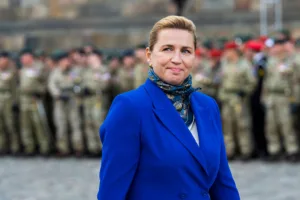
Speaking during a debate at the European Parliament in Strasbourg on May 19, EU High Representative Kaja Kallas told MEPs that the recent moves by the White House formed part of a broader trend that had long been anticipated in Brussels.
“These announcements form part of this broader trend, but NATO deterrence remains intact, and NATO will continue to maintain a robust presence on its eastern flank, because now is not the time to appear weak,” she said.
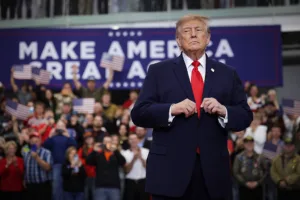
The Pentagon confirmed earlier this month that it would carry out a “gradual withdrawal over a period of between six and twelve months” of part of its forces in Germany, one of Washington’s largest European footholds. The decision came shortly after German Chancellor Friedrich Merz had accused Iran of having “humiliated” the United States, comments that drew Trump’s ire and a threat to pull troops out of German soil.
Kallas said it had long been clear that the US would shift its strategic focus towards the Indo-Pacific and the Western hemisphere. Though she argued that the American military presence in Europe was “also in the interest of the United States”, she said the EU “must take on greater responsibility for its own defence” to keep its member states secure.
That meant closing capability gaps and ramping up European defence production, the High Representative added.
“All of this comes at a cost, but deterring aggression is cheaper than waging a war,” she said.
European industry would also have to keep pace with that spending, Kallas warned, telling MEPs that “money alone does not create security if production cannot keep up”. If higher defence budgets translated only into longer waiting times and bigger backlogs, the approach would not work.
The EU foreign policy chief used her intervention to argue that Russia had reshaped itself into a war economy, devoting close to 8 per cent of its GDP to defence, with output concentrated almost exclusively on tanks, missiles and artillery.
Several national intelligence services across the bloc now assessed that Moscow could test the EU’s defensive readiness within three to five years, she said. Russia’s ultimate goal, Kallas argued, was “not only Ukraine, but a threat to the whole of Europe”.
She called for stepped-up economic, military and political support to Kyiv, describing Ukraine as Europe’s “first line of defence” and saying Ukrainians were “buying time” for the rest of the continent to rebuild its own military capabilities.
Kallas also pressed for deeper alliances with like-minded partners, naming the United Kingdom, Canada, Japan, Australia and South Korea, and for reform of EU decision-making. The requirement for unanimity, she said, “frequently prevents” the bloc from acting at the speed the current geopolitical climate demanded.