

The Spanish Government’s push to ease EU sanctions on Venezuela’s leadership has put it on a direct collision course with the European Parliament, where a large majority of MEPs has come out to defend the existing restrictive regime against acting Venezuelan President Delcy Rodríguez and her inner circle.
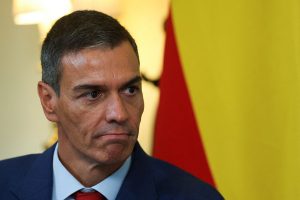
The standoff has crystallised in the run-up to the Ibero-American Summit scheduled for November 4-5 in Madrid, to which the executive of Spanish Prime Minister Pedro Sánchez has formally invited Rodríguez. Just two days after that invitation, MEPs in Strasbourg adopted a resolution urging EU governments not to lift any sanctions on those responsible for human rights violations in Venezuela until Caracas takes “significant measures” toward a peaceful democratic transition.
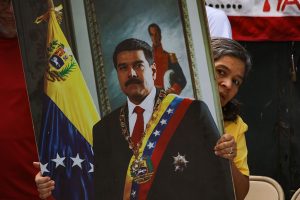
The text, although non-binding, has effectively isolated Madrid inside the bloc and turned the November summit into the focal point of a wider argument over how the EU should treat Caracas after the removal of Nicolás Maduro.
It is not the first time Sánchez’s executive has found itself at odds with the chamber on Venezuela. In September 2024, MEPs recognised opposition figure Edmundo González Urrutia as the country’s “legitimate and democratically elected president” after the disputed July elections that Maduro claimed to have won. Madrid declined to follow suit, despite having granted González political asylum, arguing that recognition had to come through a common EU position. The pattern is now repeating itself.
MADRID’S OPENING TO CARACAS
The Spanish position has been building for months. Spanish foreign minister José Manuel Albares first floated the idea of lifting EU sanctions on Rodríguez in February, arguing that diplomatic engagement could help unlock a transition in Venezuela. EU High Representative for Foreign Affairs and Security Policy Kaja Kallas has signalled her intention to draft a proposal along similar lines, though the Council of the European Union has yet to act.
Sánchez’s Government has framed the November summit as a chance to consolidate that engagement. Rodríguez became Washington’s principal interlocutor in Caracas after US forces captured Maduro in a January 3 military operation, and Madrid argues that ignoring her would amount to ignoring whoever now exercises power on the ground.
STRASBOURG’S COUNTER-MOVE
The European Parliament has taken almost the opposite view. Its resolution, promoted by the European People’s Party (EPP) and backed by the European Conservatives and Reformists (ECR) and Renew Europe groups, has secured 507 votes in favour, 31 against and 35 abstentions. Even the Socialists and Democrats group ultimately supported the final text, despite their internal disagreements over the strategy toward Rodríguez.
MEPs argue that the conditions for any easing of sanctions have not been met. The resolution points to at least 470 political prisoners still “unjustly detained under inhuman conditions” in Venezuela and rejects the Law of Amnesty for Democratic Coexistence as a credible step. Before any sanctions can be lifted, MEPs demand the unconditional release of all political prisoners, the withdrawal of politically motivated charges against opposition figures and a credible roadmap toward free and fair elections.
The Venezuelan National Assembly approved that amnesty law on February 19, and Madrid had cited it as evidence that the political climate in Caracas was changing. Rodríguez’s announcement on April 23 that she was terminating the law has effectively pulled the rug from under that argument.
A TECHNICAL EXEMPTION KEEPS MADRID’S PLAN ALIVE
Rodríguez has been on the EU sanctions list since 2018, when she was added for having “undermined democracy and the rule of law in Venezuela”, in particular through what Brussels described as the takeover of the powers of the elected National Assembly. The measures include an asset freeze and a ban on entering EU territory.
Even so, the November summit can go ahead. The 2017 framework that established the first sanctions on Venezuelan officials contains exemptions for meetings of intergovernmental bodies, gatherings convened by the EU, or events held in a member state holding the rotating presidency of the Organisation for Security and Co-operation in Europe (OSCE).
European Commission foreign affairs spokesperson Anitta Hipper has confirmed that those exemptions remain in place. The same mechanism allowed Rodríguez to attend the EU-CELAC summit in Brussels in July 2023 while still under restrictive measures, and a similar dispensation is expected in November.
A TRANSATLANTIC GAP AND DOMESTIC CRITICS
The standoff also exposes a widening transatlantic gap. The United States lifted economic sanctions on Rodríguez earlier this year as part of its repositioning in Caracas after Maduro’s removal, while EU governments have so far held the line set in 2018. Amendments tabled in Strasbourg by the Spanish Socialist Party (PSOE) seeking explicit condemnation of US military intervention and a gradual lifting of European sanctions failed to secure a majority.
Sánchez’s outreach has also drawn sharp domestic criticism. Spanish MEP Jorge Martín Frías, of the Patriots for Europe group, has called for “tougher sanctions” and a freeze on assets held by relatives of senior figures in Caracas, arguing that prisoner releases under the amnesty had been driven mainly by US pressure rather than any genuine democratic opening.
Venezuelan opposition leader María Corina Machado, who has been touring European capitals, has used recent meetings in Madrid and Paris to warn that the country’s political structure remains intact despite diplomatic gestures toward Rodríguez. For Strasbourg’s majority, that warning is reason enough to keep the sanctions regime untouched, regardless of what Madrid intends to do in November.