




On Friday; the World Health Organisation (WHO) has came out strong against pouches, accusing it of being a tool of the tobacco industry to lead young people to nicotine addiction.
As well as angering the industry, which frames the novel products as a tool for harm reduction, the WHO has also broken with the scientific consensus, which is much more nuanced.
In their press release on May 15, the WHO warned against “the rapid global expansion of nicotine pouch products, which are being aggressively marketed to adolescents and young people.”
The WHO issued the statement, based on an older report, in the lead-up to World No Tobacco Day on May 31. The report draws in part on data gathered for the WHO’s 2025 report on the global tobacco epidemic.
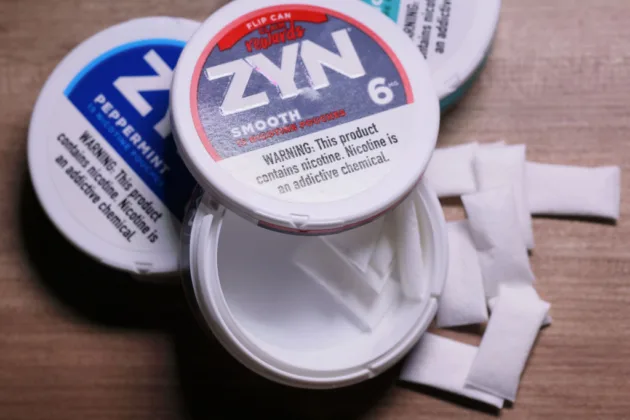
Nicotine pouches are small, white, smokeless and spitless sachets containing nicotine, flavourings and fillers that are placed between the upper lip and gum to deliver nicotine through the mouth’s mucous membranes.
They contain tobacco-derived or synthetic nicotine. Unlike snus, they do not include tobacco leaf, dust or stem.
Sales have grown sharply. Global retail sales topped 23 billion units in 2024, more than 50 per cent up on 2023, according to the WHO, a surge that has caused unrest at the organisation.
“The use of nicotine pouches is spreading rapidly, while regulation struggles to keep pace,” said Vinayak Prasad, head of the WHO’s Tobacco Free Initiative. “Governments must act now with strong, evidence-based safeguards.”
According to the WHO, this growing popularity of pouches is the result of marketing and a lack of regulations.
In its press release, the WHO said that “nicotine itself is highly addictive and harmful, particularly for children, adolescents and young adults whose brains are still developing.”
“Nicotine exposure during adolescence can affect brain development, including impacts on attention and learning. Early nicotine use can increase the likelihood of long-term dependence and future use of other nicotine and tobacco products. Nicotine use also increases cardiovascular risk.”
It identified large regulatory gaps — the WHO says around 160 countries have no specific rules for the products — leaving youth exposed.
“These products are engineered for addiction and there is a strong need to protect our youth from industry manipulation”, Etienne Krug, director of the WHO’s department of health determinants, promotion and prevention, said.
To curb the popularity of pouches, the WHO calls for bans or strong restrictions on flavours and advertising, age-verification and retail controls, health warnings, extra taxation and surveillance of use patterns and industry tactics.
However, independent experts of the Science Media Centre pushed back on the WHO.
Jamie Hartmann-Boyce, assistant professor of health policy and management at the University of Massachusetts Amherst, in the United States, said, “There is a large, robust body of evidence showing that giving people who smoke nicotine in another form can help them quit smoking, for example through nicotine replacement products like patches, gums and lozenges, and through nicotine containing e-cigarettes.”
“This is important, because nicotine is not the ingredient in cigarettes that causes cancer, so moving people off of cigarettes onto another form of nicotine can reduce health risks. We don’t yet have enough evidence on whether oral nicotine pouches can help people quit smoking, but large, independently funded studies are currently underway, meaning we should get more answers soon.”
The European Economic and Social Committee has cautioned that abrupt or excessive increases in excise duties on tobacco and nicotine products could drive consumers towards illicit markets, erode fiscal revenues, and weaken the EU’s public health objectives.…
— Brussels Signal (@brusselssignal) February 24, 2026
One such study was recently published by Konstantinos Farsalinos, one of Europe’s most prominent researchers on tobacco harm reduction.
Farsalinos told Brussels Signal in a reaction “The single greatest crisis in global public health today is the 8 million lives lost every year due to smoking-related diseases. Tobacco harm reduction offers an additional option for smokers unable or unwilling to quit by themselves or with currently approved methods.”
He said the science is increasingly clear. “As I highlighted in a published literature review, nicotine pouches sit at the lowest end of the toxicant risk continuum. Because they eliminate both combustion and the tobacco leaf itself, they offer a risk profile likely adjacent to pharmaceutical nicotine replacement therapies (NRTs). Therefore, switching from smoking to a pouch isn’t just a different way to use nicotine—it is a transition away from the thousands of toxins found in cigarette smoke.
“While the WHO report focuses extensively on marketing tactics, it fundamentally ignores the smoking epidemic. By framing nicotine pouches solely as a threat, the WHO is overlooking a significant opportunity for harm reduction that could save millions of lives.
“Its passive stance toward general sales bans is particularly concerning. History shows that prohibition rarely achieves its intended goals; instead, it denies current smokers access to life-saving alternatives and risks driving youth toward unregulated, dangerous illicit markets.
“Regulation is a necessity. Protecting youth through strict sales age limits, carefully-designed marketing rules and evidence-based standards is non-negotiable. However, applying the same restrictive frameworks to pouches as we do to combustible cigarettes is not supported by the evidence. To truly protect public health, regulatory policy must be balanced and proportionate to the risk of the product.”
He called for the WHO to “embrace evidence-based tools that help smokers migrate away from the most lethal form of nicotine delivery” and said that failing to acknowledge the harm-reduction potential of pouches was “a disservice to smokers and society”.
Harry Tattan-Birch, senior research fellow in the department of behavioural science and health at University College London, noted that governments need to regulate these products with relative harms in mind.
“Nicotine pouches do not produce smoke or require inhalation into the lungs, meaning they are likely to be substantially less harmful to health than cigarettes. The WHO report states that 16 countries have banned the sale of nicotine pouches. But an outright ban on nicotine pouches, while cigarettes remain widely available, could be counterproductive for public health.”
A spokesman for British American Tobacco told Brussels Signal that “Our nicotine products are for adults only and should never be used by anyone underaged. Preventing underage access is fundamental to our approach.”
“We also support clear, enforceable regulation that protects the underaged, ensures product quality standards, and addresses irresponsible marketing practices wherever they may occur.
“Oral nicotine pouches deliver nicotine without combustion – eliminating the primary source of smoking-related harm – and can contain up to 99 per cent fewer toxicants than cigarette smoke.
“Smoking prevalence in Sweden has fallen from 15 per cent in 2008 to 5.3 per cent today – the lowest in the EU. Smart, targeted regulation of oral smokeless products paired with targeted rules on cigarettes have enabled Sweden to reach the EU target of a 5 per cent smoking prevalence by 2040 well in advance of the rest of Europe.”
This was juxtaposed with the wider EU, where smoking prevalence remains at 24 per cent and where rates are lowering at a snail’s pace, way off target.
Philip Morris International (PMI) told Brussels Signal it was reviewing the report, but stressed that “nicotine pouches are a far better alternative to cigarettes and can play a meaningful role in improving public health”, likewise pointing to the situation in Sweden and noting that the US Food and Drug Administration (FDA) recognised potential public health benefits of pouches and alternative products.
“Instead of attacking companies and confusing the public, the WHO should focus on the real challenge: helping adults who smoke switch to better alternatives, while limiting access from minors through clear regulation and strong enforcement.”
Considerate Pouchers, an activist group representing pouchers, said it supported the principle that minors should never access their products, saying it supported strict age verification and zero tolerance for underage sales, but added that the WHO’s proposals “would strip away the tools helping millions of adults leave cigarettes behind”.
Brussels has circulated a revised, less combative, compromise proposal for a unified EU position on the World Health Organisation’s Framework Convention on Tobacco Control. https://t.co/nhGINJ5iSz
— Brussels Signal (@brusselssignal) October 30, 2025
Cyril Lalo, Head of EU Engagement at Imperial Brands said in a reaction to Brussels Signal that “Tens of millions of former adult smokers across the world have already switched to next generation products (NGP), including oral nicotine pouches. Millions more could also do so, but only if regulators and public health bodies closely follow the scientific and real-world data.”
They also pointed to Sweden as a successful counter model.
“Imperial Brands believes that responsible category growth – driven by manufacturers like us who ensure our products are developed, manufactured, and marketed to appeal to adult smokers and adult nicotine users only – is an essential part of this process.
“Far from driving falls in smoking rates, prohibition-style approaches like flavour bans often result in unintended consequences, including growing illicit trade.”