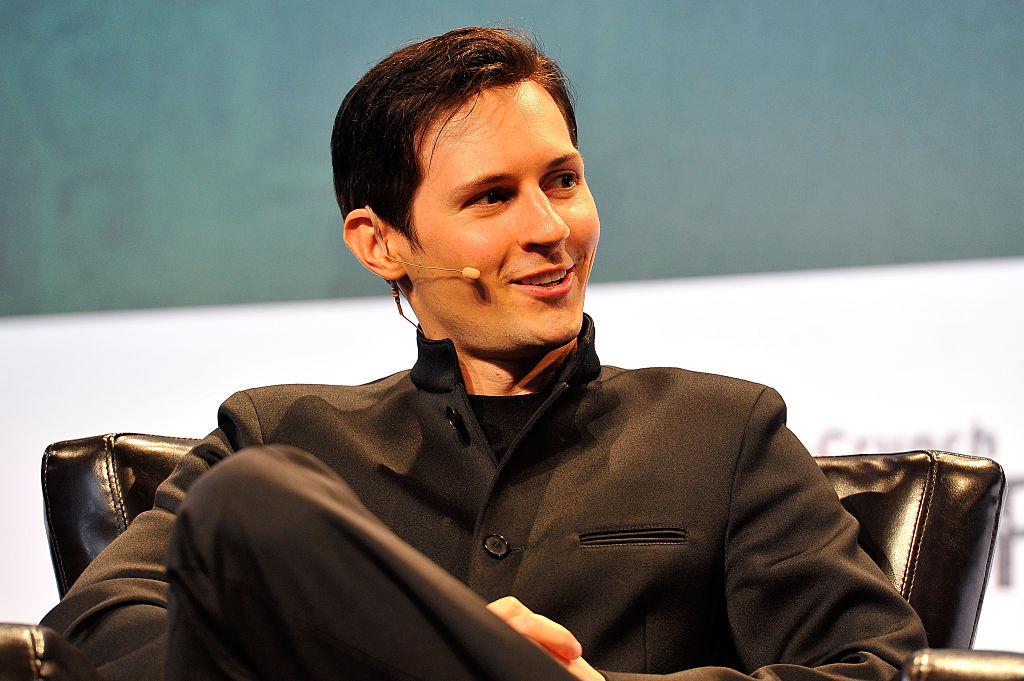
Telegram CEO Pavel Durov has issued a direct warning to millions of users in Spain, describing its government’s latest social-media proposals as “dangerous new regulations that threaten your internet freedoms”.
Dubai-based Russian-born billionaire Durov warned the plans could turn the country into a surveillance state “under the guise of protection”.
In a message sent to Spanish Telegram accounts yesterday, he wrote: “These aren’t safeguards; they’re steps toward total control. We’ve seen this playbook before – governments weaponising ‘safety’ to censor critics.”

He accused the measures of forcing platforms into mass data collection and over-censorship to avoid prosecution.
Durov warned that Spanish policies on mandatory age verification wold lead to strict ID checks for all, could set a precedent for tracking every user and open the door to mass data collection.
He said they would further lead to over-censorship and push platforms to delete anything remotely controversial to avoid risks, silencing political dissent, journalism and everyday opinions.
The liberal use of “harmful content” would cause governments to become the arbiters of what can be said, the muzzling of opposition and the creation of state-controlled “echo chambers”.
“Free exploration of ideas? Gone — replaced by curated propaganda,” Dutov said.
The tech entrepreneur also warned that vague definitions of “hate” could see criticism of the government labelled as divisive, leading to shutdowns or fines. “This can be a tool for suppressing opposition,” Durov. said.
The alert came hours after Spanish Prime Minister Pedro Sánchez used a keynote address at the World Governments Summit in Dubai to unveil what officials describe as the most ambitious national assault on digital platforms yet seen in Europe.
On February 3, Sánchez told delegates that social media had become “a failed state … where laws are ignored, crimes are tolerated and disinformation is worth more than truth”.
Social media has become a failed state.
If we want to protect our children there is only one thing we can do: take back control.
Las redes sociales se han convertido en un Estado fallido.
Si queremos proteger a nuestros hijos, solo tenemos una opción: recuperar el control. pic.twitter.com/1MvCNxiLys
— Pedro Sánchez (@sanchezcastejon) February 3, 2026
He announced five measures to be tabled in parliament next week.
An outright ban on social-media access for anyone under 16, enforced by “effective age-verification systems – not mere check-boxes but real barriers that work”.
Personal criminal liability for platform executives (CEOs included) if illegal or hateful content is not swiftly removed.
A new criminal offence of algorithmic manipulation and amplification of illegal material – “no more hiding behind the code”, according to Sánchez.
A national “hate and polarisation footprint” system to track, quantify and publicly expose how platforms fuel division and amplify harmful content.
Finally, Sánchez said he wanted the public prosecutor to investigate alleged infringements by Grok, TikTok and Instagram.
Grok owner Elon Musk responded in characteristic style. Reposting a clip of Sánchez’s speech, he called the Prime Minister “Dirty Sánchez – a tyrant and traitor to the people of Spain”, later adding that the PM was “the true fascist totalitarian”.
Spanish ministers and socialist-aligned public figures insist the reforms are about protecting children from addiction, abuse, pornography and manipulation.
The French diplomatic services also joined the fray with a show of solidarity with Spain’s regulatory stance drawing parallels to France’s own experience with Durov and Telegram.
Hola Spain, we’ve been there🤝
– Platform owner weaponises it to blast every user against national law
– Attacks gov
– Gets backed by Russian &tech bros
– Harbors drug retail channels
– Plays victim of “oppression”
– Starts all over again
Hold the line,🇪🇸
It’s platform regulation https://t.co/4cjN8QiLCh— French Response (@FrenchResponse) February 5, 2026
The official account of the French Ministry for Europe and Foreign Affairs also posted, blaming algorithms for spreading fake news.
“Fake news receives 70 per cent more retweets than the facts,” it wrote.
“When algorithms prioritise user engagement over reliability, disinformation becomes systemic. Regulating platforms means protecting information.”
The data cited is from a study by MIT Media Lab, the research laboratory within the School of Architecture and Planning at the Massachusetts Institute of Technology (MIT).
Mike Benz, former US State Department official with responsibilities in formulating and negotiating US foreign policy on international communications and information technology matters and founder of the Foundation for Freedom Online, was quick to point out that the MIT Media Lab received larger amounts of money from Jeffrey Epstein but that it did not disclose this funding.
Although MIT policy barred accepting donations from the late sex offender Epstein, Media Lab director Joi Ito continued soliciting funds from him and even consulted him on their use.
France cites an American censorship lab secretly funded by Jeffrey Epstein to justify the French government's censorship assault. https://t.co/0LlMQ4TRdI pic.twitter.com/K42aPLStxm
— Mike Benz (@MikeBenzCyber) February 4, 2026
Spain’s and France’s moves on social media coincide with the release of the Republican-led US House Judiciary Committee’s 160-page interim report The Foreign Censorship Threat, Part II. That accuses the European Commission of a decade-long campaign to censor the global internet – including US speech on US soil.
The document cites subpoenaed internal communications showing Brussels officials pressing platforms to adopt stricter global moderation rules that many say disproportionately affect conservative and election-related content in the US.
Yesterday, the the Republican-led US House Judiciary Committee held a hearing on the matter, inviting several people who had egregious experiences in Europe. They testified about personal prosecutions or arrests tied to online expression on issues such as gender ideology, religious speech and broader “hate speech” laws.
Key witnesses included Graham Linehan, the Irish comedy writer and co-creator of Father Ted, who was arrested at Heathrow Airport in September 2025 under UK hate-speech laws for tweets criticising gender ideology.
Also testifying was Lorcán Price, a barrister and legal counsel for the NGO Alliance Defending Freedom International, who warned that the European Union’s Digital Services Act (DSA) represents “the tip of a massive censorship industrial complex”.
Another prominent witness was Dr Päivi Räsänen, a Finnish MP prosecuted for sharing Bible verses deemed offensive to homosexuals.
Republican members, including committee chairman Jim Jordan, framed the testimonies as proof that European laws – including the DSA, the UK’s Online Safety Act and national hate-speech provisions – not only threaten innovation by targeting US firms but also export censorship norms that limit free speech as is protected under the First Amendment.
In February last year, US Vice President JD Vance criticised the EU at the Munich Security Conference, accusing European nations of anti-democratic behaviour.
He challenged European leaders on free speech, election integrity and mass migration, urging them to “correct course”, much to the dismay of European elites.