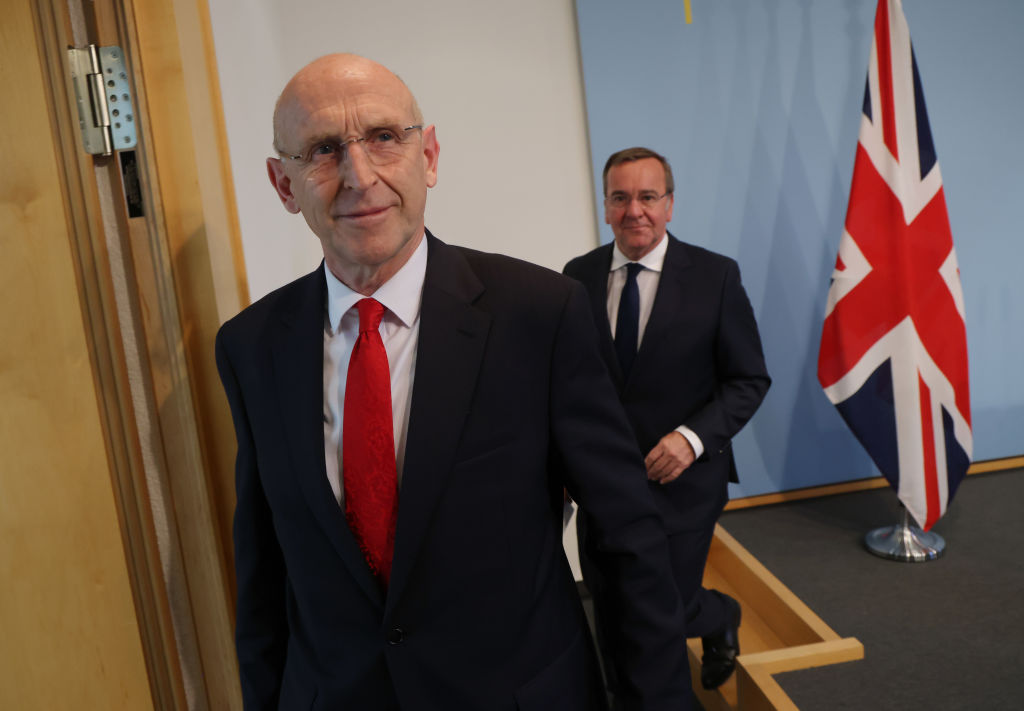
“There is nothing left in the stockpiles that can be provided to Ukraine,” says German Defence Minister Boris Pistorius.
It appears Europe will not be able to compensate for the loss of US weaponry after the decision by Washington to largely reduce its war fighting material help for Ukraine at the battlefront.
Speaking to journalists today, Pistorius admitted that the stockpiles were empty and that nothing more can be sent to Ukraine.

The statement, made in the context of a fresh appeal by Ukraine to NATO allies, has underscored the gap between European and Berlin’s ambitious post-invasion rearmament promises and the reality of depleted reserves after nearly four years of sustained support for Kyiv.
Germany’s Defence Minister Boris Pistorius:
There is nothing left in the stockpiles that can be provided to Ukraine. pic.twitter.com/oVX2Jy5Ry8
— Clash Report (@clashreport) February 12, 2026
Pistorius urged other nations to “review the old stocks to find out what we can do, and if there is nothing left in the stocks that can be provided to Ukraine, then provide money”.
The remarks build on comments Pistorius made in late January when he ruled out sending additional Patriot air-defence systems from German stocks.
Germany has already transferred more than one-third of its own Patriot armaments to Ukraine, a contribution he described as “disproportionately large” compared with other allies.
Further deliveries are currently impossible, Pistorius explained, because the armed forces, or Bundeswehr, are still awaiting replacement systems from production lines and must preserve enough equipment for training, maintenance and NATO obligations.
Germany remains one of Ukraine’s largest backers. Since Russia’s full-scale invasion in 2022, Berlin has committed more than €28 billion in total assistance, including more than €17 billion in military aid.
Deliveries have included multiple Patriot systems, IRIS-T air-defence batteries, Leopard tanks, Marder infantry fighting vehicles, artillery, ammunition and, most recently, plans for a large batch of Sidewinder air-to-air missiles from existing stocks.
Yet the defence minister’s latest intervention highlights the limits of drawing down existing inventories.
The use of the collective “we” underscores Pistorius’s point that the exhaustion of readily available inventories is a shared predicament across much of Europe after years of drawing down post-Cold War surpluses to support Ukraine, particularly in high-demand areas such as air defence systems.
He also called for those without stockpiles to give more money so Ukraine can buy on the international market to replenish its supplies.
Production of replacement munitions and systems has proved slower and more expensive than anticipated, a problem shared across much of Europe after decades of underinvestment and post-Cold War disarmament.
Pistorius has repeatedly noted that Germany is the only country supplying IRIS-T systems to Ukraine but those are now in short supply.
Germany’s depleted situation stands in sharp contrast to the high hopes raised by former chancellor Olaf Scholz’s Zeitenwende speech in February 2022.
In that address, delivered days after the Russian invasion of Ukraine began, Scholz announced a €100 billion special fund to modernise the chronically under-equipped Bundeswehr. He pledged to meet the NATO 2 per cent of GDP defence spending target “year after year” and declared that Germany would become the largest conventional army in Europe within the alliance.
Four years on, the special fund has enabled significant orders but critics and some inside the government say the results on the ground remain disappointing.
The Parliamentary Commissioner for the Armed Forces, now Henning Otte, has repeatedly reported persistent shortages of spare parts, outdated equipment and ammunition stocks that would last only days in a high-intensity conflict.
The €100 billion fund is due to be exhausted by 2027, after which the regular defence budget will need to rise sharply to sustain higher spending levels.
With Russian aerial attacks on Ukrainian energy infrastructure and cities at their most intense since the early months of the war, Kyiv has been pleading for more interceptors and ammunition.