



The European Parliament has backed a call to increase the next long-term EU budget by around 10 per cent above the European Commission’s own proposal and to introduce new levies worth some €60 billion a year — moves that critics say would place a heavier burden on member states and their taxpayers.
The position, adopted on April 28 in Strasbourg with 370 votes in favour, 201 against and 84 abstentions, sets the Parliament’s negotiating mandate for talks over the 2028-2034 Multiannual Financial Framework (MFF). A significant minority of MEPs — nearly a third of those who voted — opposed it.
MEPs have backed raising the expenditure ceiling to 1.27 per cent of Gross National Income (GNI), up from the figure put forward by the Commission in its near-€2 trillion proposal submitted last summer. On top of that, MEPs want debt repayments linked to the Next Generation EU recovery fund to sit outside the budget ceiling entirely — a move that would allow spending to grow further without triggering the formal cap.
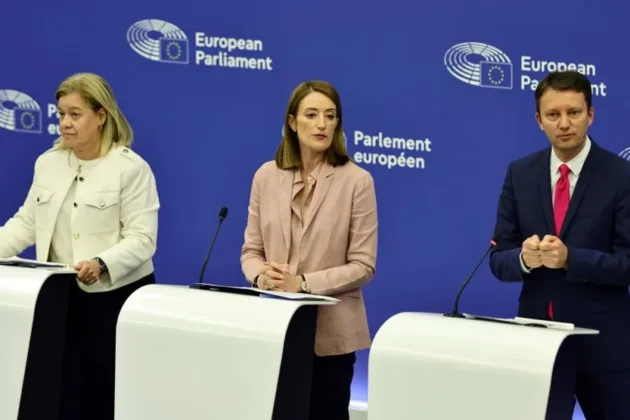
Parliament President Roberta Metsola framed the push as a matter of generational responsibility, arguing that future generations should not pay for past commitments. She called for “real progress” on new own resources — in effect, new EU-level taxes or levies — to cover the cost of repaying the Next Generation EU debt.
NEW TAXES ON THE TABLE
The text calls for new own resources generating around €60 billion a year. No specific sources have been agreed, though past proposals have included levies on carbon emissions, digital services and financial transactions — all of which would ultimately feed through to businesses and consumers across the EU.
Carla Tavares, the Portuguese Socialist MEP who drafted the report, said ambition without resources was hollow. She called on the Council of the European Union to match the Parliament’s position and deliver a budget that works for “regions, beneficiaries and citizens”.
Siegfried Mureșan, Romanian MEP and co-rapporteur, said the vote set both the level of ambition and the pace.
SPENDING ACROSS THE BOARD
The Parliament wants more money for defence, competitiveness, innovation, the green transition and digitalisation. It also wants to protect existing spending on the Common Agricultural Policy, cohesion funds, fisheries and the European Social Fund, and to increase funding for Horizon Europe, Erasmus+, the Connecting Europe Facility and climate action programmes.
On external affairs, MEPs say the Commission’s proposed allocations for enlargement, Ukraine support and humanitarian aid are not enough either.
In short, MEPs have found no area of EU spending they wish to reduce.
FRUGAL STATES PUSH BACK
Not everyone in the EU shares the Parliament’s appetite for a larger budget. Germany and the Netherlands have made clear they do not want to go beyond the Commission’s already substantial proposal. Several other net contributor countries are equally reluctant to sign off on higher transfers to Brussels.
The divisions were on open display at an informal European Council summit in Nicosia, Cyprus, last week, where leaders failed to agree a common approach. The gap between those pressing for more spending — including Spain — and those resisting it remains wide.
The Parliament’s position can only become the basis for formal negotiations once member states reach their own common stance in the Council of the European Union — a process that has so far produced no consensus.
RULE OF LAW AND GOVERNANCE
MEPs have also restated their position that rule of law compliance should remain a condition for accessing EU funds, though they have added that final beneficiaries — local authorities, farmers, research institutions — should not be penalised for the failings of their national governments.
The Parliament has warned against what it calls the “renationalisation” of EU policies and has objected to the Commission’s proposed “one plan per member state” model, arguing it could reduce transparency and oversight. MEPs want regional and local bodies to have a direct role in planning and managing funds.
WHAT HAPPENS NEXT
EU leaders are expected to return to the budget debate at the European Council summit in June, with the aim of narrowing differences sufficiently to begin formal negotiations. The goal is to reach a deal before the end of the year and have the new framework in place by 2028.
That timetable is ambitious. With net contributors resisting higher contributions, the Commission’s original proposal already stretching national budgets, and the Parliament now pushing for still more, the gap between what Brussels wants and what member states are prepared to pay remains the central unresolved question in EU politics.