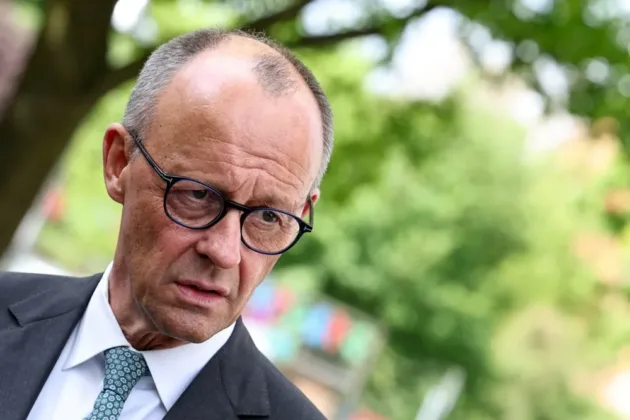



German Chancellor Friedrich Merz is a man who knows what to say to grab headlines. In the past months, he declared that hundreds of thousands of Syrian refugees “should” leave Germany in the next few years, a statement that ripped through English-language newspapers. His government followed that up with a stated plan to be the most powerful army in Europe by 2039. Coming on the heels of his finance minister’s commentary last year, pledging that Germany would spend 3.5 per cent of GDP on defence by 2029, Merz has effectively been portrayed as a centre-right leader but one who understands the issues turning voters toward more nationalistic ideas and is seeking to meet them halfway.
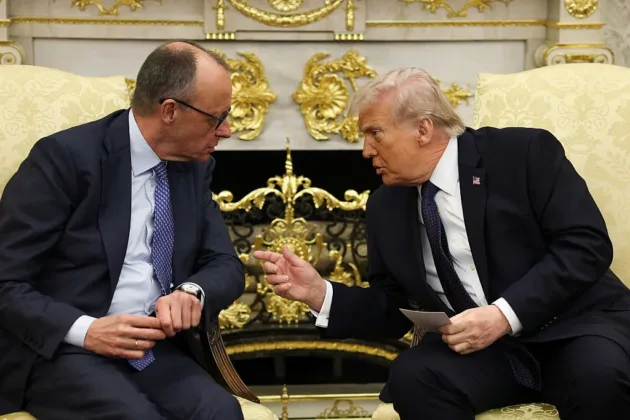
This has been bolstered by his positive reception of the NATO 3.0 concept being pushed by the Trump administration and his friendly meeting with President Donald Trump in the White House, when he spoke positively about the Iran War.
It is a pleasant portrayal which he has managed to garner for himself. It is also, fundamentally, a false one, based on nothing but words. And it is wearing thin.
Merz, loyal to the establishment which brought him to power, is fundamentally opposed to the nationalistic ideas of reimigration and the AfD; he likewise has no interest in seeing the Americans leave Europe or for Germany to have to do more to secure it. He is not as blind to geopolitical reality as his predecessor, Angela Merkel was – but he is not much better on policy than her either.
The conventional wisdom is that Europe is rearming. Much of this talk came after European Commission President Ursula von der Leyen announced an €800 billion package. As I discussed in previous columns, this number was almost entirely fake; €650 billion came from every European Union member state hypothetically raising defence spending by 1.5 percent, and the other €150 billion was mostly unspent COVID funds.
But those details were left out of most headlines, and the idea that Europe was going to rearm became taken as fact. Merz’s series of strong statements have pushed that much further.
These, however, have been backed up with no real action. Already, his government has walked back their claims of reaching 3.5 per cent by 2029, instead quietly announcing late last year that it would be only 3.05 per cent (and there are no guarantees of that either).
His government’s promise of having the most powerful army in 2039 is likewise on rocky ground. For starters, none of the European Union’s armies, outside of perhaps Poland’s, are particularly powerful. How does one measure “most powerful”? Is it through number of munitions? Number of soldiers? It’s unclear.
They seem to believe that it is in part due to number of soldiers; their report, as reported by Defense News, “foresees expanding from 185,420 active-duty soldiers today to 260,000 by the mid-2030s.” How they are going to expand is a question; but the past two years have seen their army train migrants, and the government has considered allowing foreigners into the army while centring some advertisements around decidedly non-traditionally German soldiers.
Then there is also the fact that there is no need to wait until 2039 to rearm. The United States bolstered its armed forces at a rapid pace shortly before entering World War II; while there is – hopefully – no such war around the corner, Germany does not need to wait 13 years to have the strongest army in Europe. There is only one reason to wait that long: Because they are not waiting at all. They want the headlines claiming that they will have the strongest army; even picking 2039 – 100 years after World War II began – is likely not accidental. No one in Berlin is unaware of the importance of that year, and it may well have been chosen because they knew it would drive headlines even further.
But one does not need to travel too far into speculation to understand how farcical the notion of German supremacy returning by 2039 is. Traditionally, sceptics of European rearmament – this author included – have claimed that there is no way to rearm without cutting healthcare or Germany’s other exorbitant welfare costs (this is not to mention costs of paying for refugees, nearly €30 billion per year).
That analysis missed something, however: Germany already does not have enough to spend on their healthcare system. This month Merz’s government announced billions in cuts they will be making, along with higher fees. They are seeking to find other creative ways to raise funds, such as a significant tobacco tax increase. A sugar tax and alcohol tax is also being considered.
Again, this is all simply to plug a hole, and there is no indication that it will work long-term. Merz’s coalition – an unhappy wedding of the centre-right and the centre-left – would not win a majority if an election were held today, with one of the most recent polling out of Germany showing the nationalist AfD with a healthy lead. At best, they might be able to cobble together a coalition by expanding to the Greens, but even that would just clinch 50 per cent.
This is Merz’s real puzzle: The nationalists, who in any other country would be militaristic and support an army, are his opposition and likely will oppose healthcare cuts. He cannot motivate Germans to be patriotic and fly the flag, but needs Germans to join the military and accept cuts to services.
It’s a nearly impossible task, one almost as difficult as the migrant problem Germany has hoisted upon itself. There, Merz has decided simply to wait. So instead of completing the puzzle, he simply allows people to think he said migrants must go when he only was repeating the words of Syria’s new president, who suggested Syrians should return home. He did the same thing with President Trump, supporting his efforts in Iran face-to-face but, a month later, reversed course, thus only avoiding an unhappy situation in the Oval Office.
But all he did was put off his reckoning, with President Trump now reviewing “the possible reduction of troops in Germany,” having become fed up with Merz’s endless verbiage.
President Trump, and everyone else – including the German people, who loathe him so much that he has become the least popular democratic leader in the world – are tired of Merz’s games. He has no real intention of following through with any of his promises – which are, at the end of the day, merely headlines, which aren’t worth the paper they are printed on.