




The European Union has formally adopted sanctions targeting Iranian officials and entities responsible for disrupting shipping through the Strait of Hormuz, the Council of the European Union confirmed on May 22.
The decision, taken by the bloc’s member states, allows the EU to impose travel bans and asset freezes on individuals and bodies behind actions against vessels transiting the waterway. EU citizens and companies are also forbidden from making funds, financial assets or economic resources available to those listed.
The move delivers on the political agreement reached by EU foreign ministers at the Foreign Affairs Council on April 21, 2026. In a statement, the Council said: “Iran’s actions against vessels transiting through the Strait of Hormuz are contrary to international law.”
The text added that such actions “infringe upon established rights of both transit and innocent passage through international straits”.
Rather than create a separate regime, the bloc has opted to broaden the existing EU sanctions framework against Iran. That framework was originally established in 2023 in response to Tehran’s military support for Russia’s war of aggression against Ukraine.
It was subsequently extended in 2024 to cover Iranian backing for armed groups in the Middle East and the Red Sea region, as well as Tehran’s drone and missile strikes against Israel.
EU High Representative for Foreign Affairs Kaja Kallas had signalled the move earlier in the week. “Tehran’s hardliner grip on the world’s most important energy shipping lane is untenable,” she said.
Kallas added that the bloc was looking to strengthen Operation ASPIDES, the EU naval mission contributing to freedom of navigation in the region, as a possible contribution to the “Coalition of the Willing” backed by France and the UK.
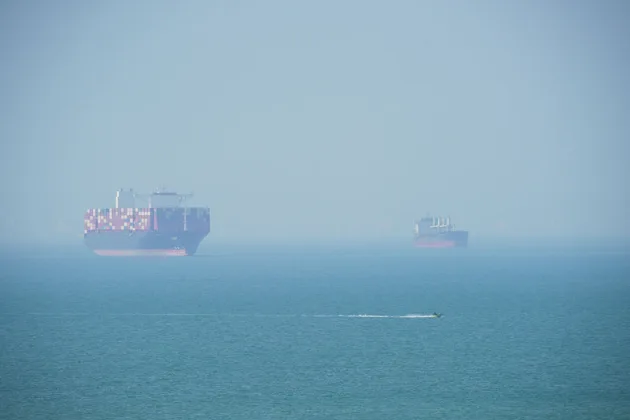
The Strait of Hormuz has been largely closed since February 28, 2026, when Iran moved against shipping in response to US and Israeli air strikes on Iranian targets. The waterway carries roughly a fifth of global oil and liquefied natural gas supplies, and its disruption has rattled energy and commodity markets.
Iran’s Islamic Revolutionary Guard Corps (IRGC) has issued warnings forbidding passage, boarded merchant ships and laid sea mines in the strait. At least 17 merchant vessels have been damaged in the crisis, of which seven were abandoned, while two more were seized by Iranian forces.
The IRGC was itself designated a terrorist organisation by the EU on February 19, 2026, bringing it under the bloc’s counterterrorism sanctions regime.
No specific names have yet been added to the list under the new criteria. The Council said designations would follow at a later stage.
The broader EU sanctions package against Iran, covering Tehran’s support for Russia and for armed groups in the Middle East and Red Sea, was extended in March until July 27, 2026.