







Sweden’s Government has formally abandoned the term “Islamophobia” in its official communications and policy documents, describing the concept as problematic and potentially harmful to free speech.
Foreign minister Maria Malmer Stenergard announced the decision during a parliamentary debate in late April, marking a clear shift in how the country addresses criticism of Islam and related ideologies.
The Moderate Party minister told parliamentarians that the term risks equating legitimate criticism of religious doctrine or Islamist political movements with irrational hatred or “anti-Muslim racism”.
Instead, Swedish authorities will now refer to “anti-Muslim racism” or “anti-Muslim hatred” when describing genuine prejudice or violence directed at individuals on the basis of their perceived faith.
Stenergard also confirmed that Sweden will press the European Union and the United Nations to follow suit. EU officials are expected to discuss the revised terminology during meetings in Brussels in the third week of May.
Both the EU and the UN have fully embraced the term in recent years.
The United Nations established an International Day to Combat Islamophobia in 2022 and has appointed a Special Envoy on the issue, while the EU has funded projects, appointed co-ordinators and produced reports addressing “Islamophobia” as a distinct phenomenon.
Swedish officials insist the change does not diminish efforts to combat hate crimes against Muslims but rather seeks clearer language that protects open debate on religion and integration.
The move follows sustained criticism from the Sweden Democrats, whose MP Richard Jomshof had questioned the government on the issue.
It has been welcomed by figures such as Sweden Democrat MEP Charlie Weimers, who described “Islamophobia” as a “made-up concept” long exploited to shield Islamist ideology from scrutiny.
The decision aligns with Sweden’s broader policy shift under its current right-leaning coalition, which has taken a firmer line on immigration, integration and the influence of political Islam.
Critics of the former terminology have long argued that the word “Islamophobia” was strategically promoted by Islamist networks to conflate criticism of Islamic doctrine, Sharia practices or Islamist political ambitions with racism.
In particular, the term has been linked to the ideological playbook of the Muslim Brotherhood, the transnational Sunni Islamist organisation founded in Egypt in 1928.
The Muslim Brotherhood is banned or officially designated a terrorist organisation in several Muslim-majority countries.
Egypt, its country of origin, outlawed the group and declared it a terrorist entity in 2013. Saudi Arabia and the United Arab Emirates followed suit in 2014, with Bahrain also endorsing the terrorist designation.
These governments view the Brotherhood as a direct threat to regime stability, moderate Islamic practice and national security.
The announcement has drawn praise from free-speech advocates but criticism from some Muslim advocacy groups and left-leaning voices, who argue it downplays real prejudice.
Faw Azzat, ambassador for GAPF (Sweden’s organisation against honour-related violence and oppression), described Islamophobia as “a word that Islamists themselves created to equate criticism of a religion with racism against people. A semantic trick disguised as ‘antiracism’”.
Martin Aagård, columnist for the left-wing newspaper Dagens ETC, strongly criticised the government’s move.
He described the parliamentary debate and decision as “an undisguised attempt to censor the Swedish language” and an effort to limit freedom of expression. He said it effectively shields anti-Muslim rhetoric.
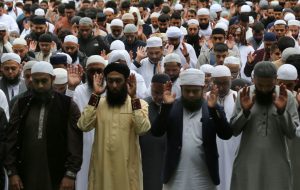
Participants in an anti-Islamophobia event at the European Parliament have slammed France over its recent ban on Islamic dress in schools. https://t.co/BVcG5w2mgx
— Brussels Signal (@brusselssignal) September 25, 2023