



We live in a world of daily miracles: Walk up to an automated teller machine almost anywhere in the world, insert a card, type four digits, and a small mechanism dispenses cash that you are entitled to draw against an account managed by a bank you have never visited, operating under a legal framework you have never read, denominated in a currency issued by a central authority you have never met. We are so used to such comforts that we simply regard them as background infrastructure that exists without ever really thinking about it. Personally, I consider every trip to the supermarket as a veritable miracle. No matter the time or season, I get fresh fruit and vegetables, and all of it for a comparably small fraction of my salary. Despite the justified worries regarding inflation, in most developed countries we have overcome the condition where 50 to 80 per cent of our income had to be spent on one or two basic foodstuffs, like bread, a condition that was, for example, the norm for the average French person in the 18th century.
But it is not just food: The same is true of the salary that arrives in the same account every month, the train ticket that an inspector validates against an electronic record, the hospital that admits a stranger on the strength of an insurance card. None of these arrangements is natural or automatic, but the consequence of a long and often tedious process of developing civilisation, and it took us long enough.
Homo sapiens has been here, in roughly modern anatomical form, for about 300,000 years. For roughly 290,000 of those, almost nothing happened. Cities, writing, organised states — what we mean when we say “civilisation” — are only about 5,500 years old, dating to Sumer in the fourth millennium BC. The ratio is the argument. If an alien had visited Earth every thousand years from the appearance of our species onward, the report would have been the same for 290 successive visits: Small tribal groups, fairly violent, walking around a lot. And then, in a geological blink, agriculture, then writing, then law, then medicine, then the cumulative achievement of which the cash machine is one small late artefact. Each of these achievements required and still requires layer upon layer of mutual trust between people who will never meet, and the cultivated assumption that they will all play by the rules whether or not anyone is watching.
This is what civilisation actually consists of, not the cathedrals and the symphonies, which are visible, but the order beneath them, which is not: Order is, in fact, not only the key to civilization but also one of the rarest things in human history.
The world before that achievement was not a peaceful one. Skeletal and ethnographic evidence consistently suggests that pre-state societies experienced violent death rates of 10 to 20 per cent of adult males, not to speak of rape as a permanent feature of “social” life. These figures would shock any modern European out of his complacency about what civilisation has spared him. The Greeks and Romans, whatever else they bequeathed us, never seriously doubted that the strong were made to rule and the weak made to serve. The historian Tom Holland has consistently and convincingly made the argument that we would not recognise the morality of the Greeks or Romans if they had a time machine that would allow us to visit them. The inversion of that assumption — the moral claim that the powerful have an obligation to the weak rather than a right against them — is one of the great unprecedented turns in human history, and it came mostly from Christianity, not from philosophy.
Yet even the Christian belief system relied not just on its morals, but an order that made it possible to implement it. One wonders if without the existing infrastructure provided by the Roman Empire Christianity would have been as successful as it ultimately turned out to be. That order is not a luxury but the precondition for civilisation was not lost on the ancient Persians either: The Avestan word for truth, asha or arta, meant both righteousness and cosmic order. Its opposite, druj or drauga, meant deceit and chaos at once. For the ancients, truth and order were the same concept, because they understood what we have forgotten: That the order around them was a thing that could be lost.
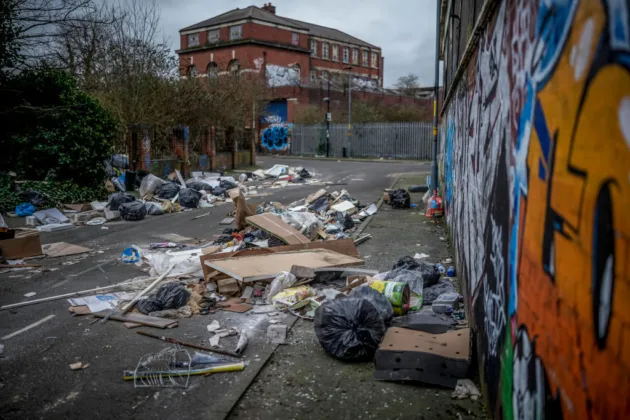
The successors of the Western Roman economy reverted to barter as its monetary order collapsed, life expectancy dropped, and civilisation retreated. The Dark Ages were not as dark as Monty Python would have you believe, but they were materially poorer than what had come before, and the reason was simple: Once order is lost, everything else follows. What is clear is that the order Europeans now treat as a permanent condition is, in fact, eroding in places. Not catastrophically. The trains still run (although rarely on time), the salaries still arrive, the cash machines still dispense cash. But the assumptions that underwrite these mechanisms — that a judge will adjudicate impartially, that a passport office will follow its rules, that public money will not be quietly diverted to political clients, that the police will treat citizens identically regardless of which group they belong to — are under measurable strain. The European political class treats this as a minor administrative concern when in fact it is the slow erosion of the very fundament on which our political and social order has been built.
There are many theories that try to explain the rise of Fascism, but I think one entirely neglected aspect is the self-depiction of the Hitlers and Mussolinis that they would replace chaos and anarchy with order and discipline. Especially at times of crisis this promise has widespread appeal, and if a sense of chaos grows, I am not sure if our societies are really more capable of resisting the authoritarian temptation than the Italians and Germans have been in the 1920s and 1930s.
The lesson of every previous collapse of order is that nobody saw it as collapse while it was happening. They saw inconvenience, irritation, the slow encroachment of corruption, the gradual replacement of impartial procedure by familial and tribal favour. Order does not announce its departure. It simply becomes harder, year by year, to walk up to the cash machine and draw out the money, because the assumptions on which that small miracle rests have quietly thinned away beneath it. Whether the present generation of European leaders is capable of recognising the pattern in time to act on it is the only political question that actually matters.