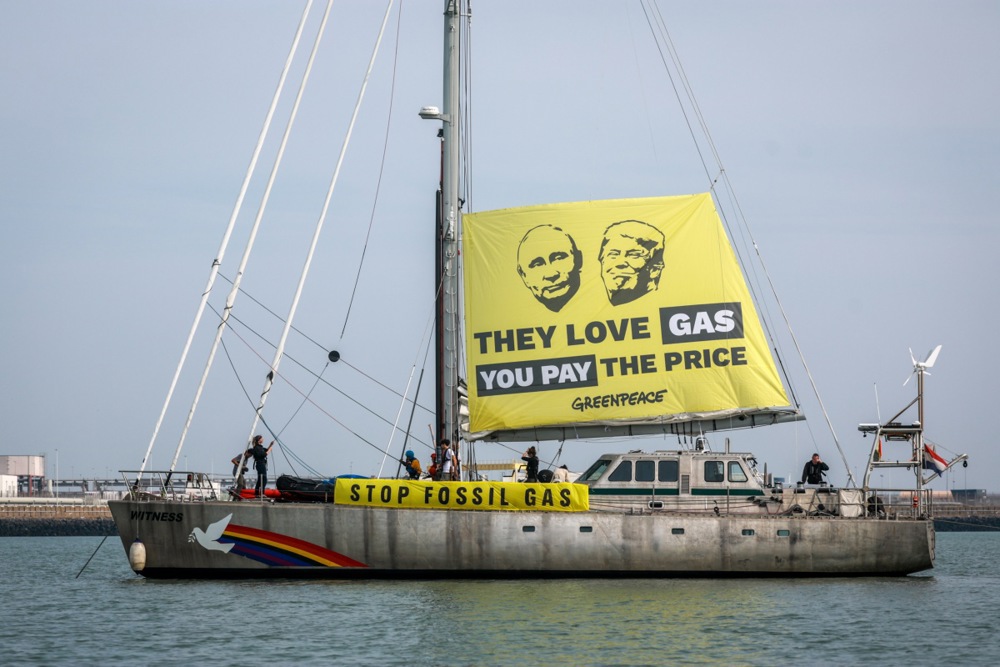
Europe bought record volumes of liquefied natural gas (LNG) from the United States in the last months of 2025, raising the question as to whether the continent is simply swapping one dependency — on Russian LNG — for another.
“The EU is replacing its dependency on Russian pipeline gas and LNG with US LNG,” Ana Maria Jaller-Makarewicz, lead energy analyst at the Institute for Energy Economics and Financial Analysis (IEEFA), told Brussels Signal on December 22.
“The EU risks over-relying on one supplier,” Jaller-Makarewicz said.

Recent data from the IEEFA shows European imports of US LNG surged in 2025, though Russian gas imports, even if beginning to decline in the last months of 2025 compared with previous years, continued to reach the bloc.

“EU imports of Russian gas and LNG in 2024 were a third of what they were in 2021,” said Jaller-Makarewicz, while “more than a quarter of the EU’s gas and LNG imports in 2024 were from the US.”
LNG, which can be shipped by sea rather than transported via pipelines, has played an increasingly central role in Europe’s energy supply since Russian pipeline deliveries collapsed in 2022.
Despite repeated political pledges to cut energy ties with Moscow, the EU continued to import significant volumes of Russian LNG throughout most of 2025. This has largely been due to long-term contracts and infrastructure constraints, with meaningful reductions only becoming visible late in the year.
According to IEEFA, EU imports of US LNG rose by 55 per cent year on year between January and November 2025. Across Europe as a whole, when including the UK and Turkey, imports from the US increased by 52 per cent.
The Netherlands and France were the EU’s largest importers of US LNG during the period, followed by Spain, the UK, Italy and Germany. Belgium’s imports more than tripled, while Spain’s nearly doubled.
At the same time, Russian LNG continued entering the EU. In the first half of 2025, Russia supplied 16 per cent of the bloc’s LNG imports, according to IEEFA. Russian imports have become increasingly concentrated in a small number of countries.
France accounted for 41 per cent of Europe’s imports of Russian LNG. This was followed by Belgium with 28 per cent, Spain with 20 per cent and the Netherlands with 9 per cent.
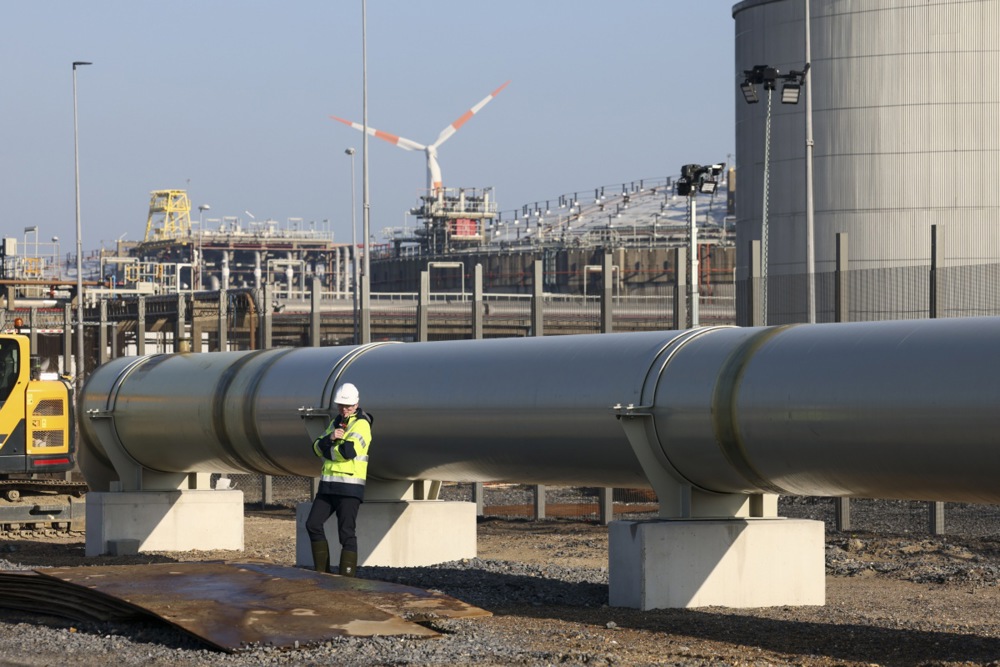
Belgium has drawn particular attention because of the Zeebrugge terminal, the country’s only LNG facility.
“Belgium has increased its imports of Russian LNG in 2025 by around 63 per cent,” said Jaller-Makarewicz. “From January to November 2025, Belgium’s imports of Russian LNG rose by 63 per cent. Zeebrugge, Belgium’s only LNG terminal, accounted for all these volumes.”
The broader shift from Russian to US LNG imports was reflected in figures Eurostat, the EU’s statistical office, published December 19.
In the first nine months of 2025, the average monthly value of petroleum oil imports into the EU fell by 18.3 per cent, while the value of LNG imports rose sharply. In the third quarter of 2025, almost 60 per cent of the EU’s LNG imports came from the United States. Russia accounted for only 12.7 per cent, while Algeria supplied 7.7 per cent.

IEEFA noted the figures illustrated how rapidly Europe’s gas supply had shifted since 2021.
At the same time, the EU has deepened energy ties with Washington. As part of a trade arrangement agreed this summer, Brussels has committed to buying more US LNG.
European imports of US LNG rose by 46 per cent year on year in the first half of 2025 alone. The United States now accounts for 57 per cent of Europe’s LNG imports, according to IEEFA.
However, “US LNG is more expensive for EU buyers than LNG from any other supplier,” Jaller-Makarewicz said.
Between 2022 and 2024, the EU paid roughly €225 billion for LNG imports, which included €100 billion for US LNG alone.