

On April 17, the press revealed that the Élysée Palace is pressing the European Commission to revise the guidelines of the Digital Services Act (DSA) in order to broaden the definition of ‘disinformation’, particularly during election periods.
Yet, in the 102 pages of the DSA, the term ‘disinformation’ appears only twelve times. It is not a central concept of the text. Moreover, no precise definition is given in Article 2, which nevertheless lists all the definitions used in the regulation.
The Commission is in fact relying on Article 34 of the DSA, which refers to “systemic risks” that may result from “actual or foreseeable negative effects on civic discourse, electoral processes or public safety”. It is on this vague basis that the Commission’s guidelines on mitigating systemic risks to electoral processes were adopted, published on April 26, 2024, just before the European elections.
These guidelines notably advocate for the labelling of content by ‘independent fact-checkers’, the organisation of regular meetings with non-state actors (academics, experts, civil society organisations) and the establishment of dedicated communication channels with platforms.
Under the guise of combating foreign information interference – a theme constantly hammered home by Emmanuel Macron since the European summit in March 2026 – the Élysée is now calling for the scope of ‘disinformation’ to be broadened. The objective is clear: To control the narrative on social media, stifle dissenting voices and stifle public debate.
However, 44 per cent of French people get their news from social media every day, according to Arcom. It is therefore in this arena that the government wishes to impose its filter.
Having already made numerous strategic appointments to lock down institutions, the Macronist regime now intends to lock down the election itself. By arbitrarily broadening the definition of ‘disinformation’ – including legitimate criticism from within – democracy is not being protected against interference: It is being confiscated for the benefit of a single camp.
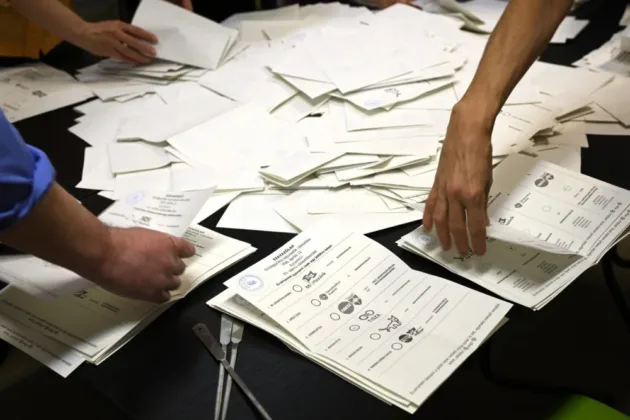
The recent example of Romania is instructive. The first round of the 2024 presidential election there was annulled by the Constitutional Court following suspicions of interference via TikTok and algorithmic manipulation. Yet the Viginum report itself acknowledges that “the over-representation of a candidate in the digital space is obviously not sufficient to explain a vote in their favour”. Despite this, the election was invalidated. This precedent highlights the danger: In the name of combating foreign interference, there is a risk of justifying the cancellation or control of democratic elections.
Freedom of expression is not a variable to be adjusted to serve a political camp. In the face of this authoritarian temptation, it is urgent to defend pluralism and the right of citizens to debate freely, without the state or Brussels substituting themselves for the sovereign people.
Virginie Joron is a French Member of the European Parliament for Rassemblement National, Patriots for Europe Group