


The Iranian situation is as dangerous as it is misunderstood. A fragile ceasefire hangs by a thread. The region remains volatile. And yet, despite a sustained and devastating military campaign by two of the world’s most powerful armed forces, the theocratic regime in Tehran still stands. That fact alone should force a long-overdue reckoning in Western capitals.
For decades, some argued that engagement and appeasement would moderate the regime’s behaviour. They insisted there were “reformists” and “pragmatists” lurking within the clerical establishment, figures who could be trusted to steer Iran toward a more responsible path. It was always a fantasy. Time and again, those illusions were exposed. The regime exploited diplomatic openings not to reform, but to regroup. It extended its influence across the Middle East, fuelling proxy wars, sponsoring terrorism, and destabilizing fragile states. All the while, it lied, obfuscated and advanced its nuclear ambitions alongside an expanding arsenal of ballistic missiles and drones. Appeasement did not change the regime. It emboldened it.
On the other side of the argument stood those who insisted that only force could bring about meaningful change. They too have been proven wrong. The recent US and Israeli military strikes inflicted enormous damage. Iran’s naval capacity was shattered. Its air force crippled. Weapons factories and missile systems were destroyed. Senior figures in the Islamic Revolutionary Guard Corps (IRGC) were eliminated in targeted operations. The regime’s military-industrial infrastructure was severely degraded. And yet, the regime endured. Not only did it survive – it adapted. Repression intensified. Internal security tightened. The machinery of control was reinforced. The very external pressure that was meant to weaken the regime instead gave it the pretext to crush dissent more ruthlessly than before. Military intervention did not liberate the Iranian people. It trapped them further.
This is the central truth that policymakers have been reluctant to confront: Neither appeasement nor war has worked. Neither will. The only viable path forward lies where it always has, in the hands of the Iranian people themselves. For years, millions have taken to the streets in waves of protest, demanding an end to clerical rule. Across all 31 provinces, resistance networks have taken shape. In cities, towns and villages, ordinary Iranians are defying the regime in ways both visible and unseen. They are paying a terrible price.
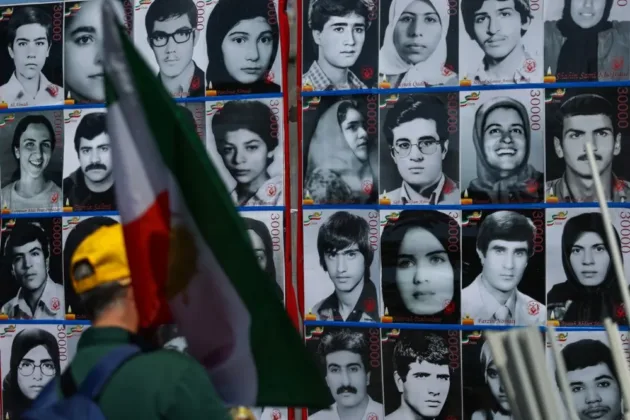
Iran today is a country gripped by fear. Arrests are rising sharply. Surveillance is pervasive. Executions are carried out with chilling regularity. Since late March alone, at least 15 dissidents have been executed, including eight Mujahedin-e Khalq (MEK) members affiliated with Resistance Units. Young men and women are dragged before sham courts, denied basic rights, and condemned in proceedings that bear no resemblance to justice. Inside the prisons, conditions are inhumane. Detainees are starved, denied medical care, and subjected to prolonged isolation. Even during recent air raids, prisoners were left without protection, their lives treated as expendable.
The silence from the international community has been as shocking as it is shameful. The recent executions of political prisoners and young protesters swept up during the January uprising, should have provoked global outrage. Instead, they passed with barely a murmur. This silence sends a dangerous message: That there is a threshold of repression the regime can cross without consequence.
The regime’s escalating brutality is not a sign of strength. It is a sign of fear. Weakened externally and increasingly isolated internally, the clerical leadership understands that another nationwide uprising could prove fatal. That is why it is lashing out. That is why it is tightening its grip. But repression cannot extinguish the underlying reality. Iran is a country on the brink. Beneath the surface lies a seething reservoir of anger among workers, pensioners, students and, perhaps most strikingly, women who continue to defy oppressive laws in their daily lives. The demand for change is not fading. It is growing.
War did not relieve that pressure. It distorted it. It allowed the regime to portray dissent as treachery and to weaponize nationalism against its own people. It created confusion and fear at precisely the moment when clarity and solidarity were needed most. This is why calls for de-escalation, while necessary, are not sufficient. Without addressing the root cause, the regime itself, the cycle will simply repeat.
There is also a parallel illusion that must be confronted – the notion that salvation might come in the form of a returning monarch. Reza Pahlavi, styling himself as a “Crown Prince,” presents an image of continuity and stability. But after nearly half a century in exile, he has failed to build any meaningful presence inside Iran. There are no credible networks operating under his banner. No grassroots structures. No organized constituencies capable of sustaining political transition. What he offers is symbolism, rooted in a past many Iranians associate with repression and inequality. More troubling still are his calls for increased military pressure on Iran. At a time when ordinary Iranians are bearing the human cost of conflict, such rhetoric is deeply damaging. His claims of support within the very security apparatus that has oppressed the population only add to the sense of unreality.
Iran’s future will not be shaped by exiled figures or imposed solutions. It will be determined by those inside the country who have already demonstrated their willingness to organise, resist and sacrifice. The responsibility of the West is therefore clear. It is not to choose Iran’s leaders. It is not to impose change through force. Nor is it to cling to discredited fantasies of reform from within the regime. It is to stand consistently and unequivocally with the Iranian people.
That means speaking honestly about the regime’s abuses. Holding its officials accountable through sustained international pressure. Amplifying the voices of those who resist. And ending the habit of granting platforms to figures who offer neither legitimacy nor solutions. The Iranian people have shown extraordinary resilience. They continue to push back against a system that relies on fear to survive. They continue to demand a future defined by freedom, dignity and justice. They deserve more than words. They deserve unwavering support. That is the task before us.
Struan Stevenson was a member of the European Parliament representing Scotland (1999-2014), president of the Parliament’s Delegation for Relations with Iraq (2009-14) and chairman of the Friends of a Free Iran Intergroup (2004-14). He is an author and international lecturer on the Middle East.