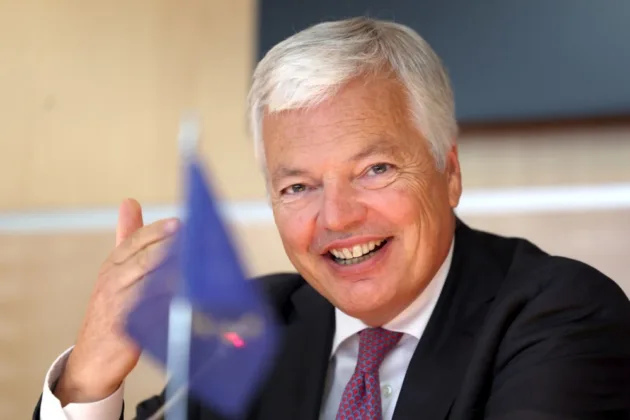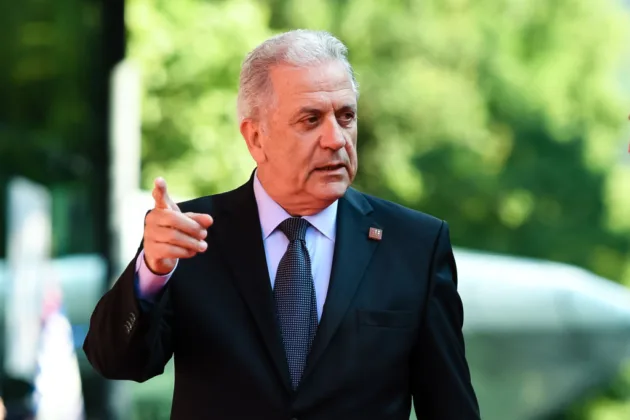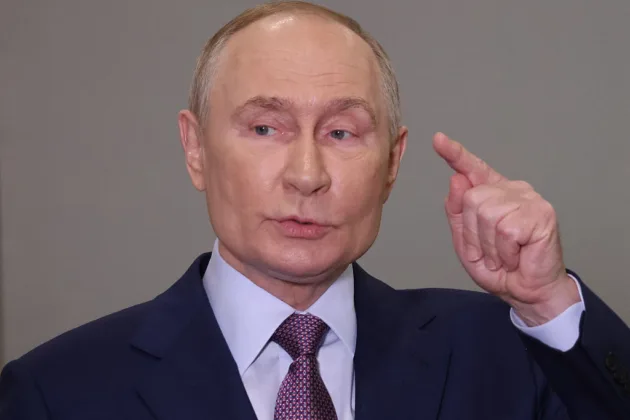






Shame, not guilt, is the currency of scandal. In 2022, on anti-corruption day no less, Belgian police uncovered €1.5m of cash crammed into the suitcases of various senior EU officials. The money was thought to be payment for various political favours. The case is still sub-judice, but the accusation is that, for a rather venal sum, European Parliament Vice President Eva Kaili and Pier Antonio Panzeri may have closed down a debate about Qatar’s Human Rights record.
It is shocking if European democracy can be bought, but it is even worse that foreign paymasters can play the alleged cash-for-influence game with no table stakes. They just slither off into privacy while the most senior European officials are left to serve as their reputational scapegoats. More, voices as far apart as Tucker Carlson and King Charles, along with dozens of US congressmen, have joined the noisy bandwagon in praise for Qatar. We must ask: Who are the paymasters apparently pumping money into apparent European corruption — and don’t they also deserve a portion of the shame?
Qatar are not allies of the West in any ideological sense. They fund terrorism, accommodate the Taliban and Muslim Brotherhood and target divided European societies with Islamist propaganda. Yet they do all this with Western blessings.
Many western public figures will never recover from the reputational blow of merely being named in the Epstein files yet, immune from the public ballot and guarded by the press controls of a radical Wahhabi regime, the government of Qatar — my homeland — are ignored for the same association and welcomed with open arms by the very people who condemn democratic leaders for their sleaze.
I was forced to leave my homeland for advocating democracy – so I watch these double standards with frustration from my exile in England.
Not all Qatar’s cash-for-influence schemes in Europe and the West involve crime, of course, but self-righteous public discourse becomes blind to the systemic one-sidedness of “cultural exchanges” of foreign patronage which are a real threat because we assume that, if something is in plain sight, there is nothing to hide and therefore nothing to worry about.
Qatar has already spent $80m (€68m) building 140 mosques in Europe. Qatar allows itself to believe that this is charity – or Zakat – one of the five pillars of Islam. But charity is given of the self and expects nothing in return. The money Qatar spent on mosques comes from the national purse and is strategically targeted in places where it is well known the Islamic vote swings national elections.
In terms of gerrymandering the new republics of the Balkans and holding sway over these critical margins, this patronage is very good value for money indeed. The hijab is now seen regularly on the streets of Sarajevo and who will dare question Al Jazeera’s rights to broadcast Muslim Brotherhood propaganda in the EU, long after Russia’s propaganda has been shut down?
Qatar itself doesn’t really have to contend with issues of national territory or societal cohesion. It was created as a state in 1971, has secured itself as a Major Non-Nato Ally and borders an empty expanse of Arabia. By some reckoning 85 per cent of its population are indentured workers from abroad. There has never been any question of these people being given passports, far less the freedom of citizens. The country is essentially a five-star hotel for its leaders who, despite lacking any cultural or civil apparatus of a western society, have become the wealthiest population on Earth from their vast resource of natural gas.
Naturally, this wealth creates a market for products, brands, lifestyle and legacy which Qatar cannot produce at home and the West is only too happy to sell. Perhaps the purest consumer product the West can franchise to Qatar is Credentialism: The sage deference of universities representing the approval of thousands of years’ of civilisation by the qualifications that they bestow. HEC Paris, several UK universities and Cornell, Carnegie Mellon, Georgetown, Texas A&M, and Virginia Commonwealth have all established themselves in Qatar. Money flows back from Doha into these and other institutions which in turn hold sway over the hearts and minds of the secular world.
The resulting deterioration in accountability when it comes to Western foreign policy towards Qatar is the result, I fear, of a cultural exchange which Europe does not understand.
We do notice when China spends millions on Confucius institutions and serious questions are asked, for instance, about whether these places of learning can be trusted to give an accurate account of Taiwan’s claim to sovereignty. But we also understand that China is a civilisation of 1.4 billion citizens with much to lose from global instability. This human collateral is an accountability of sorts.
Qatar gets less attention because the West still thinks in Cold-War caricatures of hostile civilisations aspiring to national territorial expansion and it is hard to ascribe a threat to the friendly patronage of a gas-rich emirate of 300,000 citizens founded in 1971.
When the democratic West collaborates with societies which lack any accountability or national debate, any public debacle will result in a scapegoating of the exposed partner and transferring esteem and power to the protected partner. Qatar’s infiltration does not always come as a direct command as it seems to have done in the European Parliament’s Qatargate scandal, but my homeland nevertheless neuters Western authorities’ response to radical Wahhabi dictatorship through flattery, patronage and propaganda. If we take democracy and accountability as seriously as we say we do, Qatar should not be allowed to get away with their behaviour.
Khalid Al-Hail is a defector from the Qatari ruling establishment, and is president of the Qatar National Democratic Party. Now living in exile in the United Kingdom, he is an international businessman and a leading advocate for democratic reform in Qatar.