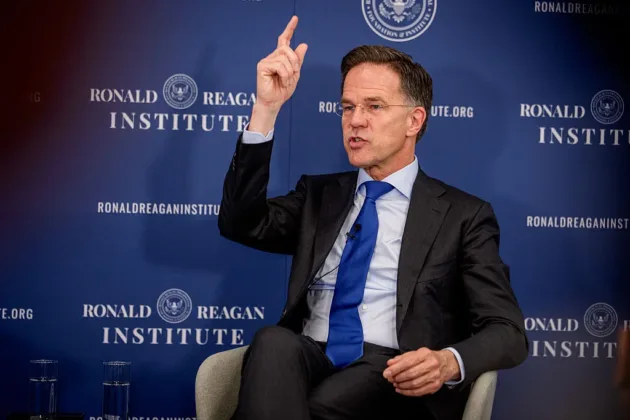




NATO Secretary General Mark Rutte has warned that the alliance’s response to any attack on a member state would be “devastating”, as the organisation closely monitors Belarusian military exercises involving Russian nuclear ammunition.
Speaking to reporters in the Swedish town of Revinge on May 21, shortly before a meeting of NATO foreign ministers in Helsingborg, Rutte said the determination to defend every ally was “absolute”.
“Let no one be in any doubt. Our capability and our determination to defend every ally are absolute. If anyone were foolish enough to attack, the response would be devastating,” he said.
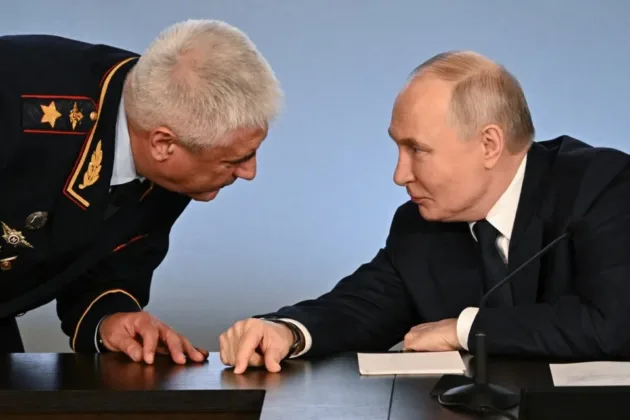
His comments came after Moscow confirmed the same day that it was contributing to Belarusian drills with nuclear ammunition for its missile systems. Minsk has insisted the exercises are not directed at any country.
Rutte also dismissed as “ridiculous” Russian accusations that Latvia had allowed Ukraine to launch attacks on Russian territory from its soil. On the violation of Estonian airspace by a Ukrainian drone, he said the incident had taken place “as a consequence of the Russian invasion”, and not because Kyiv “wanted to send drones there”.
On internal divisions within NATO, particularly over recent United States threats towards fellow member states, Rutte defended internal debate as inherent to the bloc’s democratic character.
“We are democracies, we love to debate, but in the end we always come together, all 32 of us,” he said. He contrasted that with Russia and China, where, in his view, “one single person decides what everyone has to think”.
On financial support for Ukraine, Rutte reiterated his proposal that each ally should commit 0.25 per cent of its GDP to Kyiv, though he acknowledged the initiative “will not obtain unanimity” and would therefore not formally proceed.
He defended the idea as useful for “starting the debate” on a more equitable sharing of the burden across the alliance. Sweden, Canada, Germany, the Netherlands, Denmark and Norway were “performing above their weight”, he said, while others “are not spending enough”.
The Helsingborg gathering is expected to address continued Western support for Kyiv amid the ongoing Ukraine war, as well as concerns over Russian and Belarusian military activity along NATO’s eastern flank.