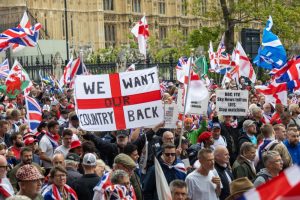
British Prime Minister Keir Starmer has issued a statement ahead of right-wing agitator Tommy Robinson’s planned Unite the Kingdom march in London tomorrow, framing the event as a struggle over the country’s identity.
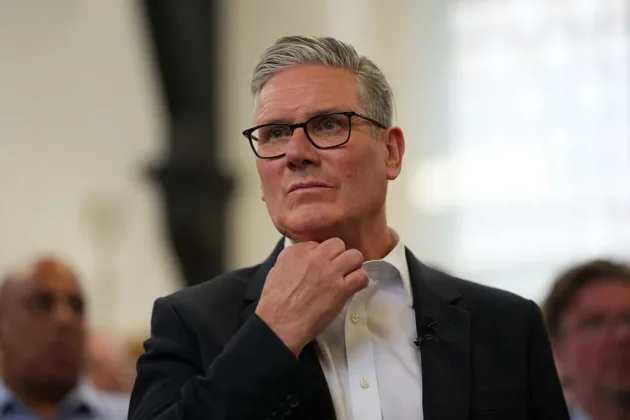
“We’re in a fight for the soul of this country, and the Unite the Kingdom march this weekend is a stark reminder of exactly what we are up against,” Starmer said today.
He accused the organisers of “peddling hatred and division, plain and simple”.
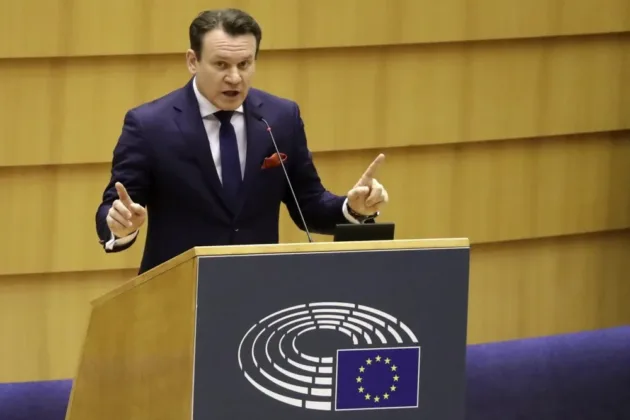
The government said 11 individuals it identified as foreign right-wing agitators had already been barred from entering the UK in connection with the event, including Polish MEP Dominik Tarczyński, of the European Conservatives and Reformists (ECR) group, who has vowed to sue the British government over the ban.
“We will block those coming into the UK who seek to incite hatred and violence,” Starmer said.
“For anyone who sets out to wreak havoc on our streets, to intimidate or threaten anyone, you can expect to face the full force of the law,” he added.
He said Britain remained “a country built on decency, fairness and respect”, emphasising what he described as the importance of social cohesion across communities of different backgrounds.
Separately, Starmer released a video message on X, also today, in which he accused some expected attendees of being “convicted thugs” and “racists”, arguing that their objective was to turn people against each other.
“Their goal is to convince people that their problems are caused by those living alongside them,” he said.
The Metropolitan Police said it would deploy more than 4,000 officers across London tomorrow.
“This is our country,” Starmer concluded, portraying the march as part of a broader “us versus them” confrontation.
The remarks come amid heightened political sensitivity around public order and immigration in Britain.
Nigel Farage’s anti-immigration party Reform UK has been gaining political momentum, securing a series of local council victories on May 7.
A similar Robinson-led rally in September 2025 drew an estimated 110,000 to 150,000 people, according to Metropolitan Police figures, making it one of the largest right-wing demonstrations in Britain in recent years. That march followed a wave of protests outside hotels housing asylum seekers across England during the summer of 2025, after the conviction of an Ethiopian man for sexually assaulting a 14-year-old girl in a London suburb.
Robinson, whose real name is Stephen Yaxley-Lennon, founded the now-defunct English Defence League (EDL) and has several criminal convictions, including for contempt of court after breaching a 2021 High Court order. The Unite the Kingdom brand has become a recurring vehicle for protests against mass migration and what organisers call threats to free speech and British identity.
Robinson today addressed his supporters and the Metropolitan Police in an X video, attempting to calm tension and frame the march as peaceful.
“We are not the enemy,” he said, urging participants not to engage with the police.
Robinson claimed the authorities wanted confrontation: “They want you to clash. We don’t want to clash.
“If they’re [the government] preparing you for a big battle, we’re not coming for a big battle.”
The Labour Prime Minister’s rhetoric, at a time when his leadership is possibly facing a challenge, is likely to place tomorrow’s march under scrutiny.
Tens of thousands of football fans are also expected at Wembley Stadium for the FA Cup Final, adding to the pressure on the capital’s police.
The march is due to take place on the same day as the annual Nakba Day Palestinian protest in another part of central London.
Deputy Assistant Commissioner James Harman told the BBC today he had “significant cause for concern” but the force could not ask for either event to be banned. Under UK public order law, police can impose conditions on a march but cannot prohibit a static assembly outright.