









Foreign nationals have received almost 60 per cent of the basic welfare paid in Germany to households with children, according to official figures.
Government data showed that €12.2 billion of the €20.54 billion paid in 2025 to households with at least one minor child went to recipients without German citizenship. That was a share of 59.4 per cent, with German nationals receiving €8.34 billion.
The figures were contained in a reply from the Federal Ministry of Labour and Social Affairs, dated October 27, to a parliamentary question from the right-wing Alternative for Germany (AfD) party. They were first reported by the tabloid Bild on November 11.
The sums covered standard allowances, housing and heating costs and social insurance contributions for single parents and couples with children. In 2024, foreign nationals received 60.5 per cent of a total of €21.34 billion.
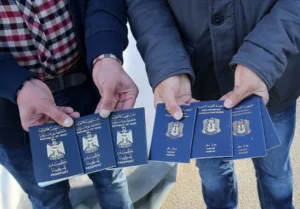
Three nationalities dominated the foreign share. Ukrainian households received €3.44 billion, Syrian households €2.2 billion and Afghan households €1.06 billion, together about 55 per cent of the money paid to non-German families.
Counted by people rather than by money, foreign nationals made up 54.7 per cent of the 3.1 million benefit recipients living in households with children in 2025. The data also showed foreign households were far more likely than German ones to include three or more children.
Across the welfare system as a whole, foreign nationals accounted for 47.3 per cent of claimants on average in 2025, according to Federal Employment Agency figures cited by the weekly Junge Freiheit. Foreigners made up about 15 per cent of Germany’s population at the end of 2025, according to the Federal Statistical Office (Destatis).
René Springer, social affairs spokesman for the AfD parliamentary group, called for consequences. He told Bild that foreigners who could not permanently support themselves should lose their residence permits.
Freiburg economist Bernd Raffelhüschen told Junge Freiheit the figures understated the scale of the issue. He said naturalised citizens who continued to claim benefits were counted as Germans, though the size of that effect could not be measured.
More than 330,000 people were naturalised in Germany in 2025, according to Destatis.
The disclosure is the latest in a series of AfD requests on welfare and immigration. In 2024, government data revealed that nearly half of all welfare recipients in Germany were not German citizens.
The coalition of Chancellor Friedrich Merz renamed the Bürgergeld (citizen’s income) as Grundsicherung (basic security) on July 1 this year, pledging stricter work requirements. It has also moved Ukrainians who arrived after April 1, 2025 onto lower asylum-seeker benefits.