








French novelist Michel Houellebecq has been placed under formal investigation over remarks about Muslims and the “great replacement” made in a magazine interview in 2022.
An investigating judge in Nanterre, west of Paris, took the step on November 10 on suspicion of complicity in provoking discrimination, hatred or violence against a group because of its origin or religion. The decision is not a conviction and no trial has yet been ordered.
The case stems from a conversation with philosopher Michel Onfray published in November 2022 in his magazine Front Populaire. In it, Houellebecq, now 70, rejected calling the “great replacement” a theory and described the change in the ethnic and religious make-up of Europe’s population as a fact.
He also said native French people did not so much want Muslims to assimilate as to stop robbing and attacking them, presenting their departure as another solution. The author of Submission predicted shootings at mosques and cafés frequented by Muslims, a mirror image of the 2015 Bataclan massacre in Paris.
The Grand Mosque of Paris filed a complaint in December 2022 but dropped it weeks later after meeting the writer, who agreed to amend the disputed passages. The Union of Mosques of France (UMF) and the anti-racism group Movement against Racism and for Friendship between Peoples (MRAP) kept their complaints alive.
UMF president Mohammed Moussaoui argued at the time that rewriting the passages would not undo their spread.
Defence lawyers Thibault de Montbrial and Louis Cailliez said Houellebecq contested the offence, arguing the remarks contained no call to action, not even an implicit one, and therefore fell within freedom of opinion and expression.
A prophet of doom does not wish doom upon anyone, the lawyers added, concluding that the novelist’s place was not in a courtroom. If convicted under France’s 1881 press law, he could face up to a year in prison and a €45,000 fine.
The 2010 Goncourt Prize winner has been in court over Islam before. In 2002 a Paris court acquitted him after he called Islam the most stupid religion, ruling that criticising a faith did not amount to inciting hatred against its followers.
In his 2023 book Quelques mois dans ma vie, Houellebecq revisited the interview and expressed regret over some of his statements.
The case adds to a string of European hate speech prosecutions over statements on immigration and Islam. In May, a Belgian court fined right-wing activist Dries Van Langenhove €4,000 over a university lecture that touched on migration and the “great replacement”.
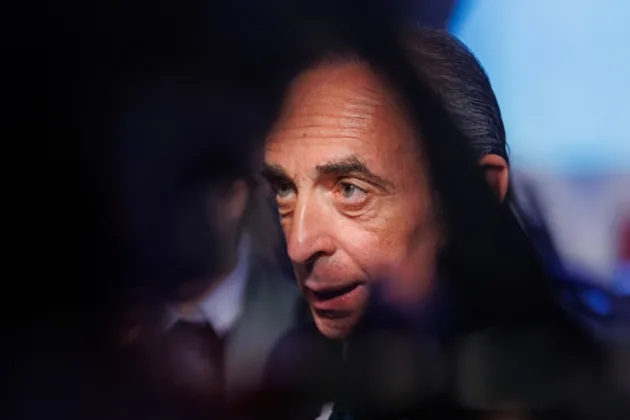
In France, right-wing politician Éric Zemmour has been convicted several times over remarks on Muslims. The European Court of Human Rights upheld one of those convictions in 2022.