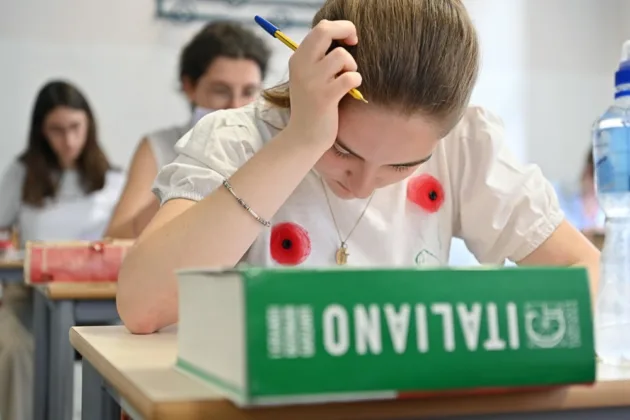






Thousands of Italian schools have received a second wave of emailed bomb threats in two days. The government has told head teachers to carry on as normal unless regional authorities identify specific and well-founded grounds for alarm.
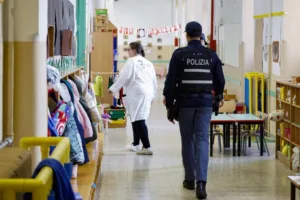
Some 3,778 schools across the country, from Milan to Palermo, received the new messages on November 12, according to Italian news agency Adnkronos. Of those, 77 were evacuated and 36 resumed lessons the same morning.
The emails were signed “Mikhail Andropov”, the name used in messages sent the previous day to about 6,000 schools, though the text was different. The pseudonym, apparently a reference to former Soviet leader Yuri Andropov, had also appeared in threats sent to broadcasters in Ireland, the UK and Bulgaria on November 6.
The latest message claimed the buildings had been mined with a device made of ammonium nitrate and nitromethane and packed with metal fragments. It also demanded the immediate resignation of Prime Minister Giorgia Meloni and claimed a bomb had been planted at Palazzo Chigi, the seat of government in Rome.
The November 11 emails had claimed an explosive device was hidden in Meloni’s car. No explosives were found at any of the targeted schools, according to the government.
Prosecutors in Rome and Milan opened investigations. According to The Local Italy, the first batch of emails was sent from a hacked account linked to a university in Taiwan, while the second came from accounts in the Philippines.
Meloni said there was no “concrete danger”. Her office said the aim was to stop unfounded threats from disrupting essential services and to guarantee the safety of students, teachers, school staff and families.
Italian defence minister Guido Crosetto blamed “idiots” and warned that more threats were likely. Interior minister Matteo Piantedosi said it was too early to speak of a coordinated campaign.
The school hoaxes followed a wave of bomb threats against dozens of European flights between November 2 and 6. Many European officials suspect these form part of a Russian hybrid warfare campaign against countries backing Ukraine, though Moscow has denied involvement.
Meloni met opposition leaders at Palazzo Chigi on November 12 and thanked them for what she called frank and productive talks. She said the government had shared its information and assessment and set out how it intended to proceed, adding that the opposition should continue to scrutinise its work.
Democratic Party (PD) leader Elly Schlein said after the meeting that the government had not presented a single concrete proposal. Five Star Movement (M5S) leader Giuseppe Conte said the opposition had been invited to put forward ideas when it was the government’s job to do so, since it alone held all the relevant information.