



Europe’s public postal operators have warned they can no longer guarantee e-commerce delivery or rural connectivity without stronger political and financial support.
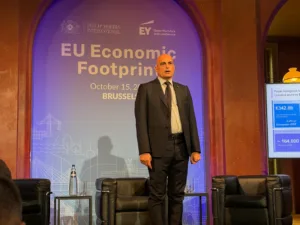
“We cannot do this alone,” said Botond Szebeny, secretary general of PostEurop, the association of European public postal operators, speaking in Brussels on November 12.
The warning comes after new findings from PostEurop’s February report Why Choice Matters 2025 highlighted the scale of so-called “digital exclusion” across Europe.
It notes that older adults, rural residents and people unwilling or unable to use digital tools remain highly dependent on physical communication.
It says some 40 per cent of the populations in countries such as Spain, Portugal, Italy, Greece and Albania lack basic digital skills. The report stresses that digital transformation “must not come at the expense of those who rely on traditional communication methods”.
Szebeny echoed this, pointing out that two broad groups still depend on postal services: Those who cannot go digital and those who choose not to, often due to mistrust over data harvesting, privacy risks or fear of leaving “digital footprints”.
The report points to findings from the European Data Protection Board showing that data breaches often result from “malicious attacks by third-party hackers”, weak internal practices, outdated IT systems or human error. These factors, it says, exacerbate the fear of people who deliberately avoid digital services because they worry about the potential misuse of their data.
Economically, it makes sense for public postal services to advocate for not abandoning physical mail options but also to not let private companies take all the contracts in a sector that is far from dying: E-commerce.
If public postal service receive less funding, they become slower and businesses, even small ones with fewer financial means, turn towards more expensive private services.
But the issue, Szebeny stressed, is not only social inclusion — it is the future of e-commerce and small-business logistics.
Public postal operators “remain the only carriers required to serve every community, including rural and remote regions”, he said.
When their funding drops, the universal network weakens: Delivery times slow, service becomes patchier and businesses increasingly turn to private couriers, which are more expensive and do not cover all territories.
The result, Szebeny said, is a fragmented system with multiple platforms, apps and email notifications, a self-reinforcing barrier for people who struggle with technology or lack access to it.
“Our network is essential for SMEs [small to medium enterprises], for e-commerce, for citizens — but it cannot stay resilient without shared responsibility from policymakers and regulators,” he said.
Universal service obligation was never designed to be carried solely by operators at a time when traditional mail volumes have collapsed and crisis-driven demands continue to grow, he added.
Szebeny argued that the debate is no longer about preserving a legacy service but about safeguarding a critical infrastructure that underpins everything from online retail to emergency response.
With the EU preparing new rules under the upcoming Delivery Act, he said postal operators need a “real partnership” with governments to keep the system viable.
Without it, he warned: “Europe risks a two-tier delivery landscape” in which only the digitally confident and commercially attractive areas stay well served “while everyone else is left behind”.