










Josep Borrell, who served as the European Union’s High Representative for Foreign Affairs and Security Policy from 2019 until the end of 2024, has sharply criticised the latest EU decision to pay third countries to establish “platforms of return” for irregular migrants.
In a strongly worded post on X, Borrell condemned the move in Spanish, arguing that the EU is abandoning its humanitarian values for expensive solutions that won’t work anyway.
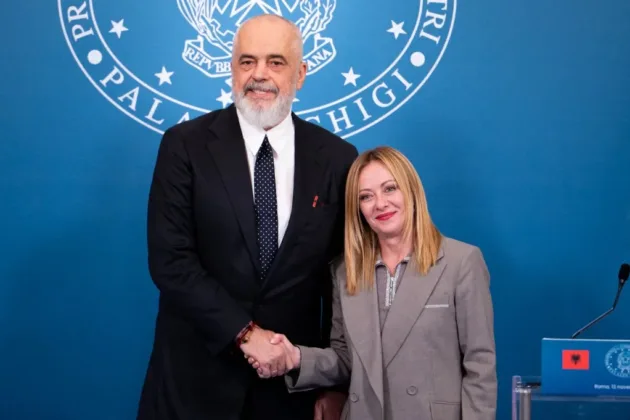
“The EU has approved paying third countries to create return platforms for irregular migrants. With this, the EU abdicates its humanitarian principles and embarks on a costly and inefficient solution, as already demonstrated by Meloni’s Albania Plan and the UK in Rwanda.”
La UE ha aprobado pagar a terceros países para crear plataformas de retorno de inmigrantes irregulares. Con ello, la UE dimite de sus principios humanitarios y se embarca en una solución costosa e ineficiente como ya ha demostrado el Plan Albania de Meloni y el RU en Ruanda.
— Josep Borrell Fontelles (@JosepBorrellF) June 4, 2026
The former top EU diplomat’s outburst comes after the European Council recently gave the green light to expanded cooperation agreements with third countries.
These deals involve financial payments to nations in North Africa, the Balkans and elsewhere to host processing or return centres for migrants who have entered the EU irregularly, with the aim of speeding up returns and reducing pressure on European borders.
During his five years as the EU’s chief diplomat, Borrell was one of the strongest advocates of open-border policies, humanitarian corridors and mass relocation schemes.
His criticism now highlights the growing internal rift within the European establishment over migration policy.
The EU has increasingly shifted toward externalising border control and return procedures in recent years, offering large financial incentives to countries such as Tunisia, Egypt, Mauritania and Albania.
Proponents argue these deals are necessary to regain control of irregular migration flows, while critics say they represent a moral surrender and are unlikely to work in practice.
Despite Borrell’s criticism, official figures show that irregular migration into the EU has dropped sharply in 2026.
According to Frontex data, irregular border crossings fell by around 40 per cent in the first four months of the year compared to the same period in 2025, with just over 28,500 detections recorded.
This continues a downward trend observed throughout 2025, driven by a combination of stricter external deals, better cooperation with origin and transit countries, and improved border enforcement.
European Union Foreign Affairs Chief Josep Borrell has warned that the union is “in danger” in his 300-page book, Europe in the Arc of Fire. https://t.co/EFTFwHzsQS
— Brussels Signal (@brusselssignal) November 25, 2024