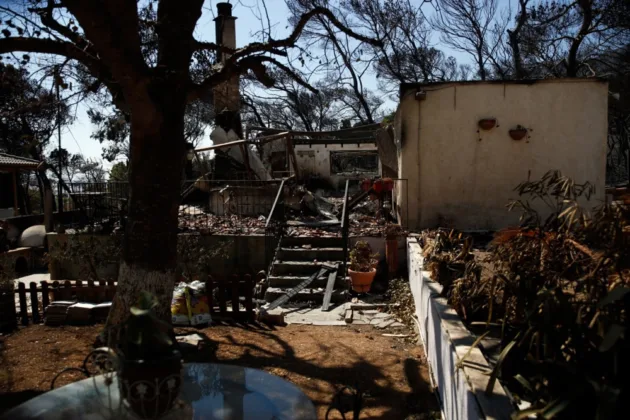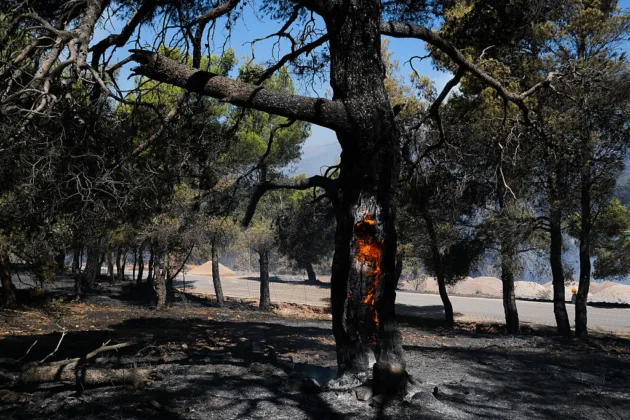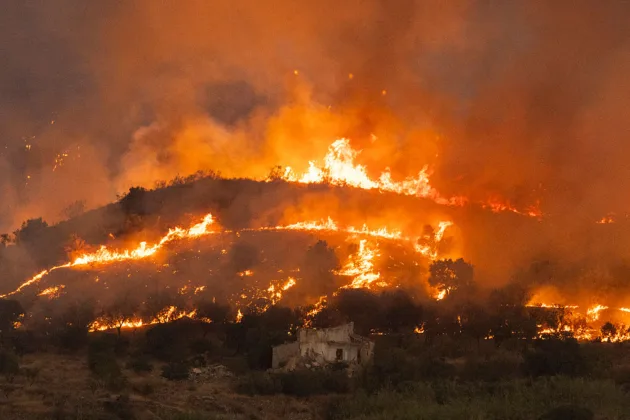





Wildfires across Europe have burned more than half a million hectares this year and caused an estimated €15.6 billion to €19.1 billion ($18 billion to $22 billion) in total damage and economic loss, according to a preliminary assessment by AccuWeather experts.
The majority of the fires have occurred since late June.
More than 530,000 hectares have burned in EU countries so far in 2026, putting the season on pace with 2025, when 1.08 million hectares were lost across the bloc.
An additional 22,000 hectares have burned in the United Kingdom.
The European Forest Fire Information System (EFFIS) mapped 457,459 hectares burned across 1,407 separate fires in the EU by July 29, some 31.8 per cent more than by the same date in 2025 and roughly two and a half times the 20-year average. Spain accounted for 217,609 hectares on that reading and France for 91,057.
France and Spain have seen some of the most extensive blazes, including a record wildfire near Bordeaux that scorched approximately 420 square kilometres, destroyed homes and forced the evacuation of more than 224,000 people.
Fires near Athens have also prompted evacuations and property damage.
Investigators have traced the largest of those fires to human activity. The blaze that began at Saumos, west of Bordeaux, on July 22 appears to have started at a brush-clearing site beneath a high-voltage line, according to Bordeaux public prosecutor Renaud Gaudeul, who said the accidental hypothesis was favoured at this stage.
A separate fire behind the Dune du Pilat is being treated as deliberate. Eleven people had been brought before prosecutors in Gironde by July 28 on charges ranging from arson to endangering others.
In Greece, the Ministry of Climate Crisis and Civil Protection said sparks from a private line carrying electricity from wind turbines to the grid had fallen to the ground and started the fire that spread from Boeotia, central Greece, into western Attica. Two people have been arrested on suspicion of arson and the owner of the wind farm company has been sought.
Greek fire service figures show 267 arrests between January 1 and August 5, of which 238 were for negligence and 29 for deliberate ignition, alongside 670 administrative fines worth €1,022,593.
In Spain, the Guardia Civil has attributed the fire at Burgohondo, in Ávila province, central Spain, to a spark from heavy machinery used in an area where such work was banned.
The European Commission’s Joint Research Centre (JRC) has repeatedly reported that about 96 per cent of wildfires in the EU are caused by human activity, a category that covers accidents and negligence as well as deliberate ignition. In the UK, the National Fire Chiefs Council (NFCC) takes the same view, and Natural England has said virtually all wildfires in England are started by people, natural ignitions such as lightning being rare.
What burns once a fire has started is determined by how much fuel has been left on the ground. The European Commission’s own guidelines on land-based wildfire prevention call for managing vegetation and avoiding the accumulation of fuels, and the EU Forest Strategy for 2030 makes prevention a stated priority.
The European Court of Auditors (ECA) found in special report 16/2025 that EU money to tackle forest fires is not systematically spent where needs and risks are highest, or with a long-term perspective. Auditors said the Commission does not have a complete picture of how much EU money goes to forest-fire measures or what it achieves, and that several member states rely on outdated fire-risk maps. More than 2 million hectares of EU forest burned in the four years covered by the audit.
Nikolaos Milionis, the ECA member responsible, said strengthening preventive measures was a move in the right direction but that EU money had to be spent in a way that ensured a sustainable impact.
National spending remains weighted towards putting fires out rather than stopping them. In Spain, 78 per cent of public anti-fire resources goes to suppression against 12 per cent on prevention, and the prevention budget recorded by the environment ministry stood at €143.8 million in 2024 against €364 million in 2009, its highest point.
Between 2009 and 2022 prevention spending fell by 51 per cent while suppression held at about €417 million a year, according to figures from the forestry employers’ association ASEMFO.
The retreat of farming and extensive grazing has compounded the effect. Cultivated ground and grazed hillsides once broke up the landscape and acted as firebreaks maintained at no public cost. Their disappearance has left continuous, unmanaged scrub: 99.6 per cent of Spain’s most depopulated municipalities have recorded fires over the past 30 years.
Research collected by the EU CAP Network has found that grazing by sheep and goats reduces woody biomass and fire risk at low cost while delivering other benefits.
Water storage, meanwhile, is not the constraint it has been in other years. Spanish reservoirs held 39,016 cubic hectometres on August 4, or 69.6 per cent of capacity, some 2,220 cubic hectometres more than on the same date in 2025 and 8,861 cubic hectometres above the average of the past decade.
AccuWeather’s estimate covers direct and indirect costs, including damage to homes, businesses, crops, vineyards, forests, utilities and infrastructure, as well as firefighting and emergency response expenses, evacuations, temporary housing, debris removal, environmental restoration, business interruptions, tourism losses and anticipated insurance claims.
It also factors in health impacts from smoke, lost productivity and longer-term effects on supply chains, agriculture and public services.
With it, the estimate goes much further than earlier reported ones. The Financial Times put losses in the five worst-hit eurozone countries at €3.1 billion, a figure covering mainly the cost of restoring burned land, against a European Commission estimate of €2.5 billion a year on average across the EU.
Credit ratings agency Morningstar DBRS has put France’s total losses at €10 billion to €15 billion, which would make the blazes the country’s costliest wildfire event on record. Unlike floods and droughts, wildfires are not covered by France’s State-backed natural disaster compensation scheme, leaving private insurers to carry most of the recovery bill.
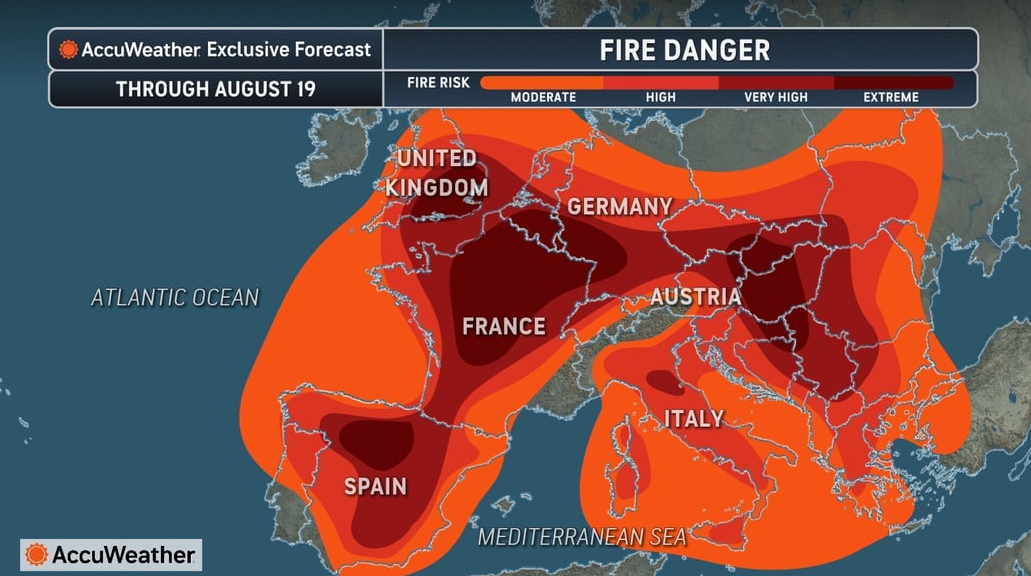
AccuWeather’s latest forecast indicates very extreme wildfire danger across large parts of western and central Europe, with the highest risk covering parts of France, northern Spain and the southern half of the British Isles. Elevated risk also extends to southern Scandinavia, Italy, parts of eastern Europe and the Balkans.
“It will likely remain drier and warmer than historical average across western and northern Europe well into September,” said AccuWeather lead international forecaster Jason Nicholls.
The preliminary figures could rise further as the fire season continues.
AccuWeather chief meteorologist Jonathan Porter said the effects extended well beyond the areas directly damaged by fire.
“These conditions are threatening lives and livelihoods, reducing crop production, and creating serious health risks due to smoke and poor air quality. The economic consequences could continue to grow as the fire season is still ongoing across Europe.”
Smoke can affect air quality over wide areas for days or weeks even after flames are contained. This can lead to long-term health effects, disruptions to everyday life and business, and additional financial costs outside the fire-affected areas.