
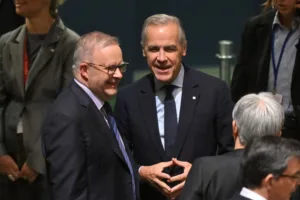

The Group of Seven (G7) has pledged tougher sanctions on Russia and more support for Ukraine, as European leaders press a reluctant United States to keep backing Kyiv.
The seven leaders signed a joint declaration on June 17 at their summit in Évian-les-Bains, eastern France, reaffirming support for Ukraine’s sovereignty and welcoming a US-brokered deal to end the recent conflict with Iran.
The text committed the group to bolster Ukraine’s military and energy capabilities, and to intensify pressure on what it called Russia’s war economy through strengthened sanctions targeting the oil and gas sectors.
The leaders also promised extra help to shore up Ukraine’s power grid before winter, when Russia is expected to renew strikes on the country’s energy infrastructure. They said they stood united in their “unwavering support for Ukraine”.
European Commission President Ursula von der Leyen and European Council President António Costa attended the talks, where the European Union pressed G7 partners to fund the final third of Ukraine’s budget needs over the next two years.
The bloc agreed in April on a €90 billion ($105 billion) loan covering two-thirds of Kyiv’s budget, leaving the rest to be met by other backers.
One-third of that loan is earmarked for budget support and two-thirds for defence, with the first tranche due to be paid out before the end of the year.
European governments have become the main source of military and financial aid to Ukraine since President Donald Trump cut back United States support, leaving France and its allies to carry much of the cost.
Trump told reporters in Évian that the United States could soon reimpose sanctions on Russian oil shipments, which Washington had eased earlier in the year to lower prices during the Iran crisis. “Soon we’ll be able to do that because the oil is now flowing,” he said.
Trump has repeatedly questioned the scale of US involvement in a war he says has little direct impact on his country, though he has voiced concern over the loss of life. He has pushed instead for a negotiated settlement between Moscow and Kyiv.
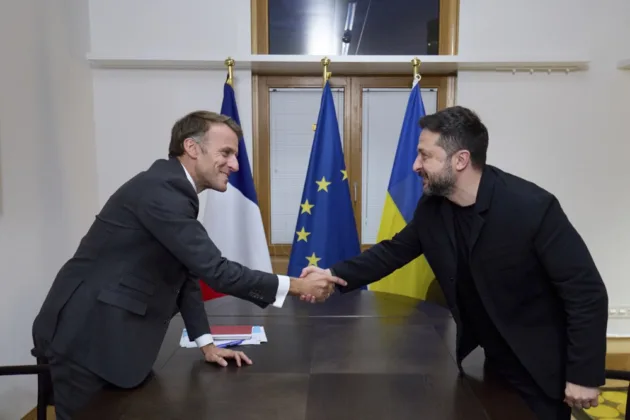
Ukrainian President Volodymyr Zelenskyy joined a working session on June 16, where von der Leyen and Costa told him the war was turning in Ukraine’s favour.
The European Commission is preparing a 21st package of sanctions against Russia, expected in July, that would target energy, financial services and trade.