





Some of Germany’s largest industrial companies have urged the government of Chancellor Friedrich Merz to implement its promised economic reforms “as quickly as possible and without any cutbacks”, warning that high energy costs and difficult economic conditions are putting companies under growing pressure.
In a joint letter to Merz, Labour Minister Bärbel Bas, Economy Minister Katherina Reiche and the parliamentary leaders of the governing parties, companies and business associations from Bavaria and Baden-Württemberg called for reforms agreed in the coalition agreement to be implemented without delay.
In the letter, the companies highlight the growing impatience over the pace at which the government’s economic programme is being implemented.
Among the companies reported to have signed the letter are Audi, BMW, Mercedes-Benz, Porsche, Siemens, ZF and Eberspächer. The employers’ associations representing Germany’s metal and electrical industries in Bavaria and Baden-Württemberg also signed.
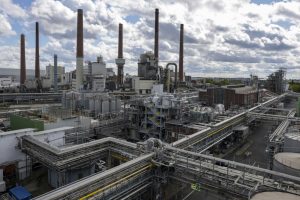
The companies said Germany’s high energy costs and changing economic conditions were placing businesses under “considerable pressure”.
“Especially in this situation, the concrete design of social and economic policy framework conditions determines whether companies can remain competitive, keep jobs and make investments at our locations.”
A central concern raised in the letter is the cost of Germany’s social insurance system.
The signatories said the overall contribution burden has risen above 42 per cent and criticised the fact that the burden on companies and employees can increase even when contribution rates remain unchanged because contribution ceilings have been raised.
They called for the burden to be reduced on a sustainable basis, describing further increases as unacceptable for businesses and employees.
The intervention comes as the German government faces continuing pressure to improve the country’s economic competitiveness.
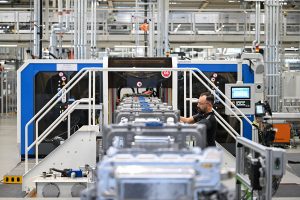
With Germany facing high energy costs, elevated labour expenses and international competition, the signatories are pressing the coalition to move from announced reforms to concrete measures.
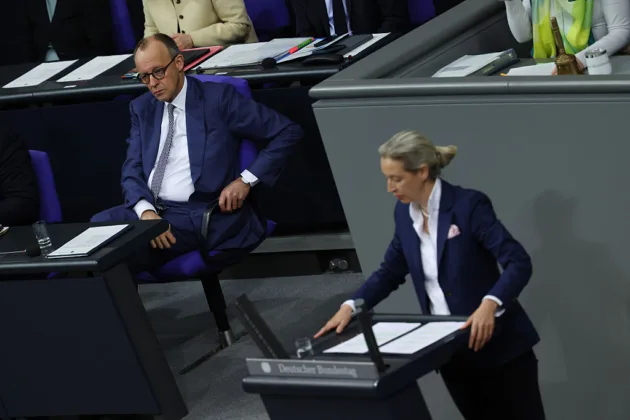
Merz’s coalition government between the centre-right CDU/CSU and the centre-left SPD has made economic reform and the revival of Germany’s industrial base central priorities.
“We are facing major challenges, that is clear,” said Chancellery chief Nina Warken (CDU) in the ZDF morning magazine regarding the economic situation.
There are “a lot of adjustments that we have to turn now,” Warken said. She mentioned non-wage labour costs, energy costs and the question of more flexibility in working hours. There is a “great need for action” here.
She admitted that the reform projects would “also lead to cuts for citizens”.
“It takes courage, and that’s not necessarily what makes you popular, but that’s not what it’s about, it has to be acted on now.”
She stressed that the federal government would focus on strengthening the economy at its cabinet meeting next week.
The companies’ appeal was nevertheless accompanied by some criticism of the business community itself. Siemens Healthineers chief executive Bernhard Montag criticised what he described as excessive complaints from some German managers, arguing that companies should not expect the state to solve every problem.
In March, members of Germany’s Association of the Chemical Industry also sounded the alarm on the slow pace of the government reforms.
A new McKinsey analysis has found that productive net investment in Germany has fallen to just 0.2 per cent of GDP in 2024, placing the country near the bottom of a ranking of 34 leading economies. https://t.co/7GP8bhKq1f
— Brussels Signal (@brusselssignal) July 2, 2026