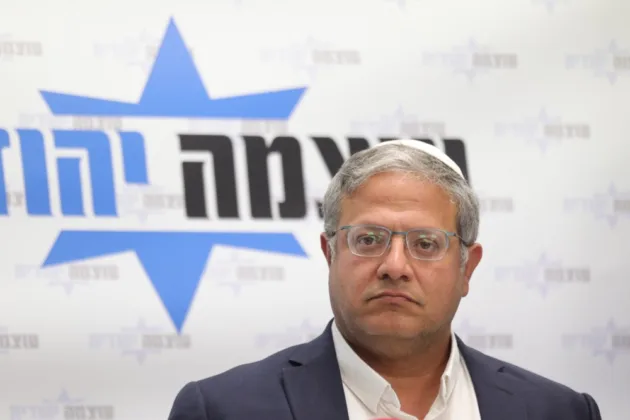






Senior politicians from both parties in Germany’s governing coalition have called for European Union sanctions against Israeli National Security Minister Itamar Ben-Gvir, breaking with Berlin’s resistance to such measures.
Jürgen Hardt, foreign policy spokesman for the Christian Democratic Union/Christian Social Union (CDU/CSU) group in the Bundestag, said on August 17 that the EU should place the minister on its sanctions list as a signal on human dignity and human rights. He told Politico that an Israeli cabinet without Ben-Gvir would bring Israel and Europe closer together.
Adis Ahmetović, foreign policy spokesman for the Social Democratic Party (SPD), said the German Government should support sanctions on both Ben-Gvir and Finance Minister Bezalel Smotrich.
Vice-Chancellor Lars Klingbeil told broadcaster Sat.1 on August 18 that European sanctions should now be considered very seriously. He described the remarks as dehumanising and said he stood in solidarity with the State of Israel but not with ministers of that kind.
The interventions have increased pressure on Chancellor Friedrich Merz and Foreign Minister Johann Wadephul, both of the CDU. Germany was understood to be among the countries that blocked an attempt to list Ben-Gvir at a Foreign Affairs Council meeting in Luxembourg in June, alongside Austria and Czechia.
The European Commission declined to comment directly on the remarks on August 18. “The EU expects Israel to comply with all its obligations under international law,” spokesperson Anitta Hipper said, adding that a proposal to list the minister under the bloc’s global human rights sanctions regime remained before the Council.
Ben-Gvir made the comments on a podcast hosted by Rom Braslavski, a former hostage held in Gaza, in an episode aired on August 15. The right-wing minister called for targeted assassinations of 30 to 40 people in the territory every night and said some of those living there did not deserve to live.
He also pressed for mass Palestinian emigration from Gaza and for Israeli resettlement of the enclave. Ben-Gvir said he disagreed with Prime Minister Benjamin Netanyahu over the scaling back of Israeli strikes under the ceasefire that took effect in October 2025.
The minister holds no formal authority over the military although he sits on Israel’s security cabinet. Israeli voters go to the polls on October 27.
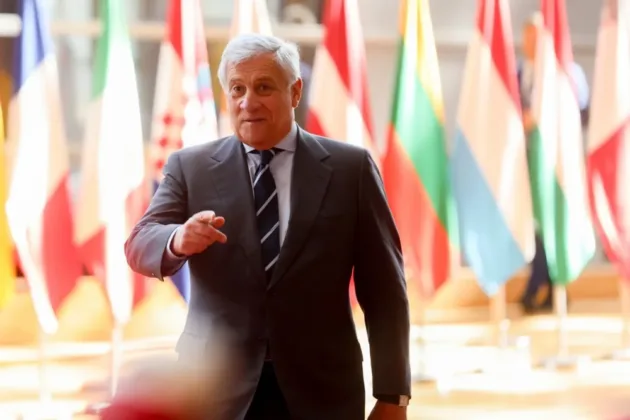
Italy and Spain demanded EU sanctions against Ben-Gvir in May over the treatment of detained activists from a Gaza-bound flotilla, a call that also failed to secure the required unanimity.
Sanctions on individuals need the backing of all 27 member states. France, Slovenia, the Netherlands, Spain and Belgium have imposed national entry bans, while the United Kingdom, Norway, Canada, Australia and New Zealand sanctioned Ben-Gvir and Smotrich in 2025.