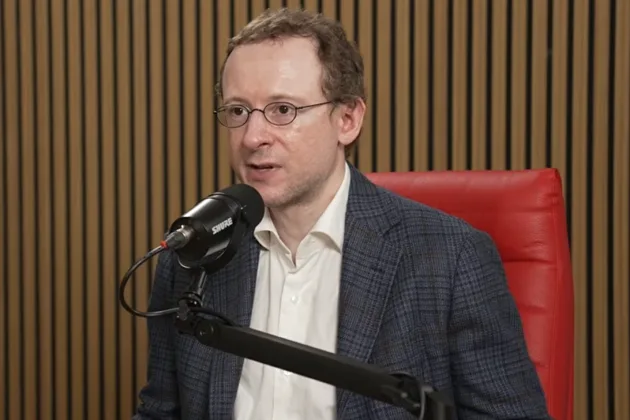




Nathan Cofnas, the academic who exposed alleged fraud of the late Cambridge professor Jason Arday, has been suspended from his position at the University of Ghent. The academic says he expects to be fired.
In the suspension letter sent to Cofnas, according to fellow academic Maarten Boudry, the University stated that “The manner in which you publicly presented your role in the allegations concerning the late professor Jason Arday has reinforced concerns among the university’s community that your public interventions seem to develop into targeted campaigns of professional elimination.”
“Furthermore, in several public interviews, you repeatedly referred to the late professor Jason Arday as being ‘mentally disabled’ and made various other disparaging remarks concerning him, including, among others, describing him as a ‘worthless scholar’.”
“By framing your interventions as a ‘crusade’ aimed at the systematic personal and professional destruction of colleagues, you have demonstrated that your actions extend beyond the permissible bounds of academic debate.”
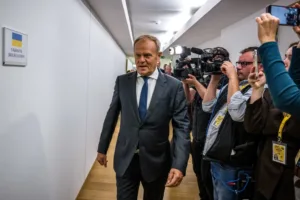
The move comes after Ghent University announced it would take “appropriate action” against one of its own researchers for publicly highlighting extensive plagiarism and biographical embellishments by Arday.
In a statement issued on August 19, the university said it was “shocked” by Arday’s death and that the recent public statements of a postdoctoral researcher at the institution “regarding this matter” were being taken “very seriously”.
“At the same time, we wish to be clear about the values we uphold as a university. Ghent University stands for respect for human dignity and opposes discrimination, hatred and racism.”
Academic freedom, it stressed, “is not unlimited” and “goes hand in hand with responsibility and may be restricted in order to protect the rights of others”.
“Ghent University has decided to take appropriate action within its powers and the applicable framework”, it said.
The statement was signed by rector Petra De Sutter, a Groen politician who was Belgium’s deputy prime minister from 2020 to 2025, and vice-rector Herwig Reynaert.
I was just suspended by Ghent University. They will almost certainly fire me.
The decision was made by rector Petra De Sutter, a former leader of the Green Party.
— Nathan Cofnas (@nathancofnas) August 20, 2026
De Sutter was herself criticised in January 2026, when the investigative website Apache revealed that her rectoral address contained three quotations attributed to well-known thinkers that had been fabricated by generative artificial intelligence.
The researcher in question was not named but is Nathan Cofnas, an American philosopher of biology who joined Ghent in 2026.
Ghent University has not specified which of Cofnas’ recent comments triggered the process, nor what form any action might take.
In late July, Cofnas published detailed evidence on his Substack showing that large sections of Arday’s 2015 PhD thesis at Liverpool John Moores University were taken nearly verbatim from an earlier dissertation, sometimes retaining copy-editing errors from the source.
That earlier text was a 2009 thesis by Paula Zwozdiak-Myers, now an education academic at Brunel University of London.
He also documented parallel problems in published papers, including the presentation of interview quotes that appeared to have been lifted from other researchers’ work, and raised questions about Arday’s claims of extraordinary athletic feats and £5.5 million in charity fundraising.
Arday, appointed in 2023 as Cambridge’s youngest black professor at the age of 37 and celebrated as a diversity, equity and inclusion (DEI) success story, resigned on August 5, hours after the University of Cambridge said it would investigate his appointment and career. He cited the “unrelenting public attention”.
He was found dead at his London home on August 14, aged 41.
Cambridge and other institutions that had employed him, including Glasgow, have since begun reviews of his appointments.
An earlier Liverpool John Moores inquiry had not upheld formal plagiarism charges, attributing similarities to “honest and reasonable error”, but subsequent reporting and analysis by independent outlets and plagiarism experts described the overlaps as extensive.
DEI Fraud and Cover-Up: https://t.co/ENXSP7I9hB
It’s an open secret at Cambridge University, but everyone is afraid to speak out. Newspapers backed away after getting hit with legal threats.
Here, I tell the true story of Jason Arday—DEI superstar and the youngest black…
— Nathan Cofnas (@nathancofnas) July 21, 2026
Cofnas, who left a position at Cambridge’s Emmanuel College in 2024 after controversy over his writings on race differences in intelligence and the implications for meritocracy and DEI policies, has described himself as a “race realist”.
His appointment at Ghent itself triggered protests, open letters from left-wing staff and students, and petitions arguing that his views conflicted with the university’s ethical code. One carried more than 2,000 signatures.
The university defended the hiring at the time on grounds of academic freedom and procedural correctness.
Critics of Ghent’s latest move note that Cofnas brought publicly verifiable problems in Arday’s scholarship into the open after major outlets had reportedly stepped back under legal pressure.
Those critics argue that universities that had elevated Arday with little apparent scrutiny of his record are now focusing institutional energy on the messenger rather than on their own failures.
They contend the priority should be examining how a candidate with such documentary issues reached senior posts.
Activists on the progressive Left have largely sidestepped the detailed evidence of plagiarism and fabricated claims in Arday’s record, instead portraying the episode as a racist “witch hunt” or media “lynching” driven by Cofnas and right-leaning outlets.
Writing in The Emancipator on August 15, Ibram X. Kendi said the “White-owned, mainstream media” had hunted Arday “like a lynch mob”. An opinion piece carried by Al Jazeera two days later called the death “institutional murder”.
London mayor Sadiq Khan accused the press of “pernicious public shaming”. An open letter signed by Green Party leader Zack Polanski and Labour MPs urged official oversight of press decision-making.
This despite the fact that the media moved very late on the story. The watchdog NewsCord counted 249 articles on Arday in 22 days.
Before that, only Times Higher Education reporter Jack Grove had looked into it.
He sent Arday three polite emails as part of investigating plagiarism allegations in Arday’s PhD and papers, backed by a 63-page dossier, and offered right of reply.
Arday reported him to the Metropolitan Police for alleged harassment.
The Met investigated Grove for four months without initially telling him. When they contacted him in February 2026 to say the case was closed, an officer warned him not to contact Arday again because the enquiries had affected Arday’s “mental health”.
Met Commissioner Sir Mark Rowley later publicly admitted the force “dropped the ball”, telling LBC that the complaint should have been screened out immediately as not requiring police action, and that contacting the journalist was a mistake.
Arday had also engaged the law firm Carter-Ruck, which wrote to the Times Higher Education suggesting the inquiries might be “racially motivated”. The outlet ultimately did not publish its investigation, as Retraction Watch later reported.
Ghent University, where @nathancofnas is employed as a researcher, has announced it is investigating the academic for breaking the story about Jason Arday’s plagiarism.
Leftists and BLM activists have been organizing a campaign urging people to mass email the university with… pic.twitter.com/C6k43YCnkJ
— Andy Ngo (@MrAndyNgo) August 20, 2026