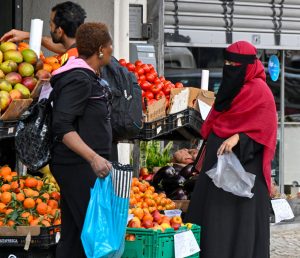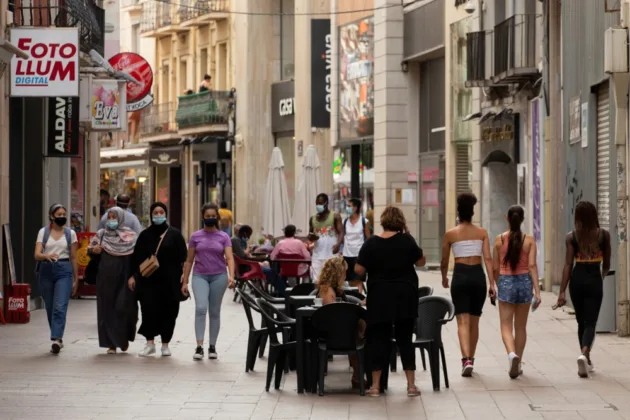






Portugal has banned the concealment of the face in public spaces after President António José Seguro signed into law a bill that originated with the right-wing Chega party.
Seguro promulgated the decree on August 18, according to a note issued by Belém Palace, the presidential seat in Lisbon. The former Socialist Party leader beat Chega leader André Ventura in the presidential run-off on February 8.
The text prohibits the wearing in public spaces of clothing designed to conceal or obstruct the face. It also bars coercing anyone into covering their face on grounds of gender, religion, age or origin.
Breaches carry fines of €150 to €750 where negligence is established and €400 to €3,000 where intent is proven. Chega’s original draft had set ceilings of €2,000 and €4,000.
Forcing a person to cover their face is punishable by up to three years in prison.
Exemptions apply for health, professional, artistic, entertainment and advertising reasons. The ban does not extend to aircraft, diplomatic and consular premises, places of worship or other sacred sites.
Seguro said the decree touched on a matter of great social and cultural sensitivity in which it was extremely difficult to weigh rights and duties in a balanced way. He said the amendments introduced during the parliamentary process had persuaded him to sign it.
The President cited social integration, non-discrimination on grounds of gender and security, pointing to rulings by the European Court of Human Rights. He said he shared the court’s view that the face was central to human identity and communication.
Parliament adopted the final text on July 17 with votes from the governing Social Democratic Party (PSD), Chega, Liberal Initiative and the CDS-People’s Party. The Socialist Party, Livre, the Portuguese Communist Party and the Left Bloc voted against, and the People-Animals-Nature party abstained.
Chega tabled the original bill, which parliament approved in principle in October 2025 before it stalled for around eight months. The PSD brought forward a substitute text in June that recast the measure around public security and identification rather than religion.
Amnesty International Portugal has said the law is discriminatory and threatens the rights of Muslim women who choose to cover their faces. It argued that stripping out explicit references to Islam had not changed its effect.
Portugal joins France, Belgium, Austria, Denmark and the Netherlands among European countries that already have full or partial bans on face coverings in public.