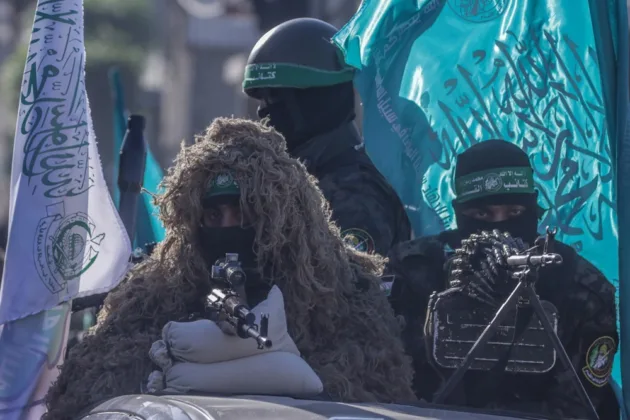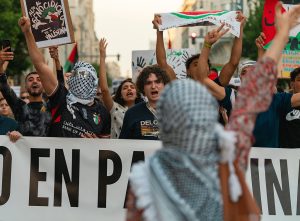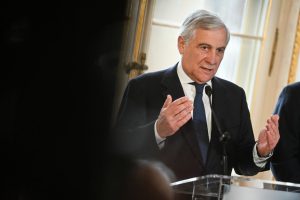









Who can claim to be a “humanitarian aid worker”? Terrorists who infiltrate aid organisations as an exploitative facade for nefarious agendas? “Human rights champions”? People who support violence?
On April 24, 2024, a local employee of the Belgian government’s agency for international cooperation, Enabel, was killed in an Israeli air strike on eastern Rafah, southern Gaza Strip. At the time, Belgium lashed out at Jerusalem over the death of this prized aid worker and then foreign minister Hadja Lahbib summoned the Israeli ambassador. The premise of that accusation, though, has since collapsed: on September 4 the innocent worker was identified as a member of Hamas’ Khan Younis Brigade, in material that has not been independently verified.
Unfortunately, don’t expect any honesty or backpedalling from Brussels on this case or others.
Abdallah Nabhan joined Enabel in April 2020 as a “business development officer”. He was killed in Rafah at the age of 32. Belgium quickly blamed Israel for the death, then development minister Caroline Gennez called the deaths unacceptable and in exceptionally strong terms Enabel said Israel bore “a crushing responsibility“. Israel Policy Forum analyst Gabriel Epstein’s recent revelation that Nabhan was a member of Hamas’ Khan Younis Brigade should have led to an apology from Belgium as forceful as its accusation.
Critically, the issue goes far beyond Nabhan and is emblematic of a greater crisis: How did Belgium’s system for vetting employees in Gaza, to the extent that this exists, as well as partners and beneficiaries of international development programmes, totally fail to detect infiltration by EU-designated terrorists and terror-supporters?
The Belgian government has been warned about this fundamental vulnerability for years. A 2021 investigation by NGO Monitor, a Jerusalem-based research institute, found that one of Nabhan’s colleagues at Enabel had published content expressing support for terrorism. Other Belgian development frameworks similarly failed basic vetting practices. In 2017, an NGO activist who would later serve as a spokesperson for Belgium’s former development minister Meryame Kitir posted about two terrorists killed in clashes with the Israel Defense Forces (IDF), declaring, “It is our duty to continue their fight.”
Was there any screening in place to prevent the hiring of terror-affiliated or terror-glorifying individuals, or to end their employment? If so, how did all three cases occur?
The same terror-linked questions apply to Belgium’s funding for NGOs. NGO Monitor’s research shows that between 2017 and 2026, Belgium provided some €2.5 million to terror-tied Palestinian NGOs, all linked to the Popular Front for the Liberation of Palestine (PFLP), an EU- and US-designated terrorist organisation. The funding, which has been channelled through anti-Israel Belgian NGOs including Viva Salud, Broederlijk Delen and Oxfam Solidarité, continues despite clear evidence presented by Israel showing the Palestinian recipients to be terror entities accused of diverting humanitarian funds for the benefit of the PFLP.
Belgium was one of nine EU member states that declared in July 2022 that they had received no substantial information from Israel to justify reviewing their policy towards the designated NGOs, and that they would continue to fund them.
Belgium has also allowed sanctioned NGOs to establish themselves in Brussels. Following the Israeli designation of PFLP-linked Al-Haq and Bisan in October 2021, Al-Haq Europe and Bisan International Center were registered as Belgian non-profit associations in 2022. Al-Haq Europe renamed itself Rights Matter in June 2025 and moved its head office to Brussels. The aforementioned Viva Salud explicitly described Bisan’s Brussels presence as a means of mitigating the consequences of Israel’s designation and strengthening political engagement with European decision-makers.
A direct line can be drawn between Belgium’s welcoming environment for terror supporters and its longtime blurring of the distinction between development assistance and political activism. Notably, Belgium’s 2017-2021 Joint Strategic Framework for aid to the Palestinians, approved by the minister of development cooperation, called for anti-Israel international-law advocacy while “mitigating the influence of pro-Israel voices”. This combination makes a mockery of the entire notion of providing humanitarian aid in areas such as Gaza that are controlled by terror organisations.
It is not too late for Belgium to change course. Belgium should independently review its Palestinian aid programmes, audit funding to organisations facing credible terrorism allegations, strengthen employee and partner screening and disclose what action it is taking in response to this evidence. The Nabhan case only heightens the urgency of these measures.
Belgian taxpayers deserve to know where their money is going, and to know that the answer is not toward terror operatives or activist campaigning. A truly resilient aid system can and should support vulnerable groups while protecting against abuse by extremist actors.