







Sweden’s Centre Party has formally committed to backing the Social Democrats for government formation, effectively closing the door on a centre-right coalition but leaving the country’s two-month political gridlock intact.
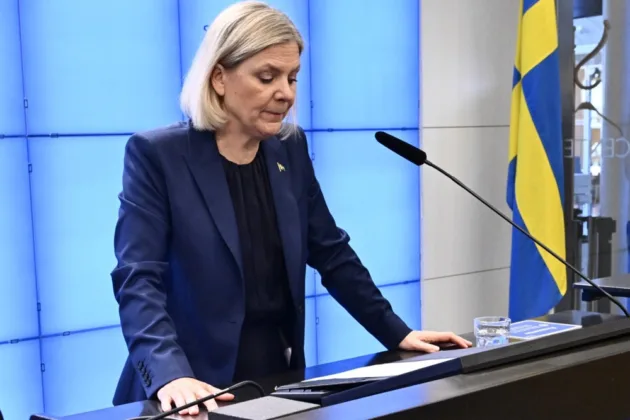
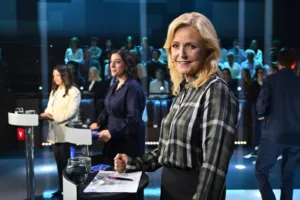
Centre Party leader Elisabeth Thand Ringqvist announced on November 15 that her party will negotiate based on Social Democratic leader Magdalena Andersson’s policy programme.
She said the decision had been backed by a unanimous party board and parliamentary group, and that it “requires the Left Party to drop its demand to be part of the government”.
The move reunites the four-party, left-leaning bloc that won a razor-thin majority of 176 of the Riksdag’s 349 seats in the September 13 parliamentary elections.
The alliance, though, remains paralysed by a structural dispute between two of its essential partners, the economically liberal Centre Party and the socialist Left Party.
While the Centre Party joined Andersson’s bloc during the campaign specifically to keep the Sweden Democrats out of power, finding the party too right-wing, it promised its voters it would never allow the Left Party into the cabinet.
Conversely, the Left Party has drawn a hard line, stating it will no longer provide passive parliamentary support without receiving formal ministerial posts.
Andersson requires the backing of both parties to become prime minister, but neither side has signalled a willingness to drop its ultimatum.
The Centre Party’s recommitment to the left deals a significant blow to caretaker Prime Minister and Moderate Party leader Ulf Kristersson.
Following Thand Ringqvist’s own failed prime ministerial vote on November 3, Riksdag Speaker Andreas Norlén tasked Kristersson with exploring a centre-right government.
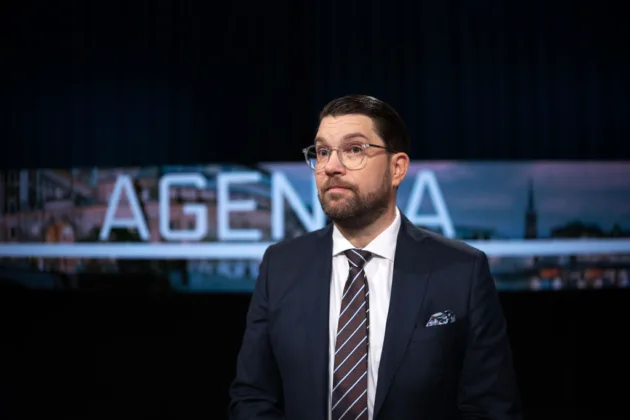
His chances had improved on November 6, when Sweden Democrats leader Jimmie Åkesson dropped his party’s demand for ministerial posts and said it would tolerate Kristersson as prime minister.
With the Centre Party’s votes now formally pledged to Andersson, Kristersson lacks a viable path to surviving a vote in the Riksdag, where a candidate is rejected if at least 175 MPs vote against. The four Tidö parties that backed his outgoing government hold 173 seats.
Kristersson said on November 15 that a right-leaning minority government was “perhaps not impossible”.
Andersson will now initiate a new round of negotiations with the Centre Party, the Green Party and the Left Party, as she attempts to broker a power-sharing compromise between the bloc’s polarised factions.
The current stalemate follows a series of collapsed negotiations and failed parliamentary votes since the election.
Under the Swedish constitution, a snap election must be held if the Riksdag rejects four prime ministerial candidates. Two votes have failed so far.
Speaker Andreas Norlén initially tasked Andersson with forming a government on September 18, but her first attempt failed by mid-October after neither the Left Party nor the Centre Party yielded on its ultimatum.
The Riksdag rejected her candidacy on October 15 by 248 votes to 99, with the Left, Green and Centre parties all voting against.
Norlén then gave Thand Ringqvist a mandate on October 19 to explore a centrist government and later put her forward for a prime ministerial vote on November 3, although she had said she was not seeking the post.
The bid was defeated, with 324 lawmakers voting against her and only the Centre Party’s 25 MPs voting in favour.
Speaker Norlén subsequently handed the mandate to Kristersson to explore a centre-right coalition.
On November 6, the Centre Party requested final policy proposals from both Andersson and Kristersson, which both submitted on November 13.
By selecting Andersson’s package on November 15, which notably excludes Left Party ministers, the Centre Party effectively ended Kristersson’s chances of securing a majority ahead of his November 17 deadline to report back to the Speaker, already extended from November 10.
Despite the Centre Party returning to the left bloc, Andersson’s mathematical impasse remains unresolved.
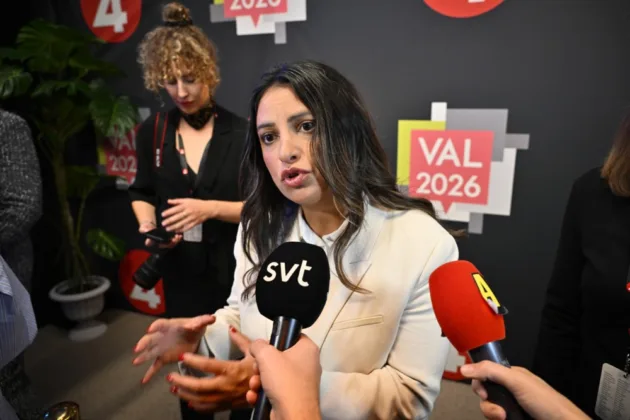
Shortly after Thand Ringqvist’s announcement, Left Party deputy leader Ida Gabrielsson told public broadcaster SVT’s Agenda programme that her party’s demand for cabinet positions stands firm.
“We have said that if we are not included, then we will not tolerate that government,” she said.
Andersson must now initiate a new round of negotiations to resolve the exact same structural conflict that has blocked government formation since election night.
Political analysts suggest the Centre Party’s commitment to the left bloc may be more tactical than permanent.
According to some, the Centre Party is deeply split internally and is intentionally keeping the door to the political right open as negotiating leverage.
Should the Left Party demand too many concessions to allow a Social Democratic government, the Centre Party could still execute a rightward pivot.
This calculation places pressure on Andersson. Political scientists note that while the Left Party risks taking the public blame if government formation collapses, the Social Democrats would likely suffer the most severe political consequences.
Highlighting the precariousness of these negotiations, Thand Ringqvist has already warned that a snap election remains a very real alternative if the Left Party does not drop its ultimatum.
📢🇸🇪 Sweden’s election may produce a narrow victory for the Left…but the numbers tell a more complicated story.
In his latest commentary, @henryolsenEPPC argues that the election reveals deeper weaknesses on the Left and encouraging trends for the Right.
Read the full…
— Brussels Signal (@brusselssignal) September 15, 2026