


Sometimes it’s the dog that doesn’t bark that speaks loudest. That’s the case in European politics, where the establishment’s failure to say that the extreme Left is as unacceptable as the extreme Right tells you all you need to know.
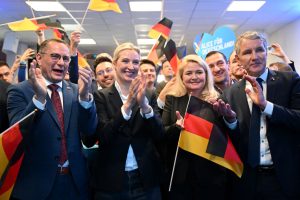
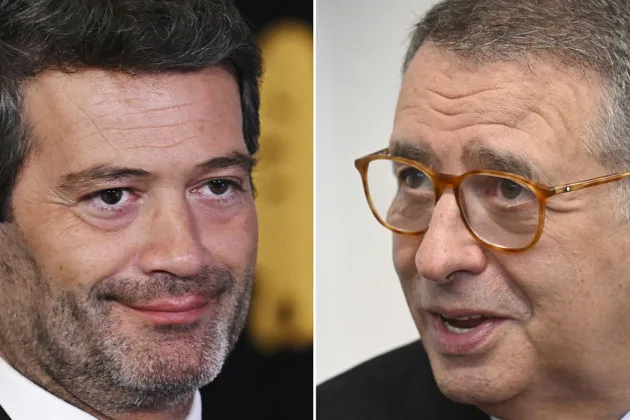
We’re now well into the second decade of conservative populist politics. Throughout this era, the centre-right and centre-left have always sung from the same hymnal: such parties cannot be tolerated and can never take power. Whether this is called the Brandmauer, the cordon sanitaire or simply represents the unanimous opinion of all the self-appointed elites, the sentiment is always the same.
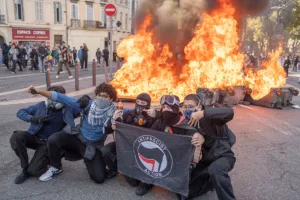
Yet one almost never hears the same cries of anguish uttered against parties of the extreme left, even if those parties embrace many of the same policies that supposedly place the populist or nationalist right beyond the pale. There may be some exceptions – Germany’s Christian Democratic Union (CDU) has always pledged not to work with the ex-East German Communists, Die Linke – but it’s exceedingly rare to hear vitriol poured on the left extreme.
We see yet more examples of the establishment’s toleration of extremism on the left in the recent elections in Berlin on September 20 and Sweden on September 13. In both cases, supposedly moderate parties of the centre-left are seriously considering entering into a coalition with parties whose hostility to the European project is as, if not more intense, than that of the right.
In Berlin, Die Linke’s victory with 25.7 per cent of the vote puts it in the driver’s seat regarding the formation of the state’s government. The three establishment parties – the CDU, the Social Democrats (SPD) and the Greens – could form a narrow majority of 82 of the 158 seats in the Abgeordnetenhaus, but the two leftist partners seem more open to joining Die Linke. This despite that party’s pledges to nationalise housing projects, install rent caps and create government-run grocery stores.
Die Linke also has at a minimum tolerated open anti-Semitism and has murky ties to a German underworld figure. At the national level, Die Linke traditionally has opposed NATO and even today does not want Germany to send weapons to Ukraine.
Views like these are among those given for why working with Alternative for Germany (AfD) is out of bounds. Yet those considerations do not seem to bother the German centre-left.
Or take Sweden. The Left Party (V) was openly Communist until 1990. It remains socialist in its economics and resolutely pro-immigration. The party only dropped its demand that Sweden leave the European Union in 2024, and opposed Sweden’s entry into NATO after the Russian invasion of Ukraine. And like Die Linke, it has been wracked with accusations of anti-Semitism.
V now insists that it will only support the Social Democratic leader, Magdalena Andersson, for Prime Minister if it sits in government. That would be a first, as it has previously supported Social Democratic-led governments from the outside, but has never sat in government. Andersson fulminated against centre-right Prime Minister Ulf Kristersson during the campaign for his willingness to allow the Sweden Democrats into government should his coalition win, but Andersson seems quite willing to let the leftist extremists into the government tent. On September 28 she handed back her mandate to form a government, saying there was “no possibility” of doing so as things stood.
Even establishment figures who openly fight against the extreme left ultimately are more willing to tolerate it than the right. French President Emmanuel Macron formed a “republican front” in 2024’s parliamentary vote with the left bloc’s New Popular Front. That entity included, and in some senses was dominated by, the extreme leftist Jean-Luc Mélenchon and his party, La France Insoumise (LFI).
Mélenchon’s leftism has been on full display in the early campaigning for next year’s presidential election. He has said he wants to withdraw France from NATO and wants to ban Ukraine’s successful drone strikes on Russia. His comments that he would be willing to simply abolish some of France’s debt held by the European Central Bank have roiled the campaign. Of course, Mélenchon and the LFI are accused by figures across the political spectrum of anti-Semitism.
The main elements of the centre-left so far are resisting cooperation with LFI going into the crucial presidential election on April 18 and May 2. The Socialist party and other centre-left entities agreed to hold a common primary to choose its candidate on October 9-10, which excluded members or candidates from LFI. But the pact establishing the vote pointedly did not include the request from one candidate, Place Publique’s Raphaël Glucksmann, to rule out future cooperation with LFI. Apparently, many within the centre-left want to wait to decide whether the extreme Left devil they dislike is worse than the populist Right devil they despise.
One could add many other examples, but the trend is clear. Parties that proclaim their devotion to democracy, capitalism and the Western alliance draw red lines only in one political direction. Which should lead any sensible observer to ask whether that means their protestations are sincere to begin with.
Europe’s centre-right voters are increasingly catching on and moving rightward in response. It will be interesting to see whether the centre-right European People’s Party (EPP) finally realises that the supposed common front for Europe is really a common front for the left or whether it will continue to pull the wool over its own eyes.