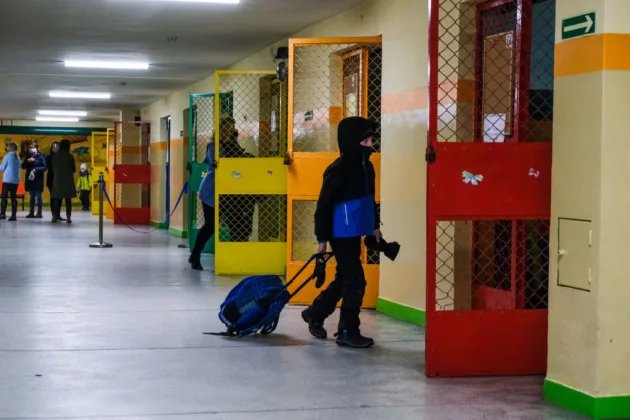






Romanian authorities have detained a 13-year-old schoolboy after a mathematics teacher and a fellow pupil were stabbed outside a classroom in the northern city of Bistrița on October 19, in an attack pre-announced across social media.
The incident at the Ștefan cel Mare secondary school left both victims hospitalised in stable condition, with local reports confirming that the wounded pupil had intervened to shield the teacher. Another 13 children and one adult were treated for panic attacks.
Because the suspect is under the age of 14, he cannot face criminal trial under Romanian law, but prosecutors have opened a judicial inquiry into attempted aggravated murder while examining his electronic devices. He has been admitted to a child psychiatry clinic in Cluj-Napoca and any further measures fall to the county child protection directorate.
Investigators and Romanian education officials are scrutinising posts published to TikTok shortly before the stabbing.
In images shared on social media and widely circulated in local press, the teenager posed with a knife, wearing a helmet and a balaclava, alongside captions saying he had been preparing the attack for eight months and ending: “See you in Valhalla.”
Those posts were in Romanian. Messages in English were found written on the tiles of the school lavatory where he changed, alongside symbols of Romania’s interwar Legionary movement.
Video footage showed him arriving in front of the classroom, knocking on the door and waiting for a female teacher to come out.
He struck her with a knife in the head and chest area. Another pupil who heard the noise jumped in to help the teacher.
Moments later, terrified children stormed out of the classroom. A sports teacher restrained him before police arrived.
The Bistrița-Năsăud prosecutor’s office said the attack had been premeditated and was most likely racially motivated. Chief prosecutor Adrian Briciu said the boy had been looking for a classmate he believed to be Indian, that the two had no previous conflict and that he had shown no remorse.
The Bistrița attack is not an isolated incident, but the latest in a cluster of juvenile school stabbings across Europe where attackers replicate specific aesthetics, helmets, body cameras and rhetoric popularised in nihilistic online subcultures.
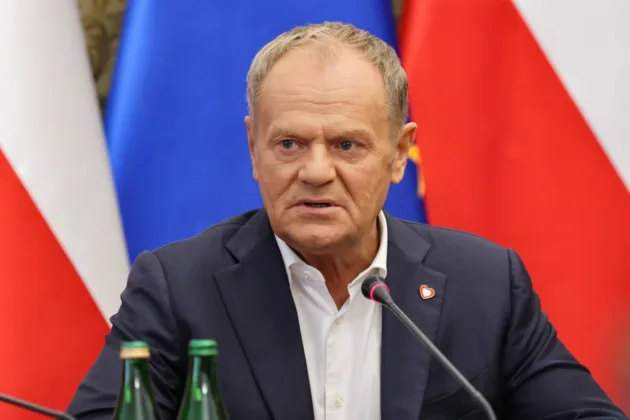
Mihai Dimian, interim Education and Research Minister of Romania, said that “the press reports that the student announced his attack on TikTok must be clarified by investigators”. He added that online threats had to be taken seriously and reported immediately, and that platforms should respond promptly to reports of content encouraging violence.
The Romanian case bears resemblances to events in Poland earlier this month.
On October 8, a 15-year-old former pupil wearing a camera-mounted helmet entered a primary school in Leszczydół-Nowiny, Masovia, northeast of Warsaw, killing a 37-year-old school caretaker who attempted to block his entry. The head teacher and a teacher were also wounded.
Just a day prior, on October 7, a 19-year-old attacked nine people — five pupils, two teachers and two passers-by — with a machete at a vocational school in Ostrołęka, Poland, leaving behind a backpack containing a homemade explosive device.
Similar youth knife assaults and live-streamed attacks have been recorded across schools in Sweden, France and Germany over the past year.
European law enforcement agencies and extremism researchers increasingly warn that these attackers are not merely “lone wolves”, but radicalised consumers of obscure digital networks.
Online channels — operating across Telegram, Discord and short-form video platforms such as TikTok — reportedly glorify school massacres, encourage livestreamed violence and promote nihilistic murder cults.
In these spaces, young teenagers are encouraged to conduct real-world violence, compete for online notoriety and adopt identical visual signatures, including mirror selfies with blades, tactical gear and streaming helmets.
The case has triggered sharp scrutiny of major tech platforms and child protection policies across Central and Eastern Europe, with education ministers and intelligence services examining whether digital platforms failed to detect explicit warning signs and pre-attack manifestos.
🇷🇴 #Internacional: Profesora es apuñalada en la cabeza por adolescente de 13 años en Bistrița, Rumanía. pic.twitter.com/mulAQuFQN3
— Luis David García (@ldgarcia_mkt) October 20, 2026