



Danish police have charged two Ukrainian nationals with espionage after arresting them over the alleged photographing of MyDefence, a counter-drone manufacturer that has supplied equipment to Ukrainian forces for several years.
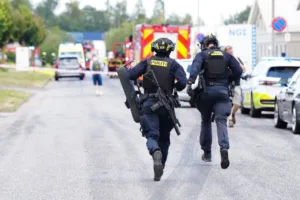
The two men, aged 18 and 21, were detained on October 19 in Nørresundby, in North Jutland, northern Denmark. They appeared the following day before the court in Aalborg, charged under section 108 of the Danish criminal code, which covers espionage.
Prosecutors allege the pair photographed the company’s premises alongside one or more unidentified accomplices and then sent the images on through the Telegram messaging service. They told the court they believed a Russian intelligence service was involved, without saying which one.
The hearing was held behind closed doors at the request of the prosecution, with an interpreter working in Russian and Ukrainian, the Danish broadcaster DR reported. The court found no grounds to remand the men but allowed police to hold them for a further three days.
Defence lawyer Rasmus Amandusson, who represents the 21-year-old, said both men had been in Denmark for less than a year, were working in the country and denied the charges. He said he could not discuss what they had told the court because the hearing was closed.
MyDefence declined to comment. Its chief executive, Dan Hermansen, said last year that the company had been the target of a Russian cyberattack.
Justice Minister Nicolai Wammen said the overall security situation was serious and that the Danish Security and Intelligence Service, PET, had reported considerable Russian interest in gathering information and preparing sabotage in Denmark. He urged anyone offered 5,000 kroner (€670) to photograph the local defence industry to refuse, warning that they risked ending up working for Russian interests.
PET said in September that Russian services were actively preparing sabotage against Danish defence companies and were recruiting ordinary Danes through social media, typically beginning with reconnaissance or photography before moving to sabotage itself.
The case lands on a country that has spent more than a year at the sharp end of what its own Government calls hybrid warfare, since drones forced the closure of several Danish airports in September 2025 and Copenhagen blamed a professional actor.
Those incursions pushed the European Union towards its so-called drone wall, a detection and interception network for the eastern flank that remains years from completion. The company allegedly targeted this week builds precisely the technology the bloc says it lacks.