

Paranoia. Distrust. Looking over your shoulder. Checking beneath your car for a bomb. Wondering whether your child’s new friend belongs to the wrong family. Keeping the curtains drawn and the neighbours at a distance.
They call it Síndrome del Norte. The Northern Syndrome.
For years, Spanish police officers stationed in the Basque Country lived with that fear. ETA killed more than 850 people. Its campaign also left behind families condemned to suspicion, isolation and, in some cases, psychological collapse.
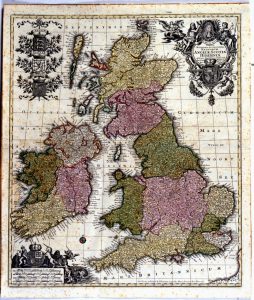
The British know the feeling. Northern Ireland has its own ghosts.
ETA declared its armed campaign over in 2011. The Provisional IRA had already laid down its weapons. Peace arrived, politicians shook hands, prisoners came home. But what happened to those who refused to accept the ending?
At 4.26am on September 26, Basque police stopped a Toyota Yaris near Eskoriatza, in northern Spain. Inside were two Basque activists and Naoise Ó Conarain, a 34-year-old former Irish Army soldier associated with dissident republican circles.
According to Spanish judicial reports, officers discovered maps of former ETA weapons caches, information on Guardia Civil officers, encrypted devices and photographs reportedly showing training for violent acts.
Malen Grünig Ibáñez and Aratz Bilbao Gómez were not detained at the scene. They handed themselves in at Irún on October 17 and were remanded in custody on terrorism-related allegations. The Irishman’s whereabouts remained unknown in reports published on October 22.
The discovery was hardly without warning.
Spain’s Guardia Civil had alerted the National Court as early as 2022 to radical Basque groups advocating methods associated with ETA. One was Jardun, a movement hostile to the institutional course taken by the mainstream Basque nationalist left.
Police sources quoted by El Español say elements of this environment favour renewed armed struggle. Jardun rejects the allegations. No attack plan has been established.
Then comes the Irish connection.
Ó Conarain has been associated with activities involving Saoradh, a dissident republican party linked by security assessments to the milieu surrounding the New IRA. Saoradh denies acting as its political wing. Its contacts with Jardun are documented; operational cooperation is not.
Meanwhile, on July 22, Irish police intercepted an explosive device containing 394 grammes of Semtex near the Northern Ireland border. Simon O’Donovan, identified in court as a Saoradh member, was charged in connection with the device. He denied the offence and was granted bail.
Two countries. Two investigations. Old separatist movements and new suspects.
There is no established operational link between the cases. That distinction matters. So does the fact that the New IRA remains active decades after the Good Friday Agreement. In 2019, it admitted responsibility for the killing of journalist Lyra McKee.
Spain now approaches its November 29 election with another uncomfortable question hanging over the Basque Country.
Under Pedro Sánchez, the dispersal of ETA prisoners ended. EH Bildu, which pursues its objectives through democratic institutions and has no established connection to the current investigation, became an important parliamentary ally.
But what happens if the People’s Party and Vox form the next government?
Cassandra could see disaster coming. Her curse was that nobody believed her.
Sara Hernández Díez, an adviser and contributor to El Correo de Burgos and Italy’s L’Opinione, has voiced to me a fear: that radical separatists might answer a right-wing victory with violence.
There is no evidence of an electoral attack plan. Yet the maps, the information on police officers and the Guardia Civil’s earlier warnings are real subjects of investigation. They deserve answers before another generation learns to look beneath its cars.
They call it the Northern Syndrome. The condition of those left orphaned by the state.
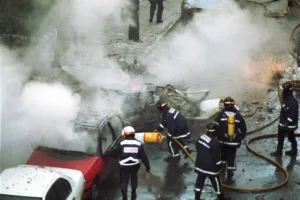
PS I wrote this article about 200 metres from where an ETA bomb was discovered in 2000 and subsequently destroyed by bomb disposal experts. It had been planted near a courthouse. Some 50 metres away stood a nursery school and a secondary school. Both are still there.