

The Hungarian Government has begun reviewing its flagship nuclear expansion project and is considering replacing Russian state-owned contractor Rosatom with alternative international suppliers, according to officials familiar with the process.
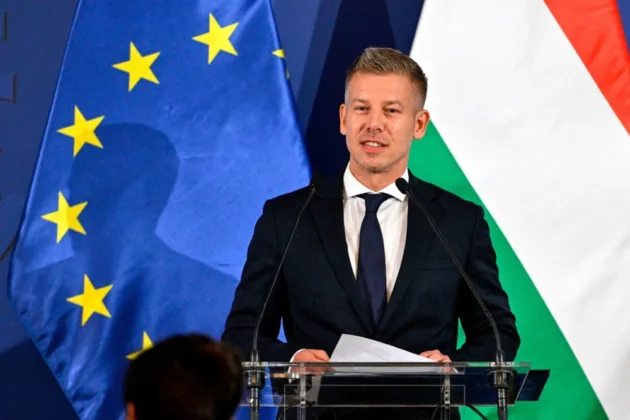
The appraisal, initiated under Prime Minister Péter Magyar after his Tisza party took 141 of parliament’s 199 seats in April and he was sworn in on May 9, is assessing the legal, technical and financial feasibility of stripping the Russian firm of its role at the Paks II facility.
A final decision on whether to terminate the contract is expected before the end of 2026 or in early 2027.
While Budapest remains committed to expanding domestic nuclear capacity to meet surging electricity demand, government insiders indicate that the administration is leaning towards removing Rosatom to align the project with European regulatory and foreign policy preferences.
The Paks II venture was awarded directly to Rosatom by former prime minister Viktor Orbán in 2014 without a public tender.
The arrangement was built around an estimated €12.5 billion budget, underpinned by a €10 billion Russian state loan facility.
The construction of two 1,200-megawatt VVER-1200 reactors has, though, been held up by regulatory disputes, design delays and scrutiny from Brussels.
The original bilateral deal has undergone five formal amendments, while a drafted sixth modification was never signed.
In another complication, the European Court of Justice on September 11, 2025 annulled the European Commission’s earlier approval of state aid for the expansion, ruling in a case brought by Austria that Brussels should have examined whether the direct award to a Russian company complied with EU public procurement rules.
Hungary had already disbursed more than €2 billion on preliminary site works and ground preparation before the first concrete was poured in February this year. Of that, some €1.1 billion has gone to Rosatom, a sum Budapest could be left to absorb if it walks away.
Walking away from the deal with Rosatom might also trigger considerable breach penalties.
Removing Rosatom would mark the second cancellation of a Russian nuclear plant within the European Union, following Finland’s decision to terminate the Hanhikivi 1 project in May 2022 after the invasion of Ukraine. The Finnish developer and Rosatom have been in legal dispute ever since.
Rosatom has rejected suggestions that its contract could be dissolved.
A company spokesperson stated that the Russian state nuclear monopoly had received no formal notification of any intention to terminate the agreement and insisted there are no legally justified grounds for such a step.
Alexei Likhachev, the head of Rosatom, said in Moscow this month that the group was awaiting the conclusion of the Hungarian appraisal, noting that approaches to the new government in Budapest for formal discussions had so far received no reply.
Officials in Budapest concede that replacing the general contractor mid-project would be technically complex and would force a redesign of the facility, renegotiation of European licensing and potential contract disputes with Moscow.
Sources close to the administration noted, though, that selecting a European or Western supplier would simplify the international sanctions environment and streamline regulatory clearance with the European Commission.
Rosatom has so far escaped EU sanctions. Russia supplied about 23 per cent of the bloc’s uranium enrichment deliveries and 16 per cent of its natural uranium in 2025, according to World Nuclear Association data.
Despite the review, Hungarian officials insist that nuclear energy remains non-negotiable for the country’s grid stability and energy security.
The sector currently accounts for roughly half of Hungary’s electricity generation through four Soviet-built VVER-440 reactors at the original Paks site, although imports mean it covers only about a third of national demand.
Addressing an energy conference, Zsuzsa Béres, deputy state secretary for nuclear energy and international relations at the Ministry of Economy and Energy, confirmed that Budapest would continue to rely heavily on nuclear generation, describing its industrial supply chains as essential for strengthening national and European strategic autonomy.
To ensure sufficient baseload power while the fate of Paks II is resolved, authorities are preparing applications to extend the operational licences of the existing four reactors by 20 years, pushing their decommissioning dates past their current expiry window of 2032 to 2037. The units, which came online between 1982 and 1987, have already had their 30-year design life extended once, in 2005.
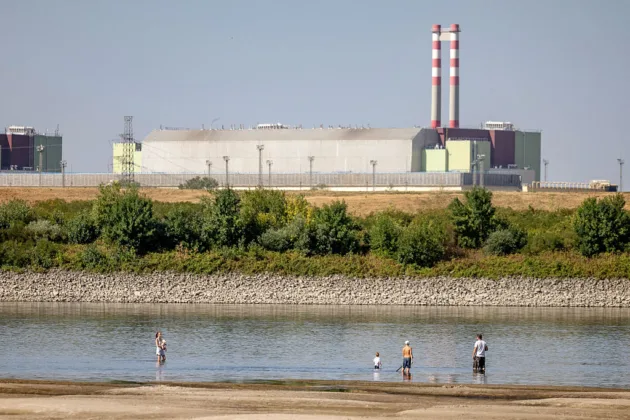
The existing plant has faced operational vulnerabilities of its own. In early August, record-low water levels on the Danube amid extreme heat and drought forced the operator to shut down three of its four units, leaving about 12 per cent of the site’s 2,000 megawatts of installed capacity running and pushing Hungary’s daily electricity import bill from roughly €1.7 million to €11 million, according to estimates by Portfolio.hu.
Russia has announced plans for a major buildout of its nuclear energy capacity.
Yesterday, Alexey Likhachev, director general of the country’s state atomic energy corporation Rosatom, said Russia aimed to add 38 new nuclear reactors to its existing fleet in the coming years.…— Brussels Signal (@brusselssignal) September 16, 2025