
The Italian Government has ordered 500 extra soldiers onto the streets of Milan, in northern Italy, and has called a cabinet meeting for the evening of October 20 to approve an emergency decree on public order.
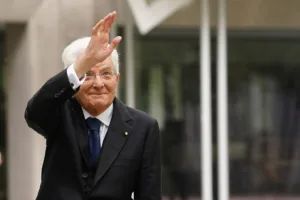
President Sergio Mattarella has said that “any form of violence is unacceptable”, speaking on October 19 at the opening of the annual assembly of the Union of Italian Provinces in Imperia, northwest Italy. He offered the solidarity of the country to the police, almost 200 of whom were injured over the preceding days.
The president called for an intelligent and in-depth analysis of the unrest, along with vigilance against violence that, he said, seemed to erupt suddenly and to come from actors not seen before.
He also drew attention to the youth of many of those involved, saying it raised questions that deserved reflection from several angles.
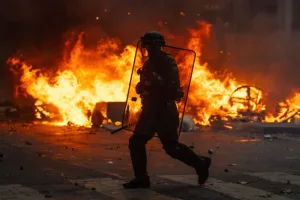
The trouble began on October 17 with marches against the rising cost of living called by the Italia in Piazza movement. Masked groups broke away from the demonstration in Milan, throwing stones and paving blocks at riot police, who answered with tear gas and water cannon.
Shops were looted and barricades set alight around Piazza del Duomo and the Galleria Vittorio Emanuele II, and rioters returned to the city centre the following night.
Police took 271 people to stations in Milan on October 18 and arrested 32 of them, including 23 minors, according to ANSA. Fourteen officers were hurt in the city, while the police union put the number injured in Bologna at 56 and the interior ministry said about 100 were hurt in Turin.
The decree is expected to extend preventive detention of up to 24 hours to minors and to allow deferred arrests on the basis of video footage, with heavier penalties for damage caused by groups.
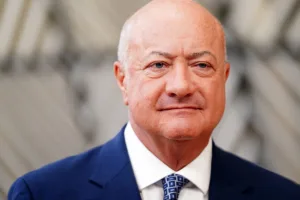
Italian defence minister Guido Crosetto said the text should give the soldiers the powers of police officers for three months. The 500 troops would reinforce the Strade Sicure operation, which already deploys some 6,800 military personnel across the country.
Deputy Prime Minister Matteo Salvini described the deployment as a victory for his Lega party, which has long pressed for tougher street policing.
Giuseppe Conte, leader of the opposition Five Star Movement, said the government was reaching for more security measures after failing on public order and ignoring the economic grievances behind the marches.
The unrest followed days of rioting in France, where about 1,000 police officers were injured and the prime minister ordered local curfews, leaving two of the European Union’s largest member states confronting street violence at the same time.