
For decades, Western policy towards the Iranian theocracy has been driven by the illusion that time and circumstance would moderate the fanatic leadership of the country into a sensible and constructive partner in the region.
For nearly as long, reality has repeatedly unmasked the illusion as nothing more than the result of appeasement. The Islamic Revolutionary Guard Corps (IRGC) built a proxy network of armed groups, a terror network operating all over the globe, and captured actors and institutions for its domination designs. It continued a programme of long-range missiles and nuclear warheads unrelentingly, circumventing all international attempts to stop it.
The last European attempt to stop the nuclear programme — by imposing automatic sanctions as a consequence of Iran’s non-fulfilment of its Joint Comprehensive Plan of Action (JCPOA) obligations, the so-called “snapback mechanism” — finally floundered in September 2025, proving how erroneous the European policy has been. France, Germany and the United Kingdom triggered the mechanism on August 28, 2025, and United Nations sanctions were reimposed a month later, on September 27.
The most serious trait of this failed Western policy has been, though, the siding with the Iranian regime in the oppression of its opposition: The full Stockholm syndrome as the apex of appeasement! Supporting the Iranian regime in the persecution of its opposition, by blacklisting it and persecuting it in Europe and Iraq, has been by far the most disastrous Western policy, since it considerably hindered what has always been the most important weapon against the Iranian Islamist threat.
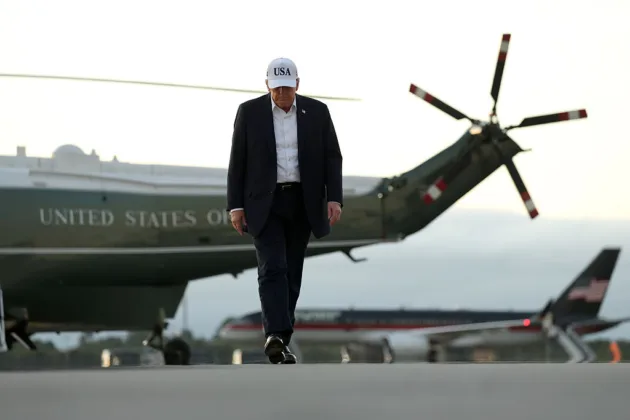
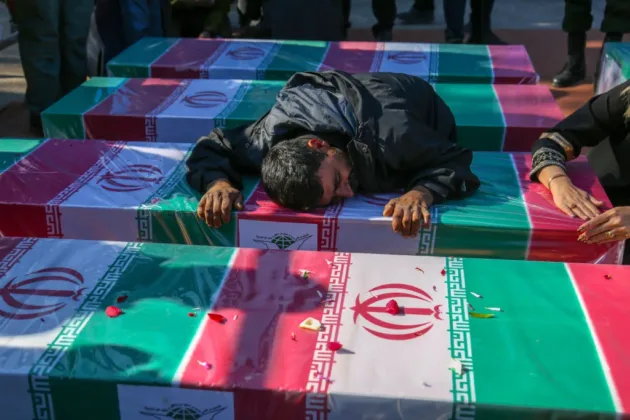
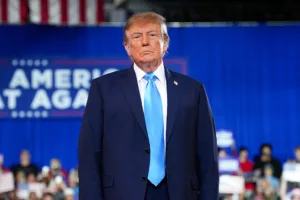
In late February this year, the US decided to change the course of its policy by confronting the Iranian military directly. It did mark some points within the old conventional framework, destroying most of Iran’s navy and air force and wiping out supreme leader Ali Khamenei, who was killed in the opening joint US-Israeli strikes on February 28 and replaced on March 8 by his son, Mojtaba Khamenei — but, as US President Donald Trump has recently acknowledged, this was not a successful alternative. At a campaign rally in Youngstown, Ohio, on October 12, Trump said Iran had been left with “no ships”, “no nothing” and “no leaders, even”, though he conceded: “We might have gone too far with the leaders because we don’t know who the hell we’re dealing with anymore.”
Still, the Western actors confronting the fanatic regime did not delve into what is by far their biggest political failure: To ignore the Iranian people on the ground and to put their trust in fake opposition declarations and intentions.
Whereas monarchist opposition has been mostly absent from the Iranian playground, whenever an uprising follows, a powerful disinformation campaign, based largely on exaggerations, distortions and outright inventions, portrays the heir of the defunct monarchy as the real alternative to the clerics.
Western powers took Reza Pahlavi’s promise that he could mobilise tens of thousands of revolutionary guards for granted**. They** overlooked monarchist threats to the main Iranian opposition, groups organised within ethnic and religious minorities and, most importantly, the monarchist leaders’ links to the IRGC machine.
Those who did not embark on the military confrontation, though, seem keen to accept the basis on which the military campaign did not attain its objectives: The empowerment of a fake opposition, which the clerics themselves find very useful to sell the idea that the alternative to their reign of terror is the revival of the past reign of terror under the Shah.
According to the Brussels Times, Georges-Louis Bouchez, leader of the Francophone liberal Reformist Movement (MR), has asked for the son of the deposed Shah to be invited to address the federal parliament in Brussels. The chamber’s conference of chairs discussed the request on October 14 and referred it to the Foreign Affairs Ministry for advice. Instead of continuing the failed policy of appeasement of the regime by trying to impose a fake opposition, it is high time for policy-makers to reconsider the failed policies they have been pursuing towards Iran over the past decades.