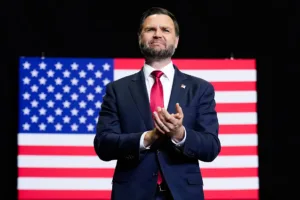


US Vice-President JD Vance has said Washington holds no formal alliance with Ukraine and that the country should not be admitted to NATO, in remarks that draw a sharper line under American commitments in Europe.
Speaking to the 2Way platform, Vance described Kyiv as a partner rather than an ally. “As far as I know, we don’t have a formal alliance with Ukraine,” he said.
He called Ukraine an admirable country while criticising its strikes on Russian oil refineries, arguing that they restricted supply and pushed up energy prices for Americans. The interests of the two countries diverged from time to time, he said.
The comments come days after Trump said Volodymyr Zelensky had never wanted to end the Ukraine war, and as European governments press Washington for firmer security guarantees for Kyiv.
Vance also tied the unrest in French cities to migration and to what he called a failure of cultural assimilation. The looting was concentrated in ethnic enclaves, he said, and followed from settling people who did not share the culture of the country receiving them.
The Vice-President had already written on X that Western governments had ignored “fundamental questions of assimilation and compatibility” when opening their borders.
More than half a million people took part in a nationwide day of protest against the cost of living in France on October 17 that ended in looting, arson and attacks on town halls, police stations and other public buildings. French ministers have blamed left-wing organisations rather than immigration for the violence.
The French Government has since ordered localised curfews in several cities and has kept a nationwide state of emergency on the table. The interior minister offered to resign over the disorder, an offer President Emmanuel Macron refused.
Vance framed the French unrest as a warning to American voters before the midterm elections on November 3, saying it was the future congressional Democrats wanted for the United States.
On Israel, he declined to follow Trump, who endorsed Netanyahu for re-election ahead of the vote on October 27, telling the interviewer he backed American candidates and would not take sides in another country’s election.
Asked about his own prospects, Vance said he believed Trump would support him immediately if he decided to run for the White House in 2028. He had not raised the question with the President, he added, and was concentrating on the midterms.
The Vice-President has become the main channel for the Trump administration’s criticism of European governments since his speech at the Munich Security Conference in February 2025, when he told EU leaders that immigration and free speech were the issues on which they were furthest from their own voters.