

NATO leaders have closed their Ankara summit with more than $50 billion (€44 billion) in new procurements and an American pledge to let Ukraine build Patriot missiles, after two days in which US President Donald Trump alternated between praise for the alliance and open contempt for several of its members.
The 32 allies adopted the Ankara Declaration on July 8, reaffirming that “an attack on one is an attack on all” and naming Russia as a long-term threat to Euro-Atlantic security.
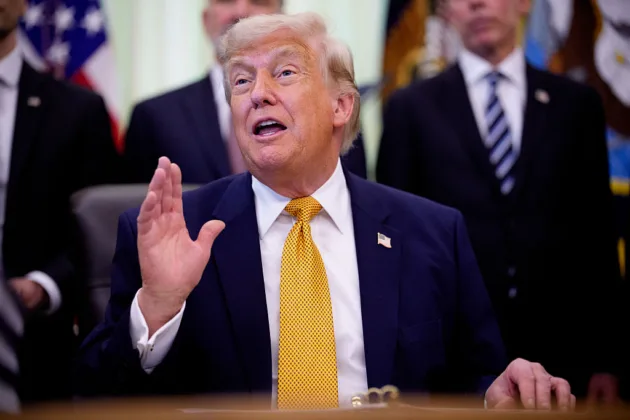
Trump, who had branded NATO a “paper tiger” and mused about quitting, left the Turkish capital declaring the summit a success. He said he had never seen such unity among the leaders in the room.
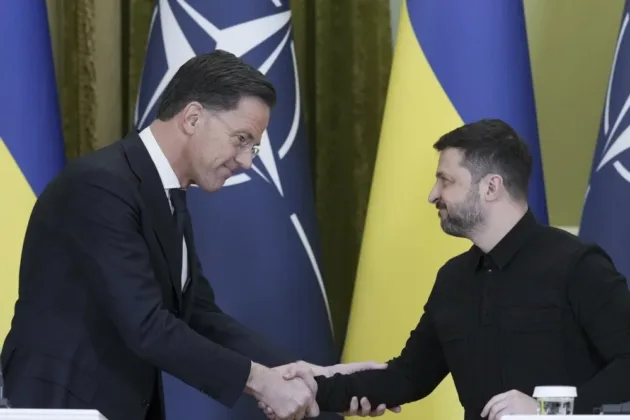
That verdict capped a gathering NATO Secretary General Mark Rutte had spent months trying to hold together. Rutte credited the President’s pressure for the surge in European budgets, telling him at one point: “Grab the win. It’s there.”
PATRIOTS FOR KYIV
The most consequential announcement came at Trump’s bilateral meeting with Ukrainian President Volodymyr Zelensky. The President said Washington would grant Kyiv a licence to manufacture Patriot interceptors, the only weapon in Ukraine’s arsenal capable of downing Russian ballistic missiles.
“We’re going to give a license to you to make Patriots,” Trump told Zelensky, adding that Ukraine could then no longer complain it was being short-changed.
The offer answered a request Zelensky has pressed for months. Trump conceded that Lockheed Martin and RTX, which build the system, had not yet been told, and it remains unclear whether Kyiv would produce the simpler PAC-2 or the more capable PAC-3 interceptor, or where the work would be done.
Global stocks of PAC-3 interceptors have been drained by the wars in Ukraine and the Middle East. Russia struck Kyiv with ballistic missiles again overnight on July 8; Ukrainian air force data showed its defences downed none of the five fired.
Zelensky said afterwards he was grateful for the emphasis placed on Ukraine’s air defences. Trump, who clashed with him in the Oval Office last year, said the two had developed a good relationship, and suggested Washington might buy Ukrainian drones.
€70 BILLION AND A DECLARATION
The declaration commits allies to €70 billion ($80 billion) in military equipment, assistance and training for Ukraine in 2026, with a pledge to sustain at least an equivalent level in 2027. The figure includes the defence portion of the EU’s Ukraine Support Loan.
Leaders also announced a €27 billion ($31 billion) investment in fuel storage, distribution and pipelines reaching the alliance’s eastern flank.
NATO said European allies and Canada raised core defence investment by more than $139 billion (€122 billion) in 2025, close to a 20 per cent rise. Alliance figures released during the summit nonetheless showed Belgium, Spain, Slovenia and Czechia struggling to meet even the older 2 per cent benchmark.
The text further called on Iran to respect freedom of navigation through the Strait of Hormuz and repeated that Tehran must never obtain a nuclear weapon.
TRUMP TURNS ON MADRID
The President reserved his sharpest words for Spain, which refused the United States use of its bases during the war on Iran and has secured an opt-out from the alliance’s 5 per cent spending target.
He called Madrid a terrible partner and said trade should be cut off, instructing Treasury Secretary Scott Bessent to do so. “Spain is a wasted cause,” he told reporters. He also criticised the United Kingdom and Italy for declining to join the campaign against Tehran.
Trump revived his claim that the United States should control Greenland, drawing a flat rebuttal from Danish Prime Minister Mette Frederiksen. “Greenland is, of course, not for sale,” she said.
IRAN OVERSHADOWS THE CLOSE
The summit was overtaken by events in the Gulf. After Iran fired on three commercial vessels near the Strait of Hormuz, US Central Command struck more than 80 Iranian targets, with a second round following on July 8. Washington also reimposed sanctions on Iranian oil sales.
Trump declared the interim understanding signed with Tehran three weeks ago finished. “I think it’s over. I don’t want to deal with them anymore,” he said, though he did not rule out further talks.
He said NATO countries would contribute minesweepers to the waterway. German foreign minister Johann Wadephul said Berlin, with London and Paris, stood ready to begin the work, but warned that a permissive environment and agreement between Washington and Tehran would be needed first.
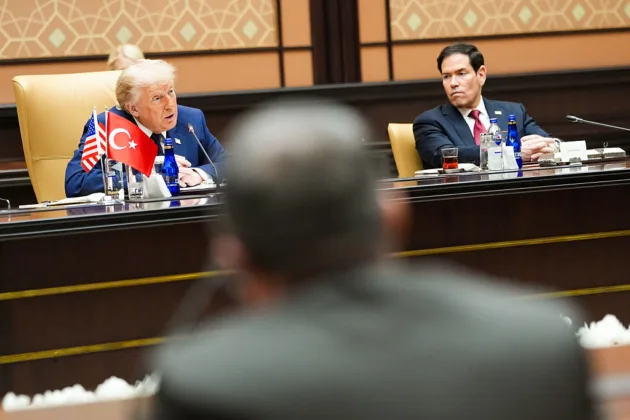
Trump also signalled he was minded to readmit Turkey to the F-35 programme, from which it was expelled in 2019 over its purchase of Russian air-defence systems, and announced the lifting of the related sanctions. A congressional ban still stands in the way.
President Recep Tayyip Erdoğan called the gathering historic. Whether the pledges made in Ankara translate into deployable capability remains, as ever, the harder question.