









Belgium has approved a law allowing police to enter private homes to arrest illegal migrants who have defied deportation orders and are considered a danger to society.
The Chamber of Representatives passed the bill just after 5am on November 6, following an all-night debate of some 10 hours. It was carried by 80 votes to 35, with 12 abstentions, The Brussels Times reported.
The five parties of Prime Minister Bart De Wever’s “Arizona” coalition backed the text, joined by the liberal Anders party. Vlaams Belang abstained while the Socialist Party (PS), the Workers’ Party of Belgium (PTB), the green Ecolo-Groen group and DéFI voted against.
Under the law, Belgium’s Immigration Office can ask police to detain inside a home a foreign national who is subject to a removal order. The person must have refused to co-operate with their return and there must be reasonable grounds to consider them a threat to public order or national security.
Each entry requires prior authorisation from an investigating judge and may take place only between 5am and 9pm. Officers may also seize documents needed to establish the detainee’s identity, according to Belgian media.
Asylum and Migration Minister Anneleen Van Bossuyt of the New Flemish Alliance (N-VA), who sponsored the bill, called the vote historic. She said its aim was to remove rapists, drug offenders and hate preachers from the country and dismissed comparisons with ICE as completely misleading.
Van Bossuyt has argued that the authorities have until now been unable to enter a home to carry out an administrative arrest, allowing dangerous individuals to escape deportation behind their front doors. In 2025, she told MPs in June, the Immigration Office asked police to check the homes of 2,052 people who had been ordered to leave and had not responded to an offer of return.
Amnesty International, lawyers and several investigating judges have said the law undermines the constitutional inviolability of the home. Campaigners have also warned it could affect Belgians who shelter illegal migrants.
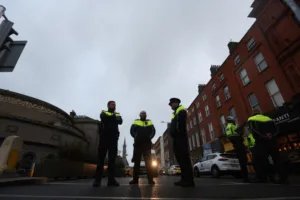
About 3,000 people formed a human chain around the Palace of Justice in Brussels on November 4, with some 50 further rallies held across the country. A similar text put forward in 2017 by Theo Francken, now defence minister, was shelved after mass protests.
The measure is the latest step in a migration crackdown by the government, which in 2025 introduced targeted police checks on routes used for illegal entry. Van Bossuyt has said some 80 per cent of rejected asylum seekers remain in Belgium.
The vote took place while De Wever’s resignation over failed talks on the 2027 budget was still pending. King Philippe refused it later the same day and asked him to report back on November 16.